



As we discussed yesterday, you can’t effect change without power, and if there is one thing I’ve learned in the last year, the apex predators in the economic food chain have managed to hit the sweet spot when it comes to living on the edge of revolution. The old adage that people won’t take notice until they hurt enough is absolutely true in the US at the moment. There is not enough critical mass among those in the economic hurt zone.
The top 10% are awash with disposable income from their overpriced stock holdings, which they are spending like drunken sailors on shore leave. They are able to do this because the system has been designed by the top 1% to reward enough enablers to maintain the status quo as their wealth continues to grow exponentially. The 9% below them are the moat between them and the angry masses.
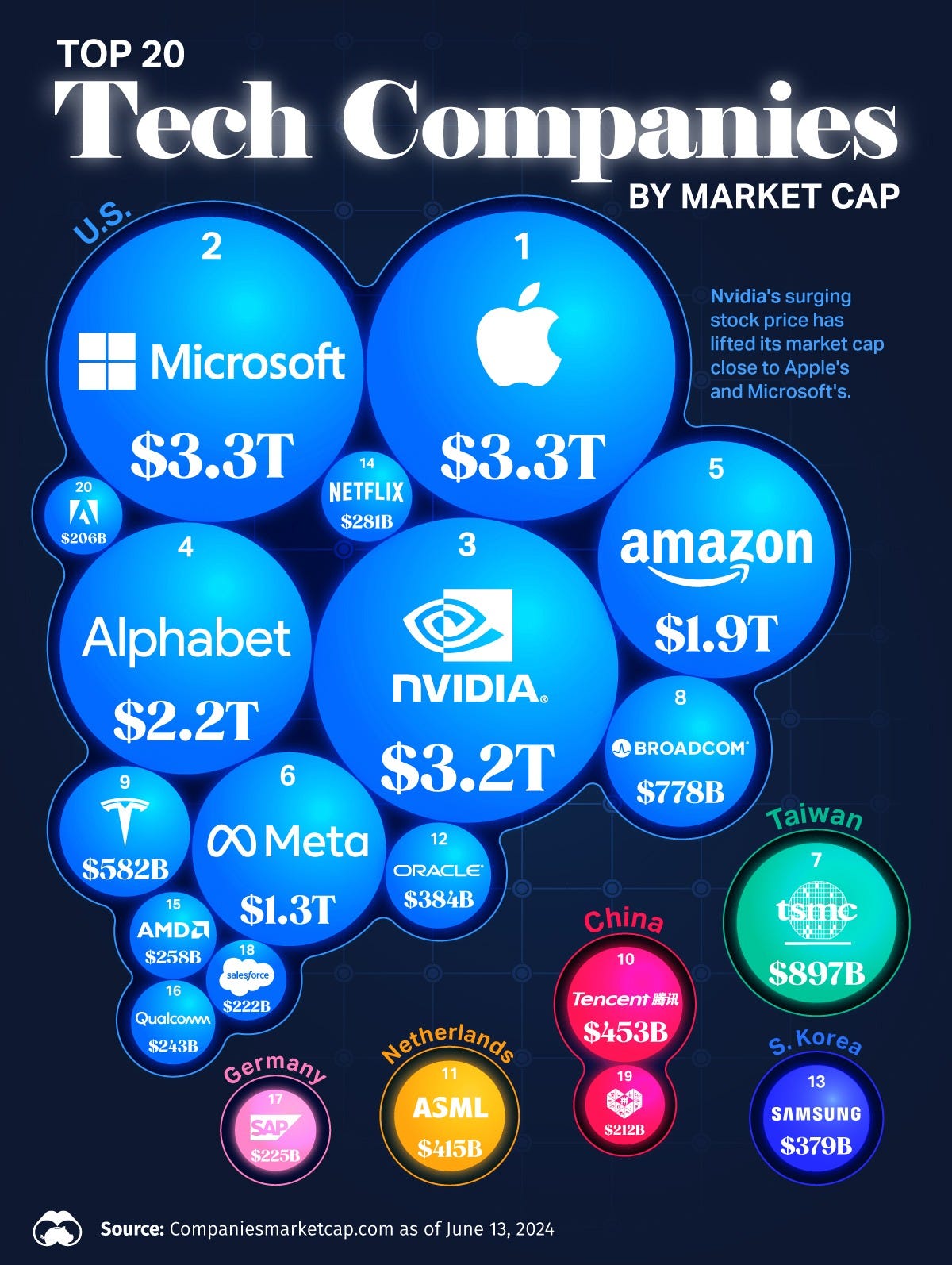
It’s important to repeat for anyone listening, if you strip out the consumer spending of the top 10% and the technology and infrastructure companies supporting the expansion of AI data centres, the US economy is flat. As Ruchir Sharma, chair of Rockefeller International, put it:
“Despite mounting threats to the US economy — from high tariffs to collapsing immigration, eroding institutions, rising debt and sticky inflation — large companies and investors seem unfazed. They are increasingly confident that artificial intelligence is such a big force, it can counter all the challenges.”
This is what being intoxicated by AI looks like. Michael Roberts worked in the City of London as an economist for over 40 years. He has closely observed the machinations of global capitalism from within the dragon’s den. In his blog post of October 2025, he noted:
‘The AI investment ‘bubble’ (as measured as the stock price relative to the ‘book value’ of a company) is 17 times the size of the dot-com frenzy of 2000 — and four times the subprime mortgage bubble of 2007. The ratio of the US stock market’s value to GDP (aka the “Buffett Indicator”) has moved up to a new record high at 217%, more than 2 standard deviations above the long-term trendline.’
Since then, it’s not got better; it’s got worse, as the top AI companies pass money around to simulate investment and revenue and further their fantasies of untold wealth. As I said, the markets are stoned on a massive ‘jam tomorrow’ promise that I firmly believe will never deliver on investment without the inevitable taxpayer bailout. An event for which the ground is already being prepared by this administration, who are colluding with the AI companies to disguise it as some sort of bizarre Chinese capitalism in the guise of ‘a public share’ in the fantasy.
Don’t misunderstand, eventually there will be a return on investment, but by the time that arrives, the public share of the return will have got lost along the way. The bottom line is, if you strip out AI and its supporting infrastructure, the US economy grew by around 0.1% in 2025. It’s the very definition of having all your economic eggs in a basket that the Chinese are likely to knock over and smash all the eggs. This, of course, is a story for another day.
The reason the above is important in the context of providing solutions to the destruction Trump is inflicting on the future of every family in America is that what happens next is critically important when it comes to finding solutions to self-inflicted wounds. In a responsible society, capitalism does not represent a threat to the welfare of low-income workers and the vulnerable, because, as in the Nordic model, the welfare state is not the boogeyman it’s demonised as in the US.
It’s all about taxes and how they operate in what we’ll call ‘social capitalism’. The emphasis is on a higher centralised tax burden, which is offset by the availability of healthcare, childcare, education and welfare benefits, all of which are provided as part of a social contract with the state. Governments in Nordic countries are not anti-union; indeed, in some cases, union membership is as high as 70% of the working population. The concept is very simple: every citizen has a right to healthcare, education, and childcare and state benefits in times of need, regardless of their ability to pay. This is taken care of within a collective tax system that does NOT discourage innovation and entrepreneurship. It fosters community and social responsibility, which is baked into a people-centric economic model.
If you stop for a moment and compare the high-tax models of these countries to examine the tax burden, it might surprise you to note that if you add the uncovered costs in the American punitive socioeconomic model, in many instances the effective tax rate is higher in the US. The cultural differences are jarring; they foster a consensus-based society, which results in trust in politicians and government. It is the antithesis of the social Darwinism promoted in the US. A consensus environment allows for strong union membership and a comprehensive welfare state that does not encourage lazy people to sponge from the state because EVERYONE has a sense of social responsibility. There are always exceptions to the rule, but they don’t make perfect the enemy of the good.
The central plank of the Nordic model is low wealth inequality, the very thing that is eating America alive. The claim in the US is that without the obscenely rich handing down crumbs from their table, the ‘unwashed’ will perish. In Nordic countries, there is no ‘trickle down’; the wealthy exist, and risk and innovation are still rewarded, but NOT at the expense of wider society and the vulnerable. These countries have no problem competing on the global stage, and their commitment to non-protectionist free trade is born of their ability to play well with others, which is a huge strength within their economic model.
We’ll use Norway for comparison as it’s a primary example of a nation that has used the wealth generated from its publicly owned natural resources to create the world’s largest sovereign wealth fund. A fund in which each citizen currently has a $300,000 social share in terms of societal benefits. The government owns it. The fund's value currently stands at $2.2 trillion. If you scale that up based on population, it’s the equivalent of the US having a fund of almost $134 trillion; however, it's still somewhat concerning that it’s $6 trillion short of the US national debt. The fund pays an annual regulated stipend, if you like, into the national fiscal budget; this then funds the increasing costs of the state retirement fund. It supports high-quality national healthcare, education, and infrastructure and, in addition, funds parental leave, unemployment benefits, and universal welfare programs.
By law, it is only authorised to spend 3% of the value of the fund each year on investments which can only be made OUTSIDE of the country. As a result of this limitation, the fund is only reinvesting interest, with a contingency in place to deal with oil price shocks. It is effectively economically bulletproof. The common denominator for each of the Nordic countries is a narrow wealth gap without compromising innovation and growth. That is determined by the tax system. If we take Norway, for example, assets are taxed annually through a net wealth tax based on total global net worth (assets minus debts).
These taxes are levied annually based on wealth held above a tax-exempt threshold of almost $200,000. The scaled tax charges are as follows:
0% Tax: On net worldwide wealth up to $199,830.
1.0% Tax: On net wealth between $199,830 and $2,261,260.
1.1% Tax: On net wealth exceeding $2,261,260.
There are further allowances; for example, a primary residence is assessed at 25% of its value, and there are further allowances on additional residences.
When it comes to asset disposal, capital gains tax applies, and this is how it works:
Shares and mutual fund holdings carry an effective adjustment factor, bringing the effective tax rate to 37.84%
Corporate bonds or standard movable property, classed as ‘standard assets’, are taxed at 22% on disposal.
Gains on commercial real estate or secondary rental properties can be taxed up to 50.6% as business-correlated income.
Source for the above can be found here
If we look at the current net wealth of just the top 0.1% in the US. According to the Federal Reserve Distributional Financial Accounts, the aggregate net worth held by the top 0.1% of households (134,000) is estimated to be $25.3 trillion. If we assume each household receives a $400,000 wealth tax exemption (assuming joint filing), this would reduce net wealth by $54 billion, leaving their now $25 trillion wealth intact.
If we apply the Norwegian tax model on the top 10% upwards, this is how the revenue model would look:
From the Top 0.1% alone: $277.1 billion
From the rest of the Top 1% (the 99.0% to 99.9% tier):** $327.1 billion
From the rest of the Top 10% (the 90.0% to 99.0% tier):** $510.0 billion
The total tax revenue based on the net wealth of the top 10% would be $ 1.1 trillion. The critical point here is that wealth is integrated into the annual tax bill, and you will notice that the variants in capital gains tax reflect the variance in assets. i.e., shares and mutual fund holdings are taxed at a higher rate than corporate bonds or standard movable property. In addition, secondary rental properties can be taxed up to 50.6% as business-correlated income.
So now let’s break down the impact on each of the asset classes
The Top 0.1%
Net wealth - $25.300 Trillion
Wealth Tax - $277.13 Billion
After Tax - $25.023 Trillion
Wealth reduction - 1.10%
Wealth increase of the top 0.1% in 2025 was 9.8%
Net wealth growth: 8.7%
The Top 1% (includes Top 0.1%)
Net wealth - $56.000 Trillion
Wealth Tax - $604.22 Billion
After Tax - $55.396 Trillion
Wealth reduction - 1.08%
Wealth increase of the top 1% in 2025 was 9.6%
Net wealth growth: 8.52%
The Top 10% (includes Top 1%)
Net wealth - $112.000 Trillion
Wealth Tax - $1.114 Trillion
After Tax - $110.886 Trillion
Wealth reduction - 0.9%
Wealth increase of the top 10% in 2025 was 8.4%
Net wealth growth: 7.5%
Meanwhile, average hourly earnings in the U.S. grew by about 3.5%. Adjusted for inflation, however, they grew by only 0.8% to 1.1%.
The bottom 50% added just $280 billion in wealth, largely due to real estate equity and consumer durables. This compares to the $2.25 trillion added to the net wealth of the top 0.1% from corporate equities and private Businesses
Note that the above model does not take into account the payroll wage cap that should be raised, I believe, from the current $184,500 to $400,000, which seems to be the sweet spot so as not to be punitive to high earners such as surgeons, etc. This would shift the burden to the top 1%-2%. It would immediately eliminate around 50% of the estimated shortfall to protect Social Security for the future, while a legislative solution can be found.
I have overlaid this model onto the US economy because it’s a proven model, not a theoretical one. It contains all the common sense elements that would reduce the wealth gap and make taxes fair again. If you look at the impact on the top 10%, it really leaves them in a substantive net positive position while raising a trillion dollars in revenue each year. I actually believe that, given the size of the US economy and the US wealth gap, the model could sustain a 2% wealth tax as opposed to the 1.1% in the Norway model. This would almost double the tax revenue and still leave the top 10% in a comfortable net positive position.
Let me be clear: this is NOT a detailed economic model; it’s merely an attempt to validate that a wealth tax would not result in the end of the world or see the advent of a communist economy. It represents a measured starting point for a conversation on the critical issue of the unsustainable wealth gap that, if not addressed, will inevitably, in my opinion, lead to either a police state or a revolution.
For those who want to support my work but can’t commit to a paid subscription, you can now make a one-off donation by clicking on the image below. By donating, you help to keep this independent reporting free for all. THANK YOU

I always read your messages with Care as they are carefully crafted but filled to the brim with facts that must be studied closely. I really appreciate the graphic today showing the capitalisation of the largest stocks. I have traveled in the Scandinavian countries and seen first hand the first world lifestyle and contentment of the citizenry. But like most cases of semi perfect results in most very broad endeavors and economies, they started that way over the long haul and never really knew that they were special. How do we who have as top management (governmental control by the very rich oligarchs with all the real power) make the switch that we so desperately need as you point out so often. It is nearly always impossible to copy utopia when you didn't start along the path early on. Those in power will try every evil way to keep it even though as you so well point out in this article that they would not be destroyed if the wealth were shared more equally. I fear that if some reversion to the mean does not occur, ther will be anarchy and revolution. Trump has opened a giant window into the unjust world you so well describe. Thank you for continuing to show us the way, even though I don't have much hope that the super strong and wealthy will ever be convinced.
Very easy to understand. The only impediment to implementation is greed in the upper 10%.