



This is PART FOUR in a series of posts on the state of the US economy. You can read PART ONE, PART TWO and PART THREE if you’d like to catch up.
As humans, we often put off until tomorrow what should be done today. It’s a trait that does not serve us well. For decades, Americans have evolved to accept crumbs from the table of the obscenely wealthy. They exhibit an almost twisted gratitude for an ability to survive barely, while those at the top bathe in a level of wealth hitherto never known to man.
If you think about it, we have to be a pretty stupid species to be herding ourselves into indentured servitude to people who are addicted to wealth at the expense of the bottom 90% of society. For centuries, the church has handed out religion as the opioid of the masses. They convinced the poor that they should fear the wrath of God unless they shared their meagre earnings from toiling on the land with the church. The only thing that has changed is that the evangelical right has refined the drug to a crack-type variant and called it Trumpism. It’s now religion sponsored by the obscenely rich, providing their worshipers with permission to worship a new God, a man who represents the antithesis of actual Christian values.
In today’s United States, the far right has simply taken the flag and the word ‘patriot’ hostage, while using the religious playbook to instil fear and anxiety among a large swathe of low-educated, highly suggestible targets desperate to belong, in a country in which the political class treat them as a necessary inconvenience on the road to power. As an outside observer, it’s terrifying to see a willingness to believe, ‘We’ve not quite reached crisis point,’ when in truth, it is disappearing in the rearview mirror.
As Trump spews incoherent rhetorical effluent into the media space to distract and poison minds, the foundation of sand on which he has built his economic fairytale is beginning to crumble in the background, out of sight to those who have taken their eye off the ball. What you need to understand as part of this conversation is that if you are not one of the few breathing the rarified air of the top 10%, things are going to get bumpy real quick, once the impact of Trump’s economic follies comes home to roost. You should never forget it’s easy to gamble with other people’s money. Trump has done it all his life, and there have been few consequences.
If the economy collapses, the rich might take a temporary hit, but the average American stands a good chance of losing everything. Forget about using 2008 as the benchmark for suffering, because if this AI bubble bursts, it will make 2008 look like a walk in the park. In this moment, Trump is basking in the glow of adulation from Western leaders hailing him as a ‘peacemaker’, when nothing could be further from the truth. His actions are purely driven by financial greed and self-enrichment. It has nothing to do with peace and everything to do with profit. Western nation taxpayers have footed the bill for flattening a two-mile stretch of prime beachfront real estate, now ready for development.
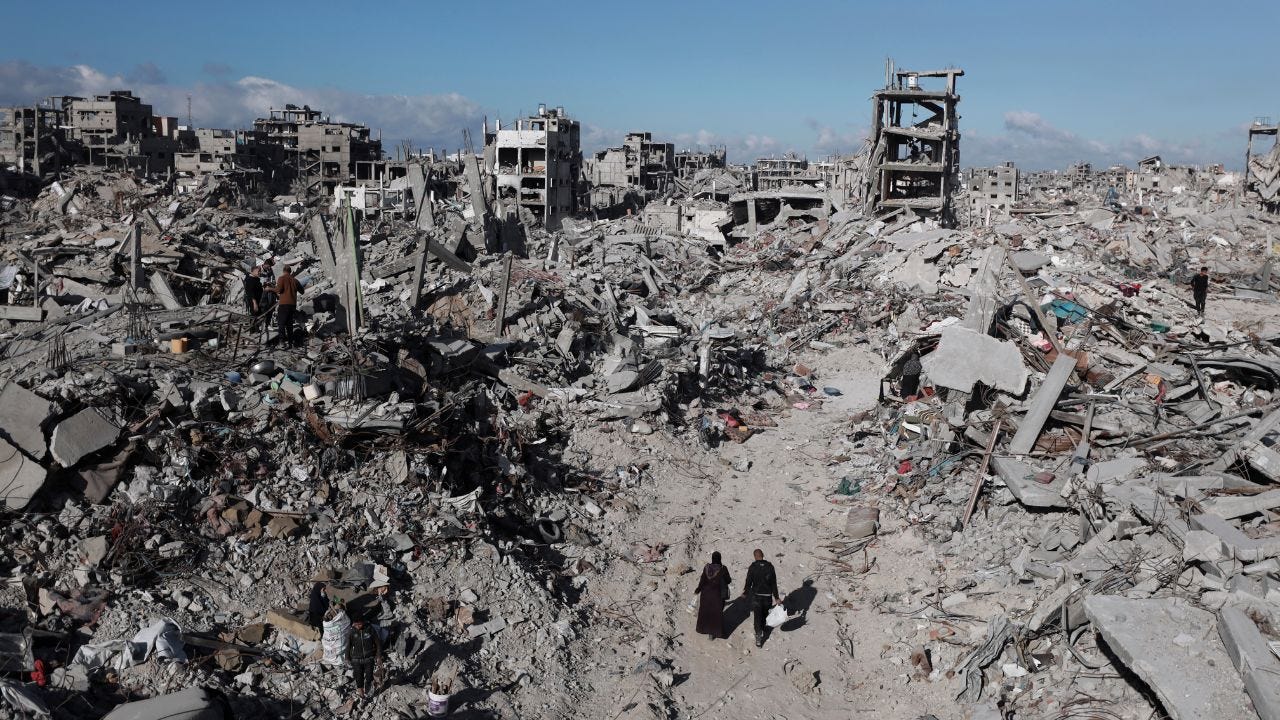
All that remains is to clear the site of the small number of remaining buildings, rubble and Palestinians, and Trump is ready to go on the most lucrative real estate project in modern history. Be in no doubt, if they are unable to engineer the expulsion of the Palestinians, they will be squeezed into a further walled ghetto as a partnership flourishes between Trump and Israel. Arab nations, along with other Western countries, will, if they are not careful, pick up the tab to clear the land for Trump’s reconstruction ambitions. American companies will flood into the barren landscape protected by security forces from the region to rape the shattered remnants of the lives of two million Palestinians. Trump will chair his ‘board of peace’ as the Gaza project becomes the next Trump extortion plan.
Returning to the US, Trump’s ability to control the narrative is becoming increasingly difficult, so he’s in no rush to reopen the government. Once he does, the scrutiny will continue and become more difficult to counter. The courts continue to essentially hold the line at least at the lower court level, which is frustrating his attempts to militarise blue cities fully. It seems clear from Stephen Miller’s misstep on CNN that, behind the scenes, they do believe Trump has plenary authority and that will no doubt be their contention as disputes are elevated to the Supreme Court..
The administration is dominating the news cycle not only with the Gaza situation, but also with the blatant open weaponisation of government departments, which are being forced to propagandise the shutdown with voicemail messaging and government-paid advertising to overtly blame Democrats for Trump’s own failure to keep the government open. Amidst all the chaos, few are looking behind the curtain at the potential economic storm on the horizon.
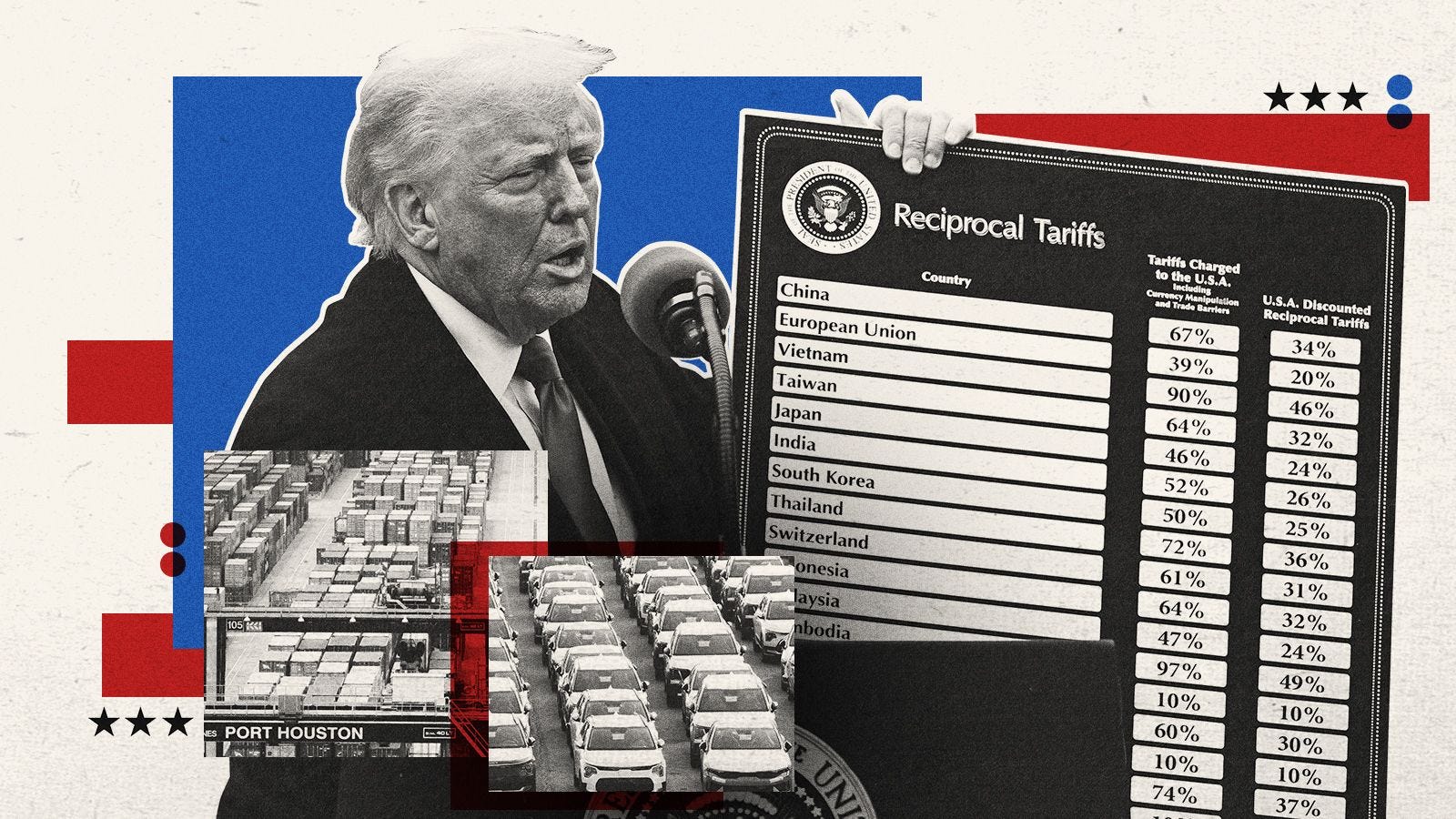
Currently, the US public is living under a convenient illusion that Trump is happy to promote. This suggests that those who suggest the tariffs will hurt consumers are overstating the case. Studies have, however, now been conducted to better understand the economic impact of tariffs on the various stages of the supply chain. Let’s remind ourselves of the nonsense claim by Trump that foreign companies are paying the tariffs. All the research indicates that exporters are not reducing their export costs, and therefore, the sole burden of this tax is borne by Americans.
As I have explained before, the duty(tax) is collected from the US importer of goods. The question, as it relates to consumers, is how much of this duty (tax) is being passed through to them. Evidence shows that to date, a large proportion has been born by businesses that have been concerned that passing on the cost would damage their business. However, what we are now seeing is a slow but steady pass-through of these costs to consumers. You can see from the graph below that the price of imported goods has surged since the introduction of Trump’s tariffs:
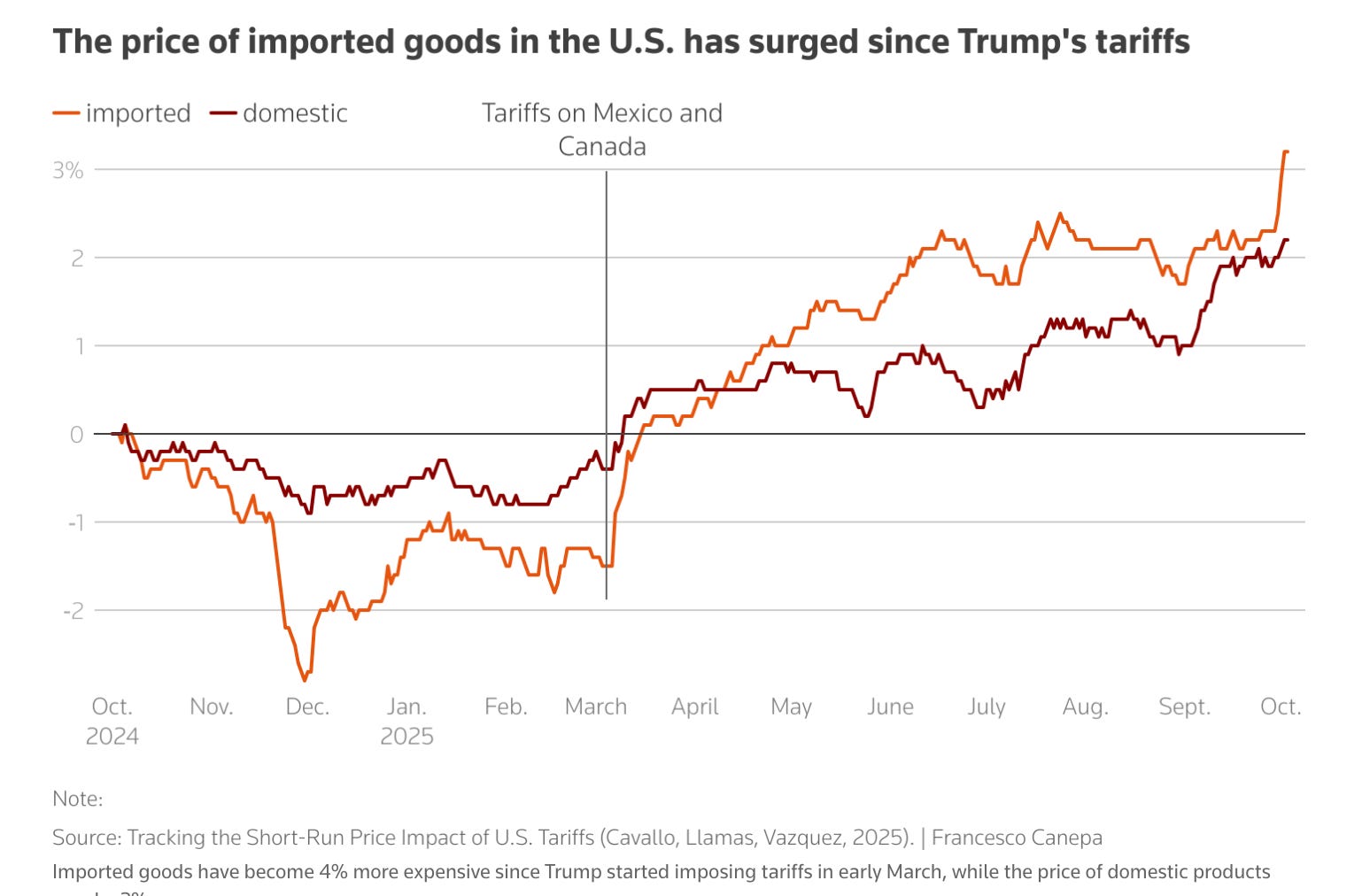
In an excellent report from Reuters on October 13th, they report that:
[Harvard University professor Alberto] Cavallo and researchers Paola Llamas and Franco Vazquez have been tracking the price of 359,148 goods, from carpets to coffee, at major online and brick-and-mortar retailers in the United States.
They found that imported goods have become 4% more expensive since Trump started imposing tariffs in early March, while the price of domestic products rose by 2%.
The most significant increases for imports were seen in goods that the United States cannot produce domestically, such as coffee, or that come from highly penalised countries, like Turkey.
The bottom line is that exporters bear little to none of the tariff costs, so Trump’s assertion that they would eat the tariff costs is just another in a litany of lies. In some cases, exporters have also been incorporating the depreciating value of the US dollar; rather than absorbing the costs of the tariffs, they have simply passed on any increased costs to them on to the US importer. The report goes on to note:
National indices of export prices paint the same picture. The cost of goods exported by China, Germany, Mexico, Turkey and India have all risen, with Japan the only exception.
The truth is that in 2024, the average tariff was set at around 2%. However, with Trump’s tariffs, this has risen by at least 15% to an average of around 17%. The critical thing to note here is that consumers have been shielded from this increase by businesses. Not anymore, it is now being gradually introduced to consumers to avoid presenting a price shock. In the end, the outcome will be the same as businesses slowly seek reimbursement for the tariff duties from their customers in the form of higher prices, which retailers then pass on to the American public. These businesses are currently facing a $30 billion a month hit, and it stands to reason that they need to pass that cost on as far up the supply chain as possible to stay in business.
The critical takeaway from this report, which I highly recommend you read, is:
“The expected impact of U.S. tariffs hasn’t materialized yet,” Ruben Dewitte, an economist at ING, said. “We anticipate these effects will become more visible in the coming months.”
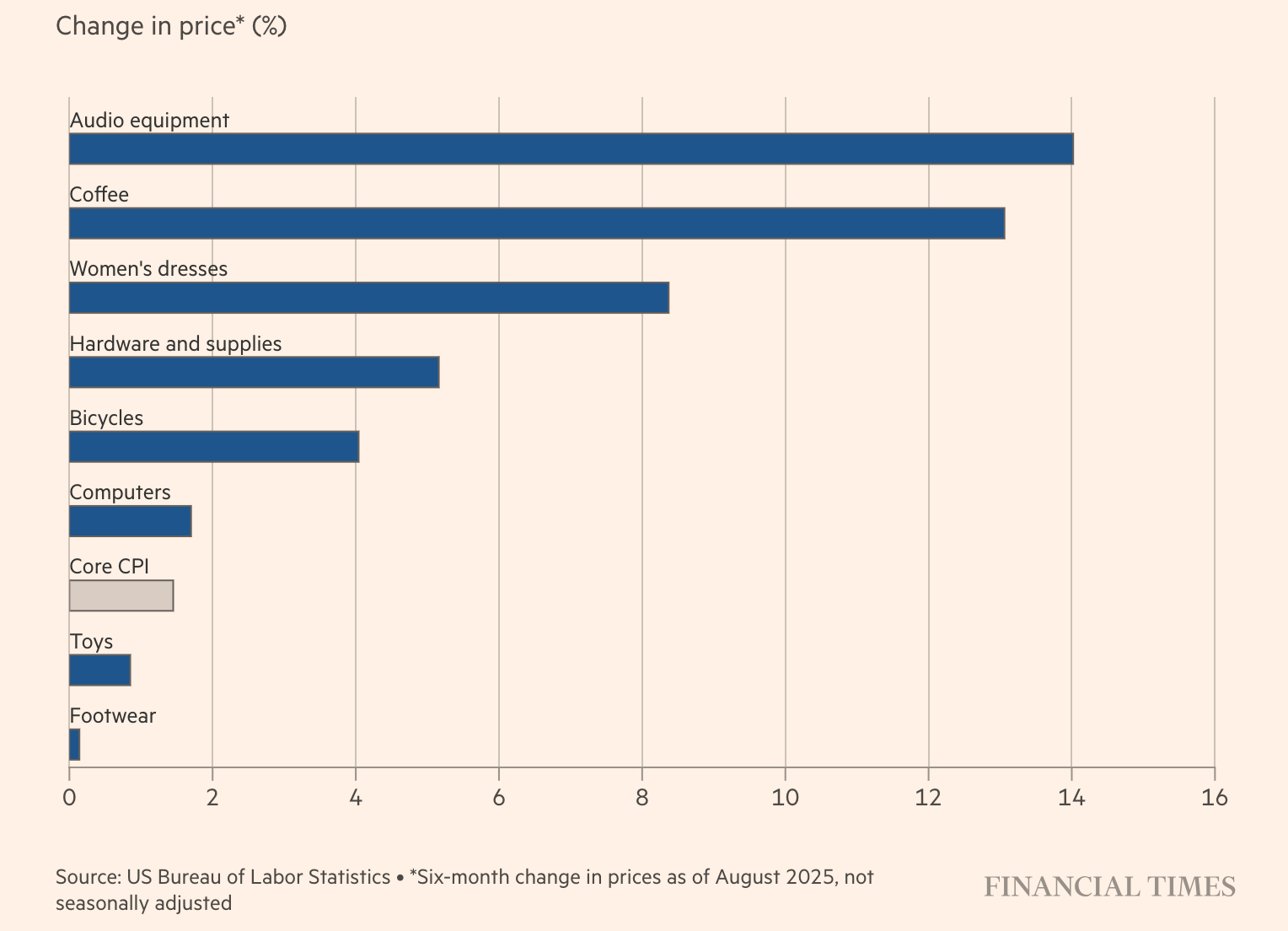
As we approach the holiday season, which many retailers rely on heavily, price increases from wholesalers or direct imports will inevitably be passed on to customers. This is already evident in the pricing of large online retailers, such as Amazon. If you look at the bigger picture, as shown in the chart below, published by the Financial Times on October 5, 2025, which I have linked for your reference (I have gifted this, so it’s not behind a paywall), the level of increases across the board is evident for just a simple sample of import-dependent goods:
I can't list all the incoming price increases, which is why I’ve linked the various articles so you can, if you wish, drill into the detail. I always share articles from paywalled publications that I have access to as part of my extensive research portfolio of subscriptions, enabling me to keep you better informed.
If there is one big picture takeaway here, it is that Americans need Democrats fighting to preserve the ACA subsidies that expire in December. Otherwise, these inflated everyday consumer costs will look small in relation to the huge increases in health insurance premium costs.
It is beyond imperative that you recognise the level of price increases you are likely to see over the holiday season, as retailers are forced to position themselves to make the required profits to survive for the coming year.

Trump will tell you to buy fewer toys and be patient while he spends a billion of your taxpayer dollars to refit his Qatari 747 jet as Air Force One and has a golden era Christmas pretending to be religious. At the same time, you’ll have a ‘Bob Cratchit’ celebration with Tiny Tim.
Next time, we’ll take a deep dive into the engine room of the economy. We’ll examine Trump’s AI fantasy driver of illusory growth as the US attempts to outrun now $37 trillion of debt, against the background of a predatory China, just waiting for the US to face plant.
Read PART FIVE
I agree. The amount of blindness to the reality horrifies me. Yes, it does appear wilful…like something out of a cautionary dystopian novel. I can partially understand in light of the rise of standardised tests and the corresponding decline in teaching critical thinking, the complexity of history, and skills in debate and questioning. But even that doesn’t explain it all away in. And I have no clue as to how, or even if, we could reverse it.
Don’t see our society much different than N Korea. They get points for brainwashing! Soon we’ll b bowing to our great leader- DON the Despicable .