


Yesterday, I shared a video featuring Bernie Sanders discussing the importance of AI regulation. It was a 15-minute video, but lots of people clearly watched it and shared their thoughts and fears. I already had a piece on the impacts of AI in the pipeline; I had planned to drop it here on Substack tomorrow. In it, I shared my thoughts as a coder with in-depth knowledge of its capabilities, a political commentator and writer, but more importantly, as a grandfather with an eye on the world in which my grandchildren will grow up. I come to this with no vested interest in the technology, but as a lion who would protect his cubs at any cost.
The complexity of this dilemma can’t be addressed in a single piece, so I thought I might provide a continuous train of thought broken into episodes. I’m often accused of being too verbose. However, in this instance, the aim is to make it relatable and easy to understand, which can sometimes get in the way of a more summarised, technical approach. Still, I will try my best to keep it as concise as I can without sacrificing the societal elements that play such an important role in my thinking.
In my view, the real complexity of the subject does not come from the technology but rather from the potential societal, geopolitical, and economic impact of AI's capabilities. I think the best place to start is from the beginning, and we’ll walk together through the evolution of a technology that has been part of our lives on a practical level since around 2000. It really is nothing new. It just hadn’t crossed into mainstream consciousness for most people until the advent of ChatGPT.
As an academic subject, it dates back to 1956 in the UK, and an educational gathering called the Dartmouth Conference. It was there that the term ‘artificial intelligence’ was coined by John McCarthy.

Six years earlier, British mathematician Alan Turing had published “Computing Machinery and Intelligence,” examining whether machines can think. This resulted in the introduction of the “Turing Test”, which is used to this day as a baseline to evaluate machine intelligence. The Alan Turing Institute in the UK remains a place of academic excellence, and it’s here where I want to begin. Science changes the world; it can improve life, help feed the poor, protect public health, and lay the foundations for a better society. Something I think most of us can agree upon.
As with all things sold as a vision of creating a better tomorrow, the vision soon becomes contaminated by money, which, in turn, metastasises into greed in search of perceived untold wealth. Don’t you think it odd that when it came to preventing millions of deaths, science became the enemy of the populist right during the COVID pandemic? A position which now sees the re-emergence of diseases long thought to have been eradicated. Whether it’s reproductive science or research into climate change, we see the MAGA cult declaring it the enemy of progress and prosperity. Translation: an obstacle to profit and greed. You will not see the same logic applied to viagra, food additives, pesticides, drilling for oil or AI.
It’s a challenge even knowing where to begin. However, what I can assure you is that listening to science is far better for your well-being than listening to the lies of a convicted criminal, whose sole objective is to make the top 1% ever more wealthy at your expense. Science, is by its very nature, about learning from mistakes. Karl Popper rightly claimed that, “Science is a history of corrected mistakes”. While Trump and his acolytes see science and academic research as the preserve of the liberal elite, the same malign forces have time and again attempted to use misrepresented science for their own gain.
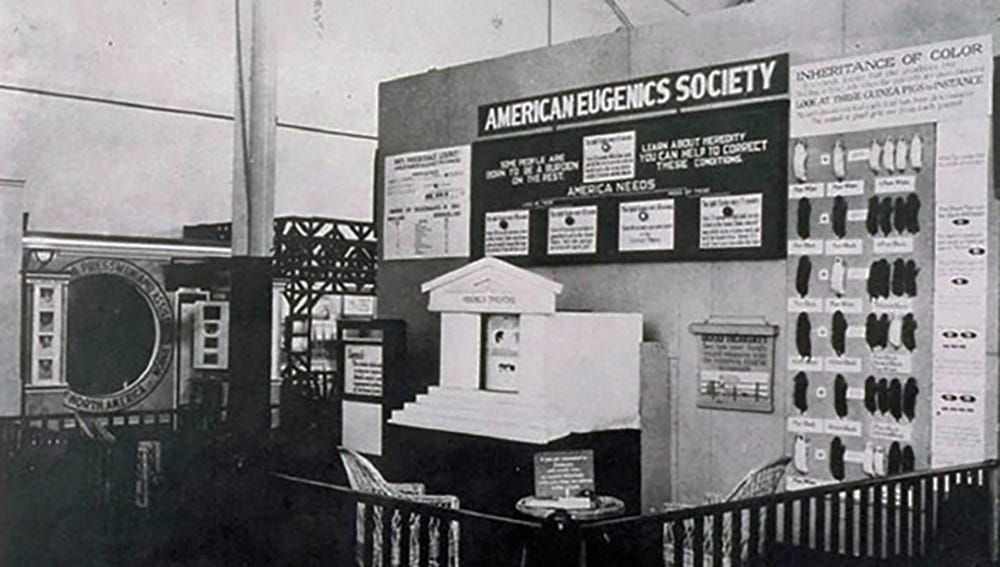
There is no better example of it than the adopted theory that humanity consists of biologically superior or inferior races. This was widely accepted in scientific circles and used to justify horrific acts of slavery, colonialism, and genocide. It serves as an example of how research can be infiltrated to support a political narrative. It’s no real secret that, despite the theory having been long since debunked, MAGA still believes it to this day. The same applies to the MMR Vaccine link to autism, which spawned the anti-vax movement. Indeed, a key advocate of that movement, RFK Mengele Jr, has enshrined it in current US health policy guidance.
The aim in this introductory piece, is to set the stage for a short series of pieces exploring the social and economic impact of AI against the backdrop of ambition for global economic dominance, sought by a handful of MEN who will stop at NOTHING to achieve it. Another key factor in this examination of how it will unfold is China. In telling this story, we encounter decades-long indoctrination of an ‘America good, ’ ‘China bad’ narrative that permeates every corner of American society. Odd, given the China of today was built on the greed of US free-market capitalists in the Reagan years. Back then, corporate America threw America’s working class under the bus to worship at the altar of cheap Chinese labour. Ooops!
It’s here that we need to understand the cultural gap between the world's two largest economies. The US is at the mercy of a four-year electoral cycle and a shareholder class that ultimately drives US legislative policy. It’s like driving a car with the handbrake on. Unless the rich and the shareholder class agree, the US is incapable of passing laws. China does not suffer from such obstacles to progress. Their plans aren’t limited by an election cycle; they plan at least 15 years ahead, and I suspect they will ultimately win the technology and economic race. Why? Because they are in no rush, they are master exponents of the long game, whereas America is an ‘I want it, and I want it now’ society. It’s the very reason why the much-promoted liberal well-intended ‘Economic blackout’ will have minimal impact on Corporate America.
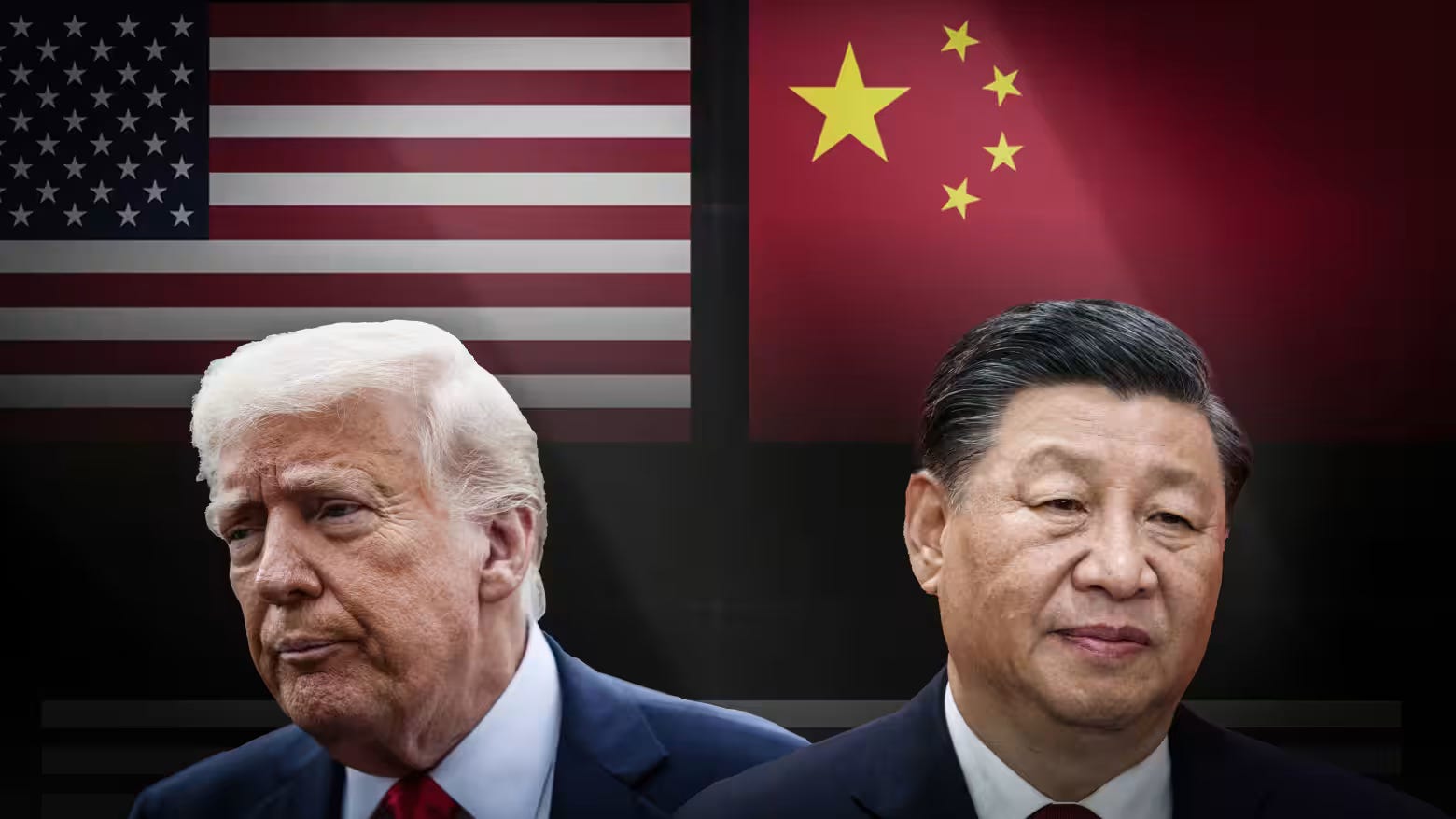
The truth is, Xi can get his people to eat grass long before any American president could convince the American people to do the same, if they even ever would. The Chinese know that an American is happy to risk losing a foot as long as they can continue to eat cakes. Add to that, they could not exist without their daily fix of often meaningless consumption. That’s not how Chinese culture works. Would I go to live in China? No, but not because I believe I would be in danger or under threat from the state, unlike I would for writing a mean tweet about Wun Dum Fuc in the US. Just because I’m too old now to make such a life-changing move. that doesn’t mean that if any of my children came to me and said they were going to live there, I wouldn’t say ‘go for it’.
All evidence shows that it’s cleaner, safer, not to mention cheaper to live in a Chinese city. Gone are the days when it was insular; it’s very proud of its decades-long progress. So much so that if you are using China as a transit country to an onward destination, you can travel visa-free for 10 days to take a look for yourself.
My admiration of their achievement has nothing to do with loyalty or being a traitor to my country; it’s about a rational assessment of the geopolitical facts. I can hear the screams already, ‘WHAT ABOUT THEIR HUMAN RIGHTS RECORD?’ It’s a very valid point, to which I would simply say to Americans: ‘Take a look in the mirror, then repeat what you have just said.’ My fondness for America is no secret. I have enjoyed some of the happiest moments of my life, both on vacation and working there over the years. However, even in the early 90s, when I spent a lot of time there, the narrative vs the lived experience were constantly at odds unless you had money. I witnessed it firsthand, working in the music industry, searching for talent in places like the Bronx and East LA. Even back then, it was a nation of haves and have-yachts.

Let’s take a moment to look at China’s record on eliminating poverty. Of course, poverty is subjective, so I am reluctant to buy the whole story, especially when it comes to remote rural China. However in 2020, China declared extreme poverty defeated. Let’s wrap some context around that by stating the International Poverty Line, as defined by the World Bank, is $1.90 per day. Manuela Ferro, World Bank Vice President for East Asia and the Pacific, summed up China’s achievement best when he said:
“China’s poverty reduction story is a story of persistent growth through economic transformation,”
It’s much more than that, though; it’s about the future, and that’s where the Chinese insistence on long-term planning comes into play. Their model is based on the recognition that:
“…targeted support was needed to alleviate persistent poverty; support was initially provided to areas disadvantaged by geography and the lack of opportunities, and later to individual households.”
It should be noted that this was an all-of-government initiative that spanned four decades. As the headline read in a Guardian piece by Eduardo Porter on November 24th 2025:
China has brought millions out of poverty. The US has not – by choice
‘Despite the US’s economic success, income inequality remains breathtaking. But this is no glitch – it’s the system.’
The important takeaway from this story is that, as reported in this Guardian article:
In 1990, 943 million people [in China] lived on less than $3 a day measured in 2021 dollars – 83% of the population, according to the World Bank. By 2019, the number was brought down to zero. Unfortunately, the United States was not as successful. More than 4 million Americans – 1.25% of the population – must make ends meet with less than $3 a day, more than three times as many as 35 years ago.
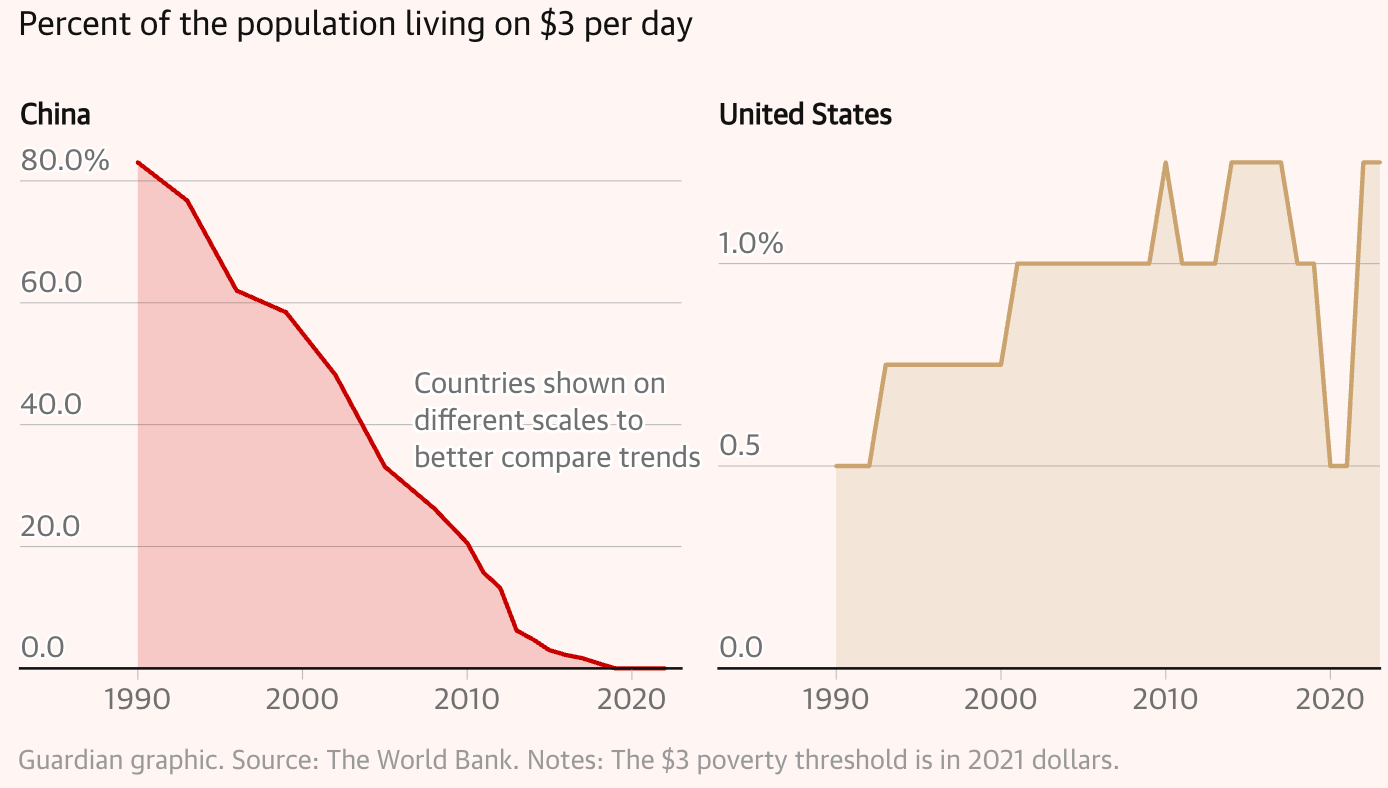
Please take a moment to absorb those numbers, then tell me that America is the shining beacon of democracy and the greatest nation on earth. Only those in the top 1% could make this statement with a straight face. The disconnect between the above graphs is not dictated by necessity, but rather by CHOICE. This is really important in the context of the journey we are embarking on together to understand AI's impact. It may all feel a little abstract right now, but I promise we will gather all the threads as we go, to present a cohesive, well-evidenced assessment that will provide a much clearer picture of what might lie ahead ahead.
The reason I have spent so much time on the Chinese side of this assessment is that it will be the single most significant factor in deciding who will win the AI race, and the potential catastrophic economic impact on the American economy if China is the victor. Am I hoping this preface piece has whetted your appetite to dig into the nuts and bolts over the next few days?
Read PART TWO
AI is evolving so rapidly that I personally can’t imagine how it will impact our lives in just 5 years . It may revolutionize our access to the best research for medical advancements , curing diseases, designing artificial organs and limbs , and improving our physical well being . But will it cause such a dependency that our brains become lazy and start to shrink ? A literal brain drain that makes us zombies ? Right now , we are addicted to instant information and communication… everyone has the cell phone attached to their body 24/7 … have a question ??? Google it … toddlers have superior finger dexterity from early digital exercise. AI Technology is a powerful tool but is it also a path to intellectual death ? The AI race is on - and no regulation means it’s a fragile balance between good and evil . Yes - evil is a possibility in the hands of immoral , power hungry billionaires who have no idea exactly what is in Pandora’s box .
Will China win the race to excellence ? Or doomsday ?
In 30 years , China has advanced their country rapidly - it is now competitive on every level. The new China has beautiful architecture, hi speed trains with museum style stations , malls that compete with the Taj Mahal . And the culture of China ? They have promoted a community of caring , neighborhood bonding and hospitality for all. A culture of solidarity and mutual support for lifting up those who are struggling. I follow several
ExPats living in China … who see a big difference in their quality of life in China verses the USA . By comparison ( and I know this will offend some ) China has a safer society , and yes poverty has been eliminated. But … they have limited personal freedoms .
So in the long term, how will AI development impact the balance of global power ? Will the global masses still have freedom and self determination with AI ? Or will freedom and self determination be lost as AI takes control of so many aspects of our lives ?
Where ARE we going ?
Exceptional piece