


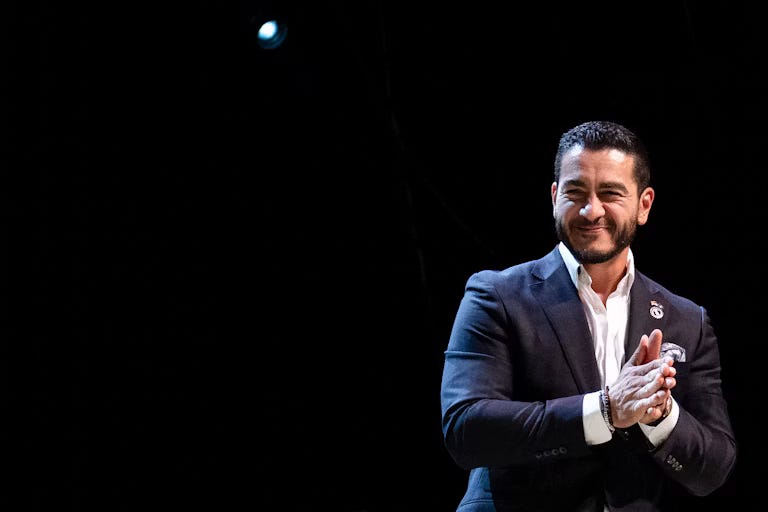
I read a great piece in The Guardian by Nesrine Malik regarding the wake-up call for the Democratic establishment resulting from the victory of Dr Abdul El-Sayed in Michigan, in which she noted:
The symbolism of the win is heavy, that of a politics snapping the chains of corporate power and special interest groups whose agendas run counter to voters’. It suggests two things. One, an electorate waking up to the fact that its democracy is captured. Two, features in the past that would have been disqualifying – lack of experience, lack of establishment endorsement – now render a candidate a “clean skin”. Someone untainted by the sordid game that keeps in play expensive healthcare, cruelty to immigrants and the hoovering of tax dollars out of the country.
Even in this moment, his own Party, after his victory, is attempting to assure its corporate donors that he’s just a freak radical blip on the broader political landscape. It’s exactly the same message as when Zorhan Mamdani was elected New York Mayor. There is no question that Democratic leadership is rattled, as it finds itself at odds with an American public sick of the same old same old politics that has infected America over decades.
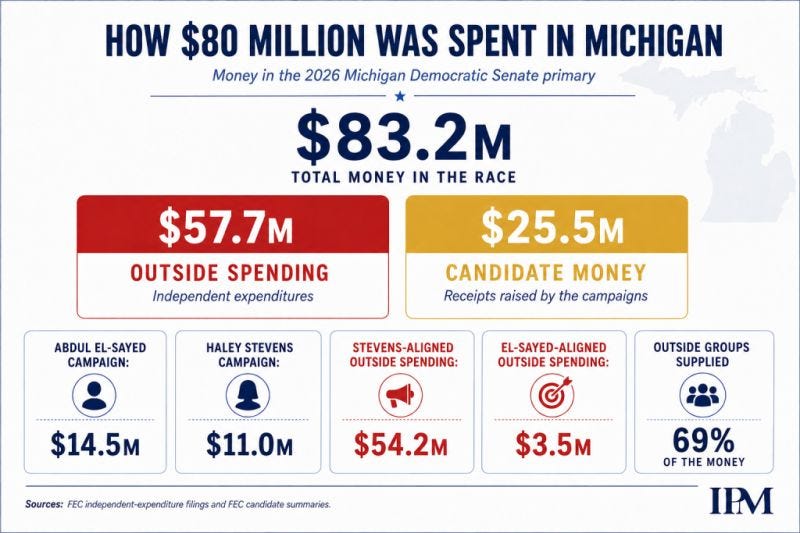
The reality is that the Dem establishment and its corporate backers spent $30 million to defeat Sayed. More disturbing, AIPAC, which remains an unregistered foreign agent under the Foreign Agents Registration Act (FARA), representing Israeli interests, added a further $30 million to defeat him. Can you imagine if a Muslim government had implanted a lobby group in Washington?
In total, those who did not want a Muslim in the Senate spent $60 million against him. It represented a 9:1 spend against Dr Abdul El-Sayed, making it the most expensive Democratic Primary campaign in history, and still he emerged victorious. Democrats can try to dismiss it as a one-off aberration, while Republicans play the Islamophobia card. What we should not lose sight of is that, in a democracy, the people, not the money, still have the final say. What needs to be foremost in people’s minds as they exercise their constitutional right to vote in November is that Trump will be working overtime to deny anyone who does not support him that right.

The ‘red scare’ politics seems to me to be tragically coming from both sides of the aisle, and that is deeply disappointing. What we are seeing is both the Democratic establishment and the now far-right Republicans coalescing under the corporate America banner to demonise ‘Democratic Socialists’. Unfortunately, this is what happens when corporations and special interests own politics and politicians. Democratic leadership can opine all day long that they are the party of the silenced, the vulnerable, and hard-working Americans, but the last half century has seen the antithesis of this, as the interests of corporate America have slowly suffocated the interests of the many to serve the interests of the few.
People can say, what does a Brit know about US politics and the American way of life? It’s a question often asked. Aside from the fact that I have spent a lot of my time in the US, both for business and pleasure over the decades, I have a comprehensive knowledge of both US law and the politics that drive America. I would hazard a guess that I have a better understanding than many Americans do. What I do bring to the party is the added advantage of looking from the outside in without any political baggage hindering my thinking. Be in no doubt, if the Republicans were advocating for my sociopolitical beliefs, I would be advocating for them.
This isn’t about political parties for me; it’s about a belief, a framework that has been in my DNA all my life. People can call me a liberal bleeding heart; I really don’t care. What I do care about, however, is the imperative of fairness, compassion and moral decency. If I were an American, I would be a raging progressive wanting to burn down the system and start again, but 66 years on this earth has taught me that in politics, pragmatism has to be at the heart of political discourse. I know I can be brutally blunt, but the truth is sometimes brutal, uncomfortable, and difficult to accept. I get that, so please don’t misinterpret my at times brutal honesty as anything but love. I firmly believe America can be great again if it can break free from the tyranny that has been imposed upon it.
I’m not here for clicks or fame and fortune; I’m here because I care, and if together we can make America care again, we can rebuild what Trump and his acolytes have burned to the ground. It takes a good friend to say the tough things out loud. I have found a home here for my thoughts, and I go to bed each day knowing I took my responsibilities to speak truth to power on both sides of the aisle seriously, without fear or favour. My loyalty lies with those who refuse to be subjugated, extorted and abused. Look, this is not rocket science, and to believe everything is ‘complicated’ is frankly absurd. Values matter, just as the truth does. Moral decency and fairness are NOT the enemy; they are the superpower of a just society.

My assertion is very simple: ‘Let Democrats be Democrats’, not ‘Republican lite’. This whole ‘Democratic Socialism’ thing has become challenging, not because the foundational premise is flawed, but because it makes the label an easy target in a social media-centric world. A world where facts are no longer relevant. Where the truth has become so distorted as to poison the minds of millions of Americans who seem to be cheering themselves on into economic and propaganda slavery.
People have abandoned politics because it’s delivered nothing for the middle and the bottom, while those at the top of the food chain gorge themselves on the wealth stolen from the many. Who in their right mind would accept this as the status quo? It seems the answer is Democratic leadership, because once they secured their seat on the gravy train, the most they’re prepared to do is engage in performative politics that tinkers at the edges of a system that is no longer fit for purpose. They have merely become paid guardians of the interests of those who bought their loyalty as the bottom 90% nurse their declining prosperity.
The progressive tiger that has been locked in the Democratic basement for too long has escaped, and the Democrats can’t put it back in its cage. The sooner they understand that there is no putting it back, the better they will come to learn it now has a taste for what could be achieved. All you’re going to hear from the right is a drumbeat that the communists are coming. The Democratic establishment would be well advised not to reiterate that sentiment by declaring those non-compliant with false corporate democracy ‘rogue’. To call ‘people first’ Democrats ‘rogue’ is an indictment of their inability to read the sentiment of the American people. Much as they were deaf to the ‘working class’ in the 2024 campaign, who were screaming that they were struggling to put food on the table.
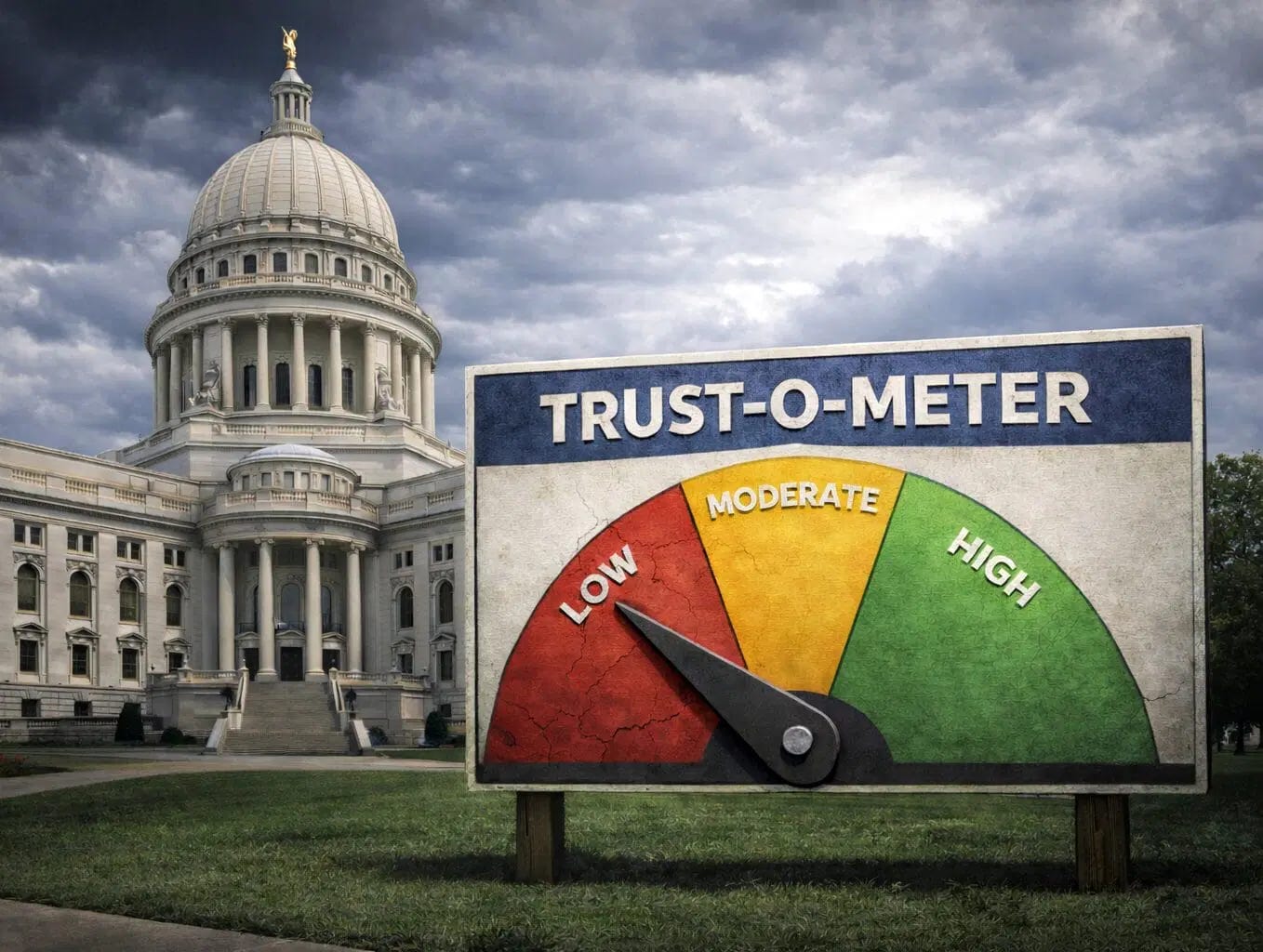
Nobody trusts politicians because they persistently fail to do what they promise. Mandani has opened a window onto what can be done if you do what you say, not say what you can’t do. The genie is out of the bottle, and Americans are waking up to the possibility that things can change and politicians can deliver if they are bold and ambitious enough to not cave when the going gets tough. Unfortunately, in the world we live in, labels matter; vulnerabilities are born of them. This is why I have long advocated for ‘people first’ Democrats; it is a label that does not lend itself to opposition weaponisation in a world where perception is everything.
Take the term ‘radical’ when partnered with ‘left’. In America, for political purposes, the Berlin Wall never fell, and the Cold War with the communists is just a heartbeat away. That, my friends, is indoctrination at its best- anything left of Mussolini is a communist in the Republican social Darwinist model. Only in America is it radical to provide healthcare as a human right, or to expect a living wage and affordable childcare. Excuse the French, but wake the fuck up. In a civilised modern democracy, what are regarded in America as ‘luxuries’ should be the societal benchmarks.
Take a deep breath and say it with me: ‘AMERICA IS BROKEN’. Only when you accept this to be the truth can you even begin to fix it. The Republican Party is intent on snuffing out ‘people first’ politics before it takes its first breath, and the real tragedy is that corporate Democrats are complicit in this political joint enterprise endeavour.
The critical mass of progressive candidates is not yet mature enough to mount and win a revolution, even inside the Democratic Party, but that’s fine. Just as the Civil Rights Movement did not obtain voting rights (which, incidentally, have now been gutted by this regime) overnight. Hard-fought change takes time, but above all requires the intelligence to pick your fights and campaign smart. I remain confident that a true progressive agenda WILL eventually emerge and be delivered to America, and that the American people WILL embrace it for the transformative change it can deliver. This victory can only be delivered from within, and that’s why Americans need to place their faith in these ‘people first’ pioneers so that much-needed change can be delivered.
For those who want to support my work but can’t commit to a paid subscription, you can now make a one-off donation by clicking on the image below. By donating, you help to keep this independent reporting free for all.

Excellent post.
The four elements of successful nonviolent resistance
Professor Erica Chenoweth's research identifies four key elements that significantly increase the likelihood of a nonviolent protest movement succeeding. These elements, developed with Maria Stephan, are based on an analysis of civil resistance campaigns from 1900 to 2006.
The four elements of successful nonviolent resistance
1. Mass participation and momentum: Campaigns with large-scale, diverse, and sustained participation are much more likely to succeed. Broad participation, sometimes cited as a 3.5% threshold of the population, provides legitimacy and leverage. This large and diverse base imposes significant costs on the opponent, whether economic, social, or reputational.
2. Strategic innovation and tactical variety: Successful movements go beyond single events like mass protests. They employ a wide array of tactics, including strikes, boycotts, and other forms of non-cooperation, to maintain pressure and adapt to repression. Creativity helps to inject humor and morale into resistance, which can weaken the opponent's resolve.
3. Loyalty shifts: A key component of success is inducing defections or a withdrawal of support from the opponent's "pillars of support"—the institutions and groups a regime relies on to maintain power. These pillars include security forces, business elites, state media, and civil society organizations.
4. Organizational discipline: Movements must stay organized and nonviolent, especially when facing state repression. When regimes react to protests with violence, disciplined nonviolent movements can use the "backfire effect" to turn that repression against the regime, winning broader public sympathy and support.
Later research and updates
Chenoweth's more recent work has provided nuance and updates to the original findings:
• The 3.5% rule is a guideline, not a guarantee. The "3.5% rule"—the finding that no government has withstood a challenge of at least 3.5% of its population actively mobilized—is a descriptive observation, not an absolute law. Some movements have failed despite reaching this number, and many have succeeded with smaller numbers.
• The importance of timing and context. For instance, while large numbers matter, momentum (the velocity of events combined with mass participation) can be a more important predictor of success.
• The rise of "smart repression." Authoritarian regimes have adapted to the digital age, using the internet and social media to their advantage. This requires movements to think beyond online organizing and build resilient coalitions.
• The decline in success rates. Recent data suggests that success rates for mass movements, both nonviolent and violent, have declined since 2010. This signals the need for movements to update their strategies, particularly by building stronger, more resilient coalitions.
Please: Resist. Stop cooperating. Stop spending. Stop the fascist takeover.
Thank you for restacking, and sharing, to help Spread the Word!