


Before we begin today, I want to wish my American friends all the best from the land of the mad king, whom you rightly showed the door in 1776. I am heartbroken that you seem to have replaced one mad king with another. Who would have thought it? While I know Trump has hijacked America’s birthday in a cynical and sickening attempt to make what should be a day of celebration into a self-congratulatory Nuremberg-style rally, I hope you get to celebrate this landmark day with those you love and hold dear. You will be in my thoughts this weekend, and I will raise a virtual glass with you to celebrate in the knowledge that together we WILL prevail.
This is a long piece that I was going to split into two parts, but given the complexity of the subject, I have made it one piece and marked a breakpoint for those who might want to read it over two days, since I won’t be posting tomorrow, as I’m sure people have better things to do than read my ramblings.
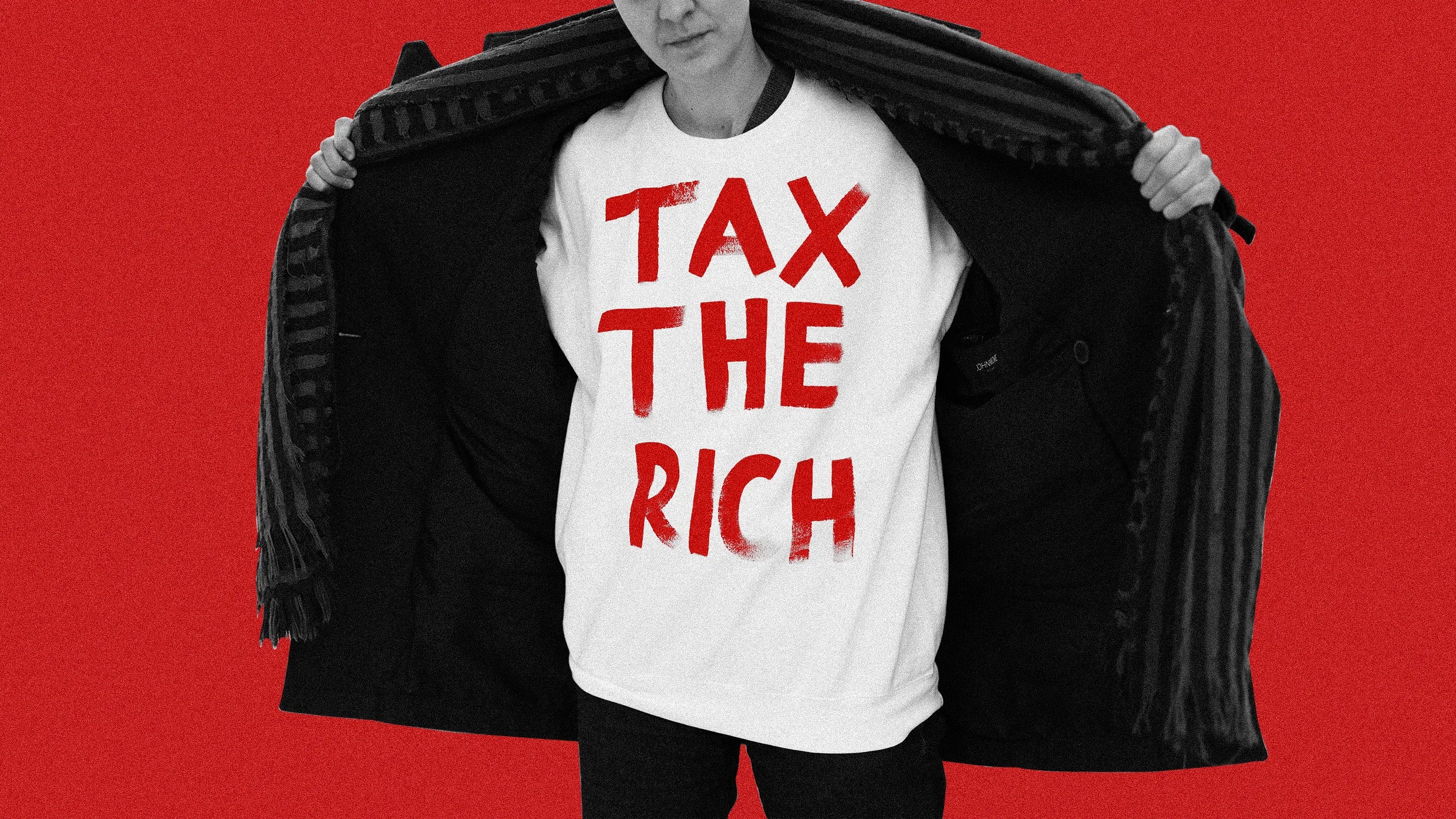
The key to understanding the process of rebalancing a tax system that has allowed those at the top of the food chain to hollow out the middle class and extort those at the bottom is recognising the different worlds the average American worker inhabits when it comes to paying taxes. Life is simple if you go out to work and get paid a wage in return for your labour. You never see the tax; it is deducted from your wages before you are given the balance. It’s simple, efficient, and you don’t have to worry about the tax. It’s important to know who pays what in the context of this complex challenge.
If you are in the asset class, paying taxes is a whole different ball game because you are not subject to salary-based pay-as-you-earn, and tax becomes a more ‘creative’ process. The object of the exercise is to invest your wealth in assets (stocks, real estate, or maybe shares in a business or two). Once you invest your money in an asset, there is no tax liability until you sell it. You can, for example, buy a series of properties as investments, and you are not liable for capital gains tax until they are sold. Of course, you are still liable for property taxes and any income arising from renting them, etc during the period of ownership.
The same rules apply to stocks and shares. The effect of this is that you hold what is hopefully an appreciating asset, which, in terms of property, is traditionally a safe long-term investment. History also tells us that, aside from inevitable occasional market corrections, stocks can also provide a reliable source of passive income, depending on your portfolio's risk profile. Again, there is no tax liability until the stocks are sold. You will often see high-net-worth individuals forgo a salary and instead take stock options. This is all about shifting from salaried income to investment income. The object of the game is to take a salary that just stays as low as the rules allow for income declaration, then convert everything above that into assets.
To understand why the strategy is ‘tax efficient’, salaried income is subject to the highest tax rates, which can reach 37%. In contrast, the top rate of Capital gains tax is just 20%. In addition, you have options to offset tax against ‘expenses’. This offers myriad ways to reduce the final tax bill.
It would be safe to say that once you have joined the asset class, there is no shortage of financial advisors to minimise your tax liability. When it comes to stocks, we move into the territory of "Buy, borrow, die". If you want to buy an asset, which might even be more stocks, you don’t cash in your original stocks to make the purchase; that would trigger capital gains tax. What you do is you borrow money from the bank using your original stocks as collateral, because loans are not taxable income. You can even claim the interest on your loan as an expense to reduce your tax liability. As for ‘buy, borrow, die, the DC Fiscal Policy Institute describes the process perfectly in a short summary article by Tazra Mitchell, who notes:
The US and DC tax systems include many advantages for wealth, allowing it to concentrate in the hands of a few households. Wealthy households, for example, can use the three-step “buy, borrow, die” strategy to get massive capital gains tax advantages. This strategy protects the inheritance of wealth, especially extreme wealth, allowing the very wealthiest families to hold, live off of, and transfer that wealth without ever paying taxes on it—and it’s all legal.
The key takeaway is that shifting from salaried income to investment income is like being given the fiscal equivalent of a Willy Wonka golden ticket for legal tax avoidance. In my last piece, I spoke about tax avoidance as a carefully choreographed dance. Some would prefer to call it a game of cat and mouse. The tax gap, as it is called, is the difference between tax owed and tax actually collected. As you would expect, these are two very different things.
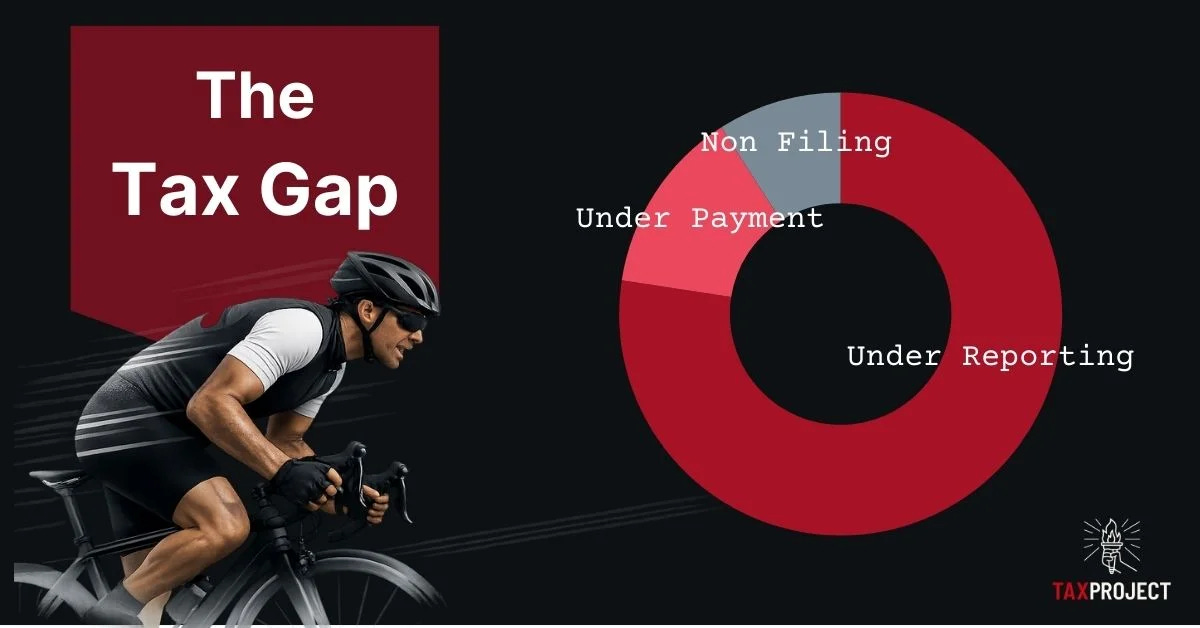
The actual gap is a combination of tax evasion, which is illegal, and tax avoidance, which is legal. As you can imagine, the tax gap is a political football and is often used to say, “Look what we could do with the money that the rich are cheating us out of " What I am anxious not to do here is to suggest that there is an easy fix, because there is no magic bullet when it comes to making those in a position to evade their tax obligations comply. Human nature dictates that nobody likes paying taxes, and I can guarantee that if similar tax avoidance options were available to salaried Americans, they would do exactly what the rich do to minimise their tax liability, so let’s not get all holier-than-thou.
I would highly recommend you take a look at this article from the Tax Project Team from February of this year entitled :
The Tax Gap: Headline vs Reality
They note:
The Tax Gap is often discussed as if it were a single, objectively identified pool of “missing money.” It is not. The Tax Gap is an estimate, based on direct and estimated assessments of missing revenue.
but go on to note:
It is a useful tool, but it is not equivalent to a ledger of collectible receivables. [1][4] While it is entirely likely that some of the non directly observed amount is in fact a true liability owed by tax payers, how much of the figure is up for debate.
It’s important to understand the following two terms:
Gross Tax Gap: the amount of tax liability that is not paid voluntarily and on time.
Net Tax Gap: the portion of the Gross Tax Gap that the IRS projects will remain unpaid after accounting for what is eventually paid through late payments and enforcement.
The IRS estimates the former at $696 billion and the latter at $606 billion, with the Enforced and Other Late payments delta at $90 billion. I highly recommend reading the full piece for a more detailed understanding of the levels of avoidance. I have included this summary just as a starting point for explaining what is, at a bare minimum, half a trillion dollars of revenue lost to the US Treasury.
While I have no evidence to back up my thoughts on this, I have a gut feeling that if we bring cryptocurrency into the evasion equation, we are dealing with much more revenue lost than what the IRS has assessed as uncollected. This brings us back to whether the rich are paying their fair share, and I am more than comfortable asserting that they are NOT.
This is a good natural point to take a break
What I would really recommend to those of you interested in this critical economic choke point is to listen to former Treasury Secretary Larry Summers, who has written and collaborated on numerous papers on Tax evasion and its economic impact. You can fast-forward to 2 min 11 secs to skip the intros.
If you would like to read the opinion piece written for the New York Times in June 2021. The authors were U.S. Treasury secretaries. Mr. Geithner and Mr. Lew served under President Barack Obama, Mr. Paulson under President George W. Bush, and Mr. Rubin and Mr. Summers under President Bill Clinton. You can read it here without a paywall
If you want to read the ProPublica piece entitled The Secret IRS Files, by Jesse Eisinger, Jeff Ernsthausen and Paul Kiel, from June 8th 2021, you can read that here
Having established that the tax gap is a fundamental part of the problem, the real challenge is how to level up the tax code to better reflect the aim of creating a fairer, more equitable society which provides opportunity for all and puts the American Dream back on the table regardless of wealth, ethnicity, creed, or sexuality. We are now in the realm of political ideology, and that’s where the real fun begins. Those at the top, with the assistance of this regime, believe that any sense of equality is ‘woke’ and that anything outside social Darwinism is un-American and flies in the face of meritocracy.
What they fail to understand is that there is no merit in exploiting those not born into wealth. In their dog-eat-dog world, the vulnerable and those at the bottom of the food chain are a drag on economic ambition and growth. They are unacceptable greed inhibitors, and that makes them expendable. What they fail to recognise is that were it not for the working class, they would not be breathing the rarefied air of the ‘have yachts’. The US is not drowning in almost $40 trillion of debt because of the poor and the vulnerable or because of immigrants; it’s as a result of what, at best, is corporate welfare and, at worst, state-sponsored embezzlement. Were it not for immigrants, I suspect the level of debt would be considerably higher.
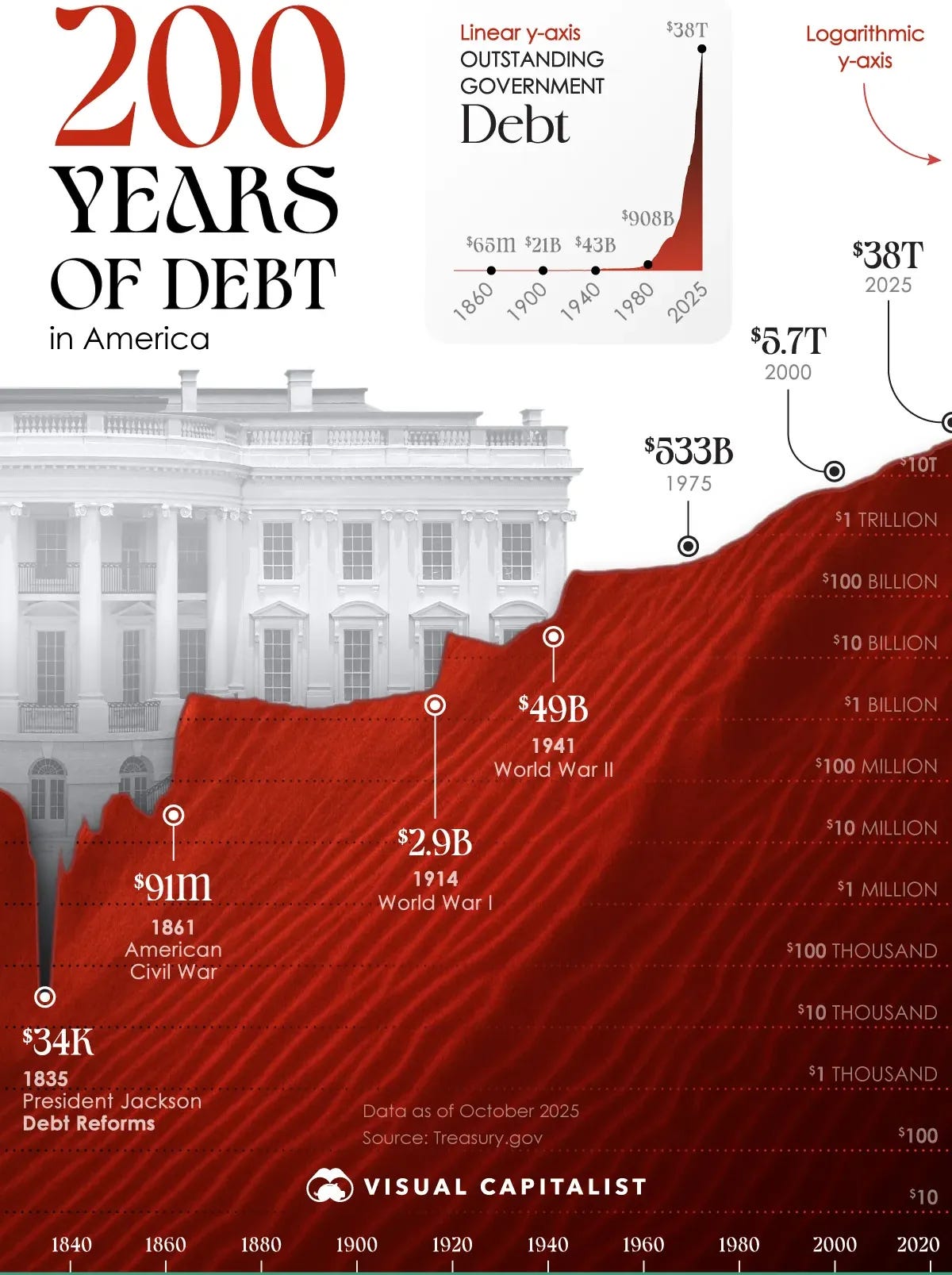
This regime can live in denial all they like; the simple fact of the matter is that the annual interest payments on the debt are twice the amount of the tax they evade each year. The regime can pretend all day long that it could survive a severe market correction at the level of the 2000 dot-com bubble, but the reality is it would crush the US economy, especially given that 50% of current consumer spending is in the hands of the top 10% in an economy in which 70% of its wealth is consumer spending. The asset class would be decimated; the only ones left standing would be the top 1% who have insulated themselves against such a hit. That would leave them picking up bargains from the resulting carnage and, yes, you guessed it, increase their wealth even further, as they did following COVID.
The regime is living on the edge, where a major market correction would undoubtedly be catastrophic. The biggest risk of that happening would be the AI bubble bursting. The regime has long decided that the AI companies are now, as the banks were in 2008, too big to fail. The US has quite literally bet the house on winning a race with no guarantee of success. The level of unhinged desperation involved in this technology arms race with China should terrify every American. We have reached a stage where NOTHING, not man, nor beast, nor natural resource, shall be an impediment to the biggest economic gamble in American history.
The regime is prepared to do whatever it takes to win, and if that means contaminating drinking water and destroying the environment, that is, in their eyes, an acceptable price to pay. You will recall I said the bottom 90% are now considered acceptable collateral damage in a technology war. I believe the US can’t win against China, and they are prepared to sacrifice the future of 300 million Americans at the altar of the asset class. In the next part of this series, we’ll dig into how rebalancing the tax code could be implemented.
I know my thoughts on this subject are turning into a long series of posts, but I believe, despite my ever-decreasing number of paid subscribers, it represents the most important work I have done since I began writing here. I enjoyed a brief period of breaking even, which covered the ever-increasing costs of research and access to expensive stats datasets, but that’s now a thing of the past. Please don’t misunderstand: I’ll do whatever it takes to ensure nobody ever has to pay for the truth here; it might just mean I have to take on other consulting work to cover the shortfall costs, because I can’t cover them from my pension if the decline continues. It just might mean my writing less, but I want to assure you that I remain absolutely committed to this cause, the existential fight, which we are all part of.
I am passionate about this mission, and NOTHING will get in the way of what I do. The Truth Matters community has become part of who I am, and I’m sharing this information because the truth does matter. I can’t switch to writing about what I think people want to read rather than what they should read. It’s just not who I am, and I have to be true to that regardless of the cost. As they always say, where there’s a will, there’s a way.
This is not a plea for sympathy, just a reflection of where we are; I am more than aware that in these difficult times, there are thousands of fantastic writers on this platform who deserve support, and choices have to be made, especially when many are struggling to put food on the table. I completely understand that subscriptions are and should be the first casualties in times of fiscal distress. I just wanted to be transparent about moving forward, because I can’t do this at the level it demands without access to quality research, which now costs almost 20% more than it did when I started this work.
When I spoke of these challenges recently, a number of people suggested that I include an equivalent of a ‘Buy me a coffee link’ at the bottom of each piece so that it would enable readers to give one-off small donations for those who would like to support what I do but can’t commit to an ongoing paid subscription. Below is my version of ‘Buy Me a Coffee’, which provides a secure link to the same payment provider used for subscriptions: if you click it, you can now make one-off donations. There is no obligation, and my content will always remain FREE to all.
From this point forward, there will be no appeals for paid support; this linked image will simply appear at the foot of each post. Normal subscription options will remain, as clearly these provide a degree of security when planning ahead. This will be just an additional option. Thank you for listening to me clumsily waffling on.

Cheers Martin ✌️
I believe that once we defeat this regime, we need to recoup all of the money that they stole, all of the dark money, money investments, and taxes they haven’t paid and use it towards a big redistribution of wealth to America starting from the poorest up! Enough is enough…
Thanks for writing this substack!
Sending love ❤️ strength 💪🏻 and positivity to you and all! 🌹