



The sun rose in the UK today, and as with every sunrise, it brings with it opportunity. However, for me, ever the optimist, it brings a chance to deliver hope to a nation that was forced to endure 14 years of conservative rule, which tore out the heart of the nation I call home. I hope my largely American audience will indulge me just for today, because I think there are huge lessons to be learned from our political evolution in the alleged ‘land of the free’, where, sadly, nothing is free and the bottom 80% are self-deporting into economic slavery, while the rich get richer. Meanwhile, a convicted criminal and adjudicated rapist draws up his plans to hold onto power and avoid accountability in November.
I want to begin by hopefully explaining why our two countries are so important in what will ultimately be the reshaping of Western democracy. Our joint future is more closely linked than you might think, as we too face the onslaught of far-right populism that spreads like a cancer not just across Europe but in places as far away as Australia and New Zealand. Ultranationalism has become the political flavour of the day, as malign actors are backed by the very technology giants that can’t survive in an isolationist world.

In a project examining the Global Far-Right Threat and Response Mapping by a team of experts made up of Dr Jessica White, Claudia Wallner and Dr Simon Copeland working for the Royal United Services Institute (RUSI), an organisation which has for two centuries engaged in forward thinking and careful reflection on defence and security matters, they note:
‘ … much of the research and analysis on far-right extremism in recent years has focused on Western Europe, North America and Australia/New Zealand, while escalating far-right activities in other parts of the world, including South Africa, Turkey, the Western Balkans, India, Brazil, Myanmar, Japan, and Israel, have been largely ignored.’
The aim of their important project is to:
‘[Review] the global threat landscape and the different ways in which far-right violent extremism is understood in different geographical contexts. Focusing on three locational case studies, an assessment is made of the types of far-right extremism that are present in South Africa, Turkey, and the Western Balkans region (e.g., ethnic, religious, political, etc.), and the groups or individuals targeted.’
If you want to better understand the geopolitical implications of this far-right fever threatening our way of life, I would highly recommend reading the Excellent work of RUSI and the team working on this project. It’s all too easy to look at the rise of the right in one nation, especially when it’s the largest economy in the world and has, for decades, allegedly upheld the rule of law and stood as a shining beacon for democracy.
In an interconnected world, the danger of the largest economy coming under the spell of a malignant narcissist criminal, represents an existential threat to the welfare of billions of people globally. The ability to mitigate that threat now largely rests with 90 million Americans who chose not to vote in 2024 because of the trust deficit created by politicians of both stripes over the last half-century.
It’s astounding to me that once again, we are approaching elections at a time when the fiscal security of the 300 million people who represent the bottom 90% in America is under threat by a government serving only the top 10%. Political pundits on traditional news media considered centre-left, are saying ‘it looks likely to be a close election’. It makes absolutely no sense to me that the answer to tyranny in the 21st century is to choose for it to continue.
You know you have a fundamental political rupture when the only opposition party’s campaign is built around the hope that people will reject a fascist without providing any single meaningful policy proposition to voters in order to advocate for change. The only change they are advocating for is a shift from corporate Republicans to corporate Democrats. Ambition, vision and hope left the building long ago, and all that’s left, is a hollowed-out husk of what could have been, and Democrats wonder why they face another ‘close race’.

There’s unquestionably a problem when the right and the Democratic establishment come together to stamp out the voices of those who want no part of the same old same old. People who believe that the system should not serve the many at the expense of the few. Who believe that in the alleged richest country in the world, it’s possible to deliver healthcare as a right, a living wage, paid parental leave, affordable childcare and an opportunity for social mobility. These should not be luxuries; they should be the benchmarks for any responsible society.
If you can afford a million dollars to shoot down a $500 drone, then you can afford to ensure that no child goes to bed hungry and that no American’s life is changed forever by a medical emergency that delivers bankruptcy and perpetual fear instead of care. I have no doubt that this regime WILL fall; that’s not my concern. My concern comes from the missed opportunity for transformational change that will inevitably follow if the Democratic establishment gets its way.
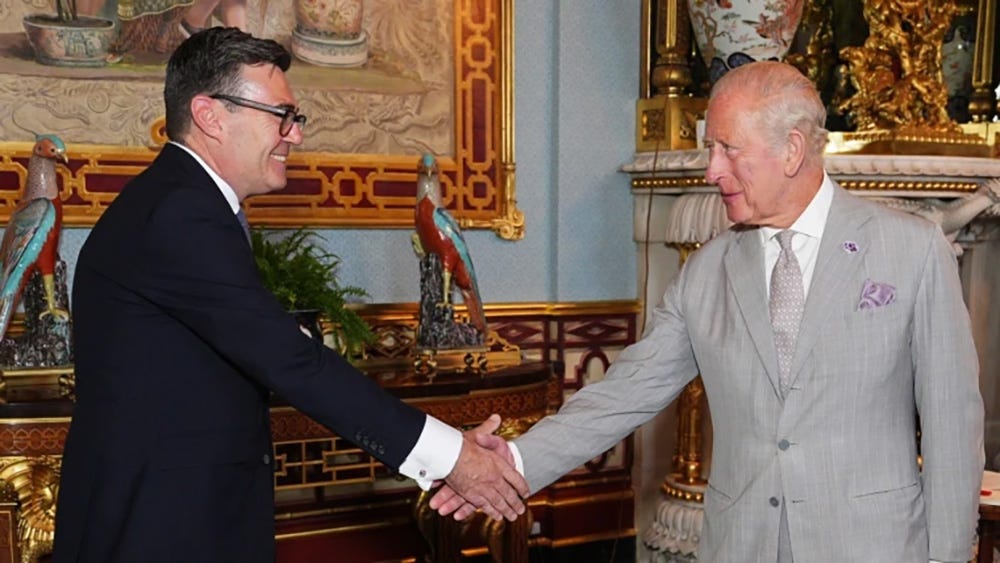
This brings us nicely back to the transfer of power that took place here in the UK today. I hope you’ll allow me to share with you why I think this is important on both sides of the Atlantic. While in the US, the UK might be regarded as a poor relative, it remains the 5th-largest economy in the world, this, DESPITE the widely cited £100 billion annual loss delivered by a razor-thin vote to leave the EU a decade ago. The cumulative cost of that exit now exceeds £1 trillion; that’s $1.34 trillion. We run a debt-to-GDP ratio of 93.8% according to figures published by the Office for Budget Responsibility in May 2026. This compares to a US debt-to-GDP ratio of nearly 123%, a level of credit only possible because the US dollar is the world’s reserve currency and can be printed at will.
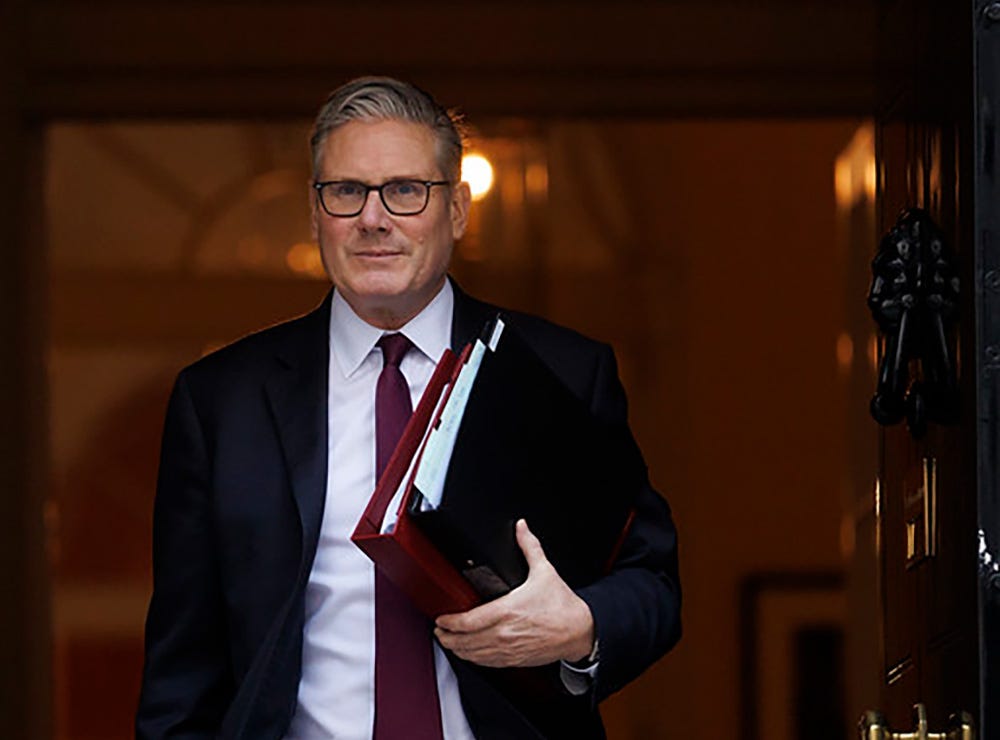
I can tell you from lived experience of both the financial crash of 2008 and the self-inflicted fiscal arterial bleed that was Brexit, the British people have been subjected to a relentless program of right-wing-led deregulation. A program presided over by 14 years of conservative rule dominated by a government in which just two of the five conservative Prime Ministers were elected by the British people. So you’ll excuse me if I dismiss current calls for a General Election resulting from the Resignation of Keir Starmer.
Labour won a landslide victory in 2024 because the British people had endured a government that served at the same altar of corporate special interests as the US. We were forced to live through a decade of austerity, during which the everyday people of the country I am proud to call home, paid the price for the reckless behaviour of UK banks that were complicit in Wall Street’s predatory lending scam. A scam perpetrated in concert with insurance companies that left tens of millions of people just hours away from losing their life savings as a result of a banking crisis with its roots in the US. A crisis, I’m sorry to say, in which the former Labour government was complicit, given its mirroring of US light-touch regulation that led to so much pain for everyday Americans and Britons alike.
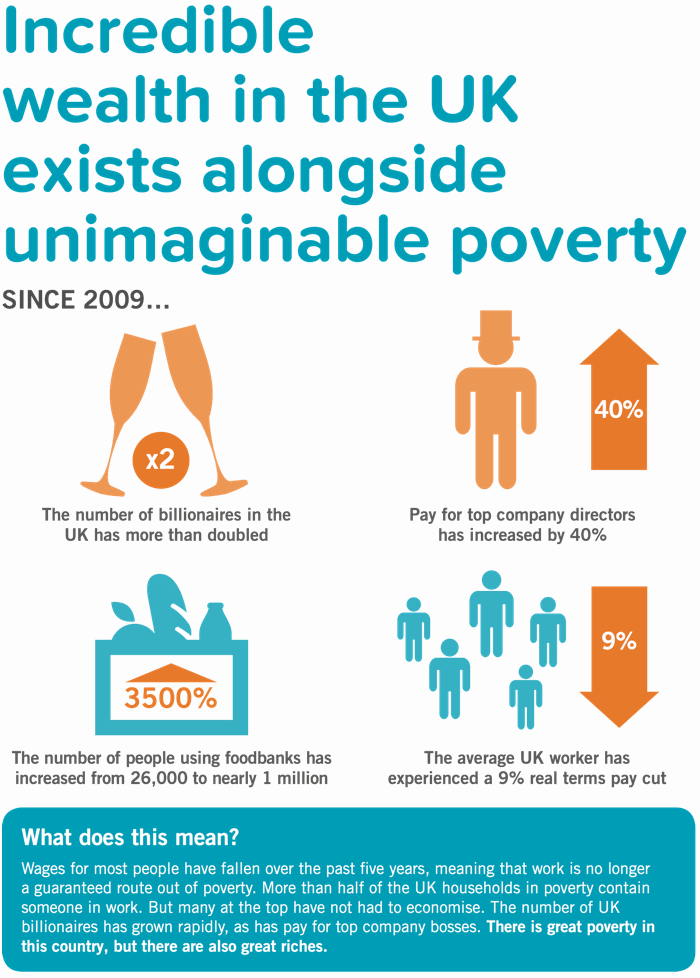
We now live in a world in which those in the middle and the bottom, along with the vulnerable, persistently pick up the tab for the failure of those who should know better. The rich have now insulated themselves to the point where a fiscal shock, far from damaging the wealth of those in the top 1%, sees them expand the wealth gap even further, as demonstrated during the COVID crisis.
For the benefit of my American friends, in a General Election, the British people vote for constituency candidates from the competing political parties. The leader of the party that wins the most seats, is asked by the monarch to form a government. If that leader subsequently resigns, then he or she is replaced by a new leader elected by their parliamentary peers, and the elected government continues to function as normal. It’s not dissimilar to the US in terms of continuity. When Nixon resigned, it did not trigger a General Election, and so it is here in the UK.
I am often heard banging the drum for ‘people first’ politics, which is a distinct departure from what has become ‘special interest’ politics on both sides of the Atlantic. I believe that Democrats in the US can, if they are prepared to put their arrogance aside, learn from the change of leadership now taking place within the Labour Party in the UK. As someone who is passionate about ‘people first’ politics and social justice, I’m not going to lie: a tear rolled down my cheek today when Andy Burnham dispensed with the lectern, stared down the lens of the camera with no notes and spoke from the heart about values we both share for our country. Of course, talk is cheap, and the proof of the pudding is always in the eating. I certainly don’t doubt the scale of the challenges ahead, not least of which will be navigating a relationship with the petulant child in the White House.
It would be remiss of me not to pay tribute to Keir Starmer, who is a good and honourable man who, in decades gone by, would have fared much better in the job of Prime Minister before these times of swipe left or right politics. As a highly successful lawyer, he was a man of process and detail, but sadly not a natural politician. Having said that, his skills rescued the Labour Party from its catastrophic defeat in the 2019 election, which saw Boris ‘the bafoon’ Johnson come to power and treat the job of Prime Minister as an opportunity to enrich himself and his pals. Sound familiar? Starmer deserves the credit for turning Labour’s fortunes around. It is this success that I hope will enable Andy Burnham to deliver what I pray will be transformative change.
I have been around Labour politics all my life and have had a challenging relationship with a party that could have changed the world in 1997, when Tony Blair was elected, only to choose self-enrichment over the welfare of the British people. No more is his character better defined than by his current relationship with Trump and his international grift organisation ‘The Bored of Peace’, and yes, I did spell that correctly.
I can tell you that the likes of AOC, Zohran Mamdani, Jon Ossoff, Jamie Raskin and Pete Buttigieg would feel very much at home in an Andy Burnham Cabinet, and that’s why I believe that Democrats should take note of what happens as a result of this new era for British politics. Burnham knows that he must not let perfection be the enemy of the good. He faces some significant headwinds both domestically and on the foreign policy front, not least of which is how to deal with the petulant child in the Oval Office. Then there’s the war in Iran, Lebanon, and the pretend ceasefire in Gaza. That’s before he’s forced to face the right-wing media that will be hellbent on destroying his premiership starting TODAY.
This will be as much a fight against the enemy within the British political establishment as it will be a fight to protect the citizens of the UK from the threat of Russia. That’s before he faces the threat from malign actors within the US administration and right-wing media supporting the British far right. For me, this moment is a critical inflexion point in UK politics that has an opportunity to redefine the political conversation and address the catastrophic wealth inequality that is eating hard-working British workers alive, just as is occurring in the US.
What people might not know is that Andy was part of the Blair and Gordon Brown government and served as Chief Secretary to the Treasury, so he is more than familiar with how government works. On the good news front, Andy will, I am sure, be looking forward to working with Mark Carney on the international stage.
In 2017, he decided to stand down from frontline politics after a failed bid to become Labour Leader, and instead stood for Mayor of Manchester. It was in this role that he became popular as a ‘people first’ mayor who took a new, highly effective approach to leadership. It’s this leadership role in a large northern metropolitan city that informs his vision for the Prime Minister's role.
His enthusiasm for devolved power, which, if executed effectively, could prove to be a game-changer, is vitally important. He understands the need for growth and was highly effective at attracting overseas and domestic investment into Manchester. Unlike Trump's mini-me, Nigel Farage and his dodgy crypto backers, Burnham is NOT a one-trick pony. He’s a serious man for serious times. Unlike Farage’s phoney ‘man of the people’ tag, Andy Burnham is the ‘real deal.’ He understands that all politics is local, and I’m sure that that will serve him well given the challenges ahead.
I hope you won’t mind if, from time to time, I keep you up to speed on his progress. I say this because I think it could really inform Democrats on how to approach a ‘people first’ agenda, not just with words but with the real-life enactment of policies to deliver on a more equitable society.
For those who want to support my work but can’t commit to a paid subscription, you can now make a one-off donation by clicking on the image below. By donating, you help to keep this independent reporting free for all.

Thank you for this very informative piece, Martin! I, for one, think this is very helpful to know and would be keenly interested in hearing more of your thoughts and observations on the UK side. Please keep them coming.
As an Australian who lived and worked in the UK for most of my life, I’m particularly keen that Andy Burnham should follow through on devolving real power to the regions - something the Tories have opposed in every way possible, because the UK must surely have the most centralised power structure of any country with any claim to rationality. By far.
For example, by contrast to the total lack of independent regional government there, here in little Belgium we have two main regional governments PLUS 11 provinces, all of which have significant power; and that’s on top of all the local councils. And all of these have at least some power to raise their own taxes to cover services.
It always horrifies me that Westminster can simply decree what services the poor local councils have to provide, but also holds almost all their purse-strings. It’s that combination that allowed Osborne to inflict Austerity on everyone but the rich. And of course it pretty much guarantees waste and poor « efficiency » (memo: I HATE that word), feeding - I think deliberately - the sense of all-round failure blighting the country.
I do think everyone is more than ready to see significant change. So, fingers very firmly crossed…
(Andy: TAX THE RICH!!! You will be a hero!)