


Your daily reminder, which I hope you don’t mind me leading with, because it’s important:
Americans CAN stop this anytime without being arrested or punished in any way for their actions. STOP SPENDING on all but essential items and shift as much of that essential spending to local businesses. No need to stop eating out, just eat in locally run family eateries (NOT corporate chains). It’s about strategic spending decisions. It’s all about common sense, but if you need more detail, click here for my broader thinking.
There is no case to be made for saying ‘there’s nothing we can do’ It really is very simple, and I would urge you to encourage everyone you know to become part of a sustained act of strategic economic disengagement, because I guarantee just by this most simple of actions, you can unlock the gate on the road back to real American values. A sustained 3-4% drop in consumer spending will occur if Americans have the collective and sustained patriotic determination to say ‘enough is enough’.
Once again, I would ask you to leave your current perception of the world and the hellscape we inhabit at the door. For 10 minutes, we’re going to exercise our critical thinking together.
If we are to understand the Epstein Class, we need to live for a moment in a parallel world in which Greed takes priority over everything and everyone. A world where all but you are expendable. The Epstein Class is a network of individuals who have a code in which they help each other enrich themselves in an environment where the only rules that exist are those of their elite club, where tax evasion is a badge of honour, and the rule of law plays no part.
Since the days when the Reagan administration fired the starting pistol on expanding the wealth gap, generational wealth has played an increasing role in delivering the grossly distorted society we are forced to inhabit. In their world, new generations are born into their economically gated community, so the need to work hard and innovate diminishes as each generation inherits more and more wealth. They simply use their assets to exploit those living outside of their bubble.
It’s an inescapable fact that for their wealth to continue to grow, they still need at least some of the bottom 90%. However, in their power-obsessed wet dream, they believe that AI will deliver a society in which the bottom 90% have increasingly less power as technology and robotics reduce their largest overhead: people. This is how they think.

We don’t just have a two-tier justice system; we have a two-tier society with the wealthy elite and everyone else. The Epstein Class, however, breathe the truly rarified air in the penthouse on the invitation-only floor. Over the decades, the wealthy have created the illusion that social mobility was a reality. Like most things they told us, that turned out not to be true. There are always exceptions to the rule, but generally speaking, social mobility has become an urban myth. We simply watch the rich get richer while the poor get poorer, and, more importantly, children not of the chosen few, have become less educated as funding has been shifted away from those they deem unworthy.
The top 10% not only control almost all the country's wealth, but they have formed an alliance that allows the top 1% to hold and direct power through bought-and-paid-for politicians and the Supreme Court of the United States. Meanwhile, we, the people, have been the frog slowly boiling in the pot for decades. As with all criminal enterprises, the Epstein Class needs enablers and foot soldiers, and that’s where politicians come in.
They been armchair emperors for decades, with no opportunity to execute their dream until Trump came along. He was the key that unlocked the door to the next phase of societal wealth extraction, thus pointing to Curtis Yarvin’s road to dark enlightenment, a subject I have explored before. However, to provide some context on the theoretical model behind the Trump Regime, those who can endure it will learn a great deal from the interview below with Yarvin in the New York Times.
It would be folly to suggest that the Epstein project is a historical plan to impose global economic domination. Evidence points to an economic plan that became so virulent and addictive that it was always going to escape the lab.
It’s never been a secret that wealth equals power, but in this case, it’s the way that the growth of that power was relatively slow until technology came along and provided the rocket fuel to accelerate it. Looking back at the fractured societies left behind after World War II, it was a time of great opportunity for the US. It did not have to deal with reconstruction, because it never had to fight on its own soil. After entering the war as a result of the attack on Pearl Harbour, it was forced to become a manufacturing superpower through necessity to support the war effort.
You will often hear Trump and others say that, were it not for the US, we in Europe would all be speaking German today. Let’s be clear, if Japan had not attacked the US, Trump would not give a damn that we were speaking German today. In any event, had Germany won the war, America might have found itself speaking German, too. After all, they have yet to win a war on their own, ever. American isolationism is nothing new; the US wanted no part in the Second World War because it was believed at the time that it did not advance American interests.
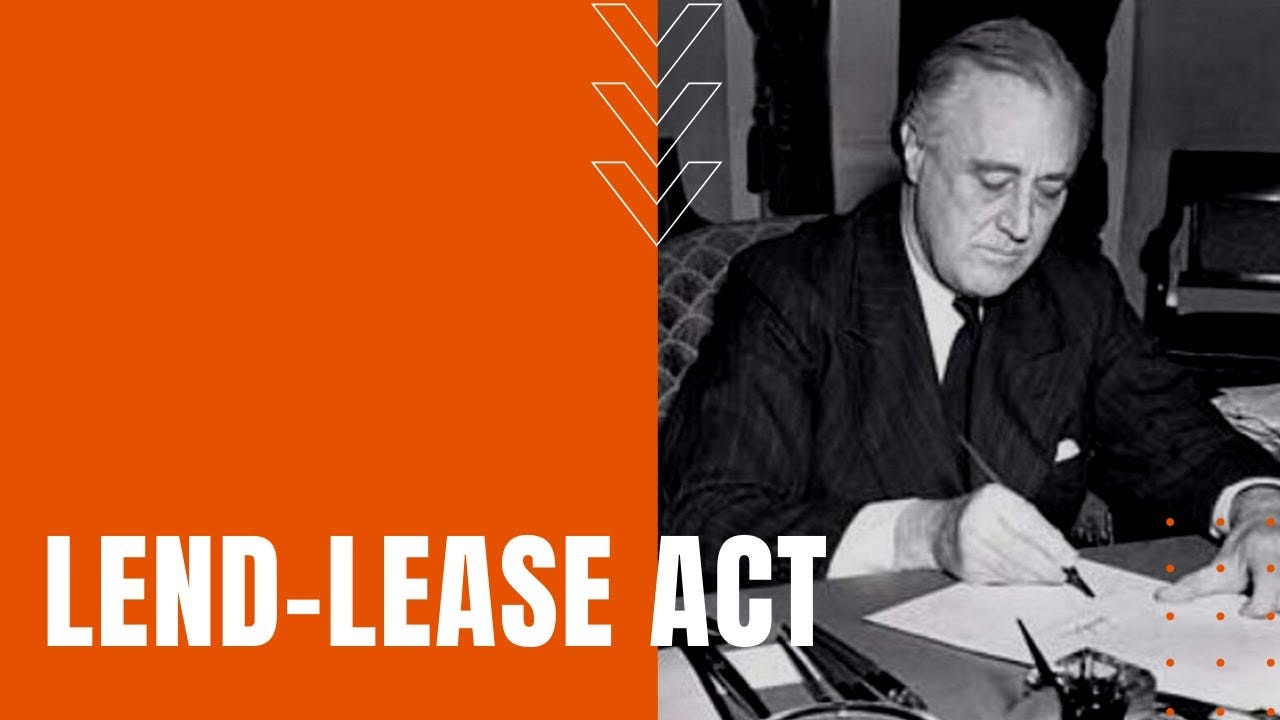
Putting all this aside, the war made the US an economic superpower at a time when the British Empire had collapsed, and Britain was broke from financing the war effort. It’s worth understanding how FDR used the war to further American interests, providing obsolete US destroyers in return for 99-year leases on UK bases in Newfoundland and the Caribbean. Support then came from the Lend-Lease Act of March 1941. As noted by the US Office of the Historian:
After many months of negotiation, the United States and Britain agreed, in Article VII of the Lend-Lease agreement they signed, that this consideration would primarily consist of joint action directed towards the creation of a liberalised international economic order in the postwar world.
The reason I wanted to include this is that the lend-lease model was used by the US as a financial instrument with 30 countries as part of an economic strategy to shape the post-war global economy, which Trump now wants to burn to the ground. The UK did not fully discharge this debt until 2006; that’s a measure of the economic power the US exerted over the alliance.
How is this relevant to Epstein, I hear you say? While not directly linked, it goes to the heart of US foreign policy and speaks to how, following the war, there has been a perpetual jostling by the US to attempt to control the global economy and establish a world order where they sat at the head of the table. This has proved to be the gateway that allowed US corporate interests to embed themselves as a central plank in the global economic world order. It’s also where we see the rise of the corporate fixers.
Before Trump, US presidents knew where to draw the line with Corporate America. Even Republican presidents would only go so far with deregulation, despite what some may think today. It is with this in mind that we see a divergence. You have to remember that, before Citizens United, on paper, corporate influence was limited; as with all prohibitions, influence had long since gone underground. Big business had established a sociopolitical fight club for the elite to gamble with the nation's wealth and prosperity. They felt they had to have this in place for periods under Democratic presidents who felt no obligation to hand out tax cuts to the rich.
I spoke in the previous part of this series about the disconnect from reality regarding Republican mismanagement of the economy. There is no evidence to support the lie that Republican administrations are more fiscally responsible. Historically, they have starved the government of revenue time and time again in the service of providing endless tax cuts to the rich.
Reagan’s Economic Recovery Tax Act of 1981 reduced the top individual tax rate from 70% to 50%. He then reduced it further to 28% in the Tax Reform Act of 1986. During that one presidency, the top tax rate was reduced by more than half. Under Reaganomics, government revenue fell by 2.9 percentage points of GDP over the first four years, amounting to around $200 billion. That’s $715 billion in today’s money. Before the defenders of the indefeasible jump in to say that between 1982 and 1987 revenue grew, it was not enough to offset the cost of the tax cuts and increased defence spending, again feeding the Military Industrial Complex, just another arm of corporate America.
The outcome was that the national debt grew from $997 billion to $2.85 trillion under Reagan, and this was AFTER he was forced to increase taxes in 1982, 1983, 1984 and 1987 to try and offset losses. This represents the antithesis of fiscal responsibility, yet Reagan is hailed as a hero by the Republican faithful. There was only one winner during the Reagan administration, the Epstein Class.
The story was repeated during the Bush-era tax cuts, which reduced tax rates across the board and lowered the top capital gains rate to 15%. Trump then jumped in with the Tax Cuts and Jobs Act in 2017, when he slashed corporate tax rates from 35% to 21%. The bottom line, without exception, is that NONE and I really do mean NONE of these tax cuts paid for themselves as promised on EVERY occasion. They simply resulted in adding to the national debt as the Epstein Class were handed free borrowed money.
The problem is, the rich can never be satisfied, no matter how much money you give them. The Epstein Class was born out of an insatiable appetite for GREED. It is this obsession that, over the years, has led to the creation of an economic underworld in which the likes of Epstein operated. Evidence suggests it was a world where the sole objective was to transfer wealth to the top. They created a ‘no rules club’ in which corruption was normalised, while taking advantage of the knowledge of organised crime as they developed state-sponsored leverage operations to hide and launder money. Epstein became the go-to guy for facilitating the theft of taxpayer money through complex tax-evasion schemes.

Rest assured, this is not a Republican thing; this is a rich man thing, and that’s why we find connections in the Epstein files across the political spectrum. Regardless of the party in power, there were representatives from the Epstein Class embedded in each administration, ensuring the interests of their private club were represented at the very heart of government. This has allowed corporate interests to control legislation to varying degrees depending on who was in power. However, regardless of which party is in government, big money is always driving the bus.
Just as an example of the level of corruption in play, I have outlined above just how much free money the wealthy elite have been given by the respective Republican administrations, but it’s never enough. It is estimated that, in addition, at least $1 trillion is lost each year to tax evasion, primarily by the wealthy. To provide some context, this is enough revenue to eradicate food insecurity and homelessness in the US and still leave change to reverse the $880 billion in healthcare cuts imposed by the so-called Big Beautiful Bill.
I’ll close this episode in the series by saying this: the Epstein Class has to date lived in the shadows of government and big business. But in 2024, they were actually installed in government. They are now running the country not from behind the curtain; they are centre stage, and Trump is the new facilitator. In the next episode, we will examine the role I believe the Epstein Class played in the 2008 financial crisis and their involvement in Trump's 2016 election win.
https://www.theguardian.com/commentisfree/2026/feb/15/defeat-trump-mass-non-cooperation
The key to defeating Trump? Mass non-cooperation | Mark Engler and Paul Engler
The following are excerpts from this article.
“The extraordinary level of grassroots solidarity and creative resistance in anti-ICE protests in Minnesota has given people a new appreciation for the power that mass non-cooperation can have in resisting the Trump administration’s drive toward authoritarianism. And it has created an awareness of why such action is clearly needed.”
Early in Trump’s second term, an array of mainstream critics expressed skepticism about the value of continued protests in the streets. They invested their faith in institutions such as Congress and the courts. But as these institutions – along with law firms, universities and the business community – have each caved in to the administration’s demands and proven themselves unwilling to catalyze an ardent defense of democracy, it has been left to the people themselves to do this essential work.
Mainstream political thinking in the US sees power as “monolithic,” resting in the hands of senators, generals, billionaires, presidents and CEOs. From that vantage point, the options for opposing a rogue administration seem desperately thin: wait for elections, file a lawsuit, hope for some unforeseen maneuver by elites. This worldview breeds despair. One prominent Democratic party consultant even advised that the best course for progressives is simply to “roll over and play dead”.
Those immersed in social movements look at the process of change in a different way than political insiders do. Instead of subscribing to the monolithic view of power, they hold a social view of power, which understands that those in positions of authority are dependent upon the cooperation and support of the governed.
Now, as then, the list of methods is best seen as an invitation to creativity, reminding organizers they have many tools in their collective toolbox – each with distinctive properties and powers. The potential of civil resistance is not just in holding large demonstrations. It is in drawing from a vast array of strikes, boycotts, noncooperation tactics and artistic protest. And it is in coming up with innovative forms of creative resistance that may never have been seen before.
Successful Social Movements
In this transcript Professor Chenoweth discusses the four elements necessary for a successful social movement. Below are excerpts from the transcript.
“The third thing that successful movements do is they innovate new tactics. This is very important because movements that tend to over-rely on a single technique like protests, like demonstrating every Friday, something that becomes very routinized, end up succumbing much more quickly first of all to protester fatigue, but the second thing is they often subject their participants to a higher risk of repression or communal violence from opponents. So movements that are capable of having the capacity to shift to methods of dispersion, like stay-at-homes or strikes or forms of economic noncooperation, tend to be much more effective because they have the capability of maneuver when the state begins to ramp up violence against them.”
Vote blue!