



I wanted to take a moment today, as I mentioned in my last post, to explain more explicitly the ambition and intention behind the [Truth Portal] and how the concept has evolved over the last few days. It’s taken a little time to reach the project's base camp because of a few important considerations. My wider social media branding is Truth Matters, and I was concerned that the primary domains weren’t available. However, after careful thought, I have settled on truthmatters.org.uk, which will be at the heart of this project moving forward. The domain isn't live yet, but it will be shortly. It also means that my Substack email will be updated shortly to reflect the change; this will be a seamless transition that will not affect subscribers.
The domain acquisition was a deliberate move, given the full scope of my vision for the project. I want trust to be central to the project, and I don’t want any ambiguity about where Truth Matters operates from. For the record, this is absolutely NOT about interference in the US political process. It is an international commitment to preserving democracy and advocating for social justice worldwide. You don’t have to be an American to advocate for the preservation of Democracy in the States, no more than you don't need to be a US citizen to advocate for social justice, voting rights, women’s rights and gay rights. That’s what it means to be a responsible member of a global society.
It’s no secret that I’ve focused on assisting social activism in the US since 2019. I’ve done this because, as a UK citizen, I have witnessed the exportation of the sickening right-wing politics that has blighted the political discourse in America and now infects my shores, not to mention that it has crept into the lives of our European neighbours too. As an inhabitant of this globally interconnected world, I feel a deep sense of responsibility to uphold the values at the core of a fair and equitable society, and that’s at the heart of this ambitious proposition.
I’ve carried this vision with me for over three years. I haven't been able to deliver it not for lack of imagination, determination or ambition, but because it has proved cost-prohibitive, particularly to stay in control of its aims and ambition. Add to that, I don’t believe the tech stack was mature enough until now to make it happen. This week has convinced me that the technology is not only available now, but truly transformational. Take it from me: I’m not easy to impress when it comes to tech hype.
The key objective of this project is to challenge your thoughts on how information can be shared and presented without terrifying you. As a coder, database designer, and visual presentation specialist, I’m in a somewhat unique position: I not only understand the technical and visual aspects of delivering a dynamic information pipeline; I also have intimate knowledge of the political space that houses its intended audience.
It’s with this in mind. I can only drive this so far on a self-funding basis. Don’t worry, this is not me with my begging bowl out. I have allocated a budget from my own pocket to get this proof of concept into a deliverable that this community can get hands-on with at no cost. It will also have a free, public-facing home where anyone can explore it. That is not to say I’m not grateful for any incoming revenue over the coming weeks in the form of a paid subscription or clicks on the Buy Me a Drink link at the foot of this piece. What I’m simply saying is I’ve allocated a budget myself, with the support of the love of my life, to take it to a working model regardless. My bank manager is, as we speak, thinking I’ve lost my mind after a $1200 spend in the last 72 hours, but I can live with that.
All this aside, the focus is on bringing my readers along on this journey of discovery and opening their minds to a new, optional way of viewing facts and the truth. It’s long been said that a lie can travel around the world before the truth can pull on its socks. This is because we are programmed to respond to propaganda while ignoring the ‘boring truth’ as it has become. That old adage of never letting a lie get in the way of a profitable narrative has never been truer than it is today.
Add to this the anxiety that comes from all the lies, the AI, and the threat it’s perceived to pose to the world. It’s easy to see how it becomes a challenge for some to embrace a technology that, despite the fears, CAN be used for the greater good. What I want to open your mind to is the ethical use of AI for the benefit of democracy. I know some will stop reading here and switch off. I understand and sympathise with that position. However, I would say: give me the opportunity to show you how it can be used to fight those weaponising it against us in service of their insatiable greed.
This entire project should be treated in the spirit of its intent. It’s a not-for-profit endeavour. A solution from the mind of a guy who believes we can, and should, do better. A gift, if you like, from me, dedicated to the preservation of democracy, social justice and all we hold dear. As I’ve said so many times, ‘You can take a horse to water, but you can’t make it drink’; never has this statement been truer than with this project. I can afford to prove to you it works; beyond that, it can’t be scaled without help. Everyone who has bought me a drink or become a paid subscriber is now a welcome stakeholder in this vision, and that’s exactly how it should be. You have supported me in my journey to be heard. The very least I can do is say thank you.
I understand that in a world where profit is king, this project may seem crazy, but I promise you it’s not. I've spent the last 48 hours mapping out how it can help ANY country around the world facing a threat to democracy. Every political system is different, from the US to European proportional representation models, etc. Judicial systems and legislative branches differ, as do campaign finance rules and their democratic models. The system architecture is designed to let a political model define how the system manages data and information flow, depending on the country it’s used in.
While the current proof of concept will be modelled on the US and UK systems, the architecture supports future geographical expansion. It’s a device-agnostic presentation layer designed as a scalable enterprise model. The aim is to avoid retrofitting components downstream. It’s designed to fit into a secure containerised modular architecture that can sit within an enterprise security model. Rest assured, once those trying to dismantle democracy see it in action, it WILL become a target.
Just as I am meticulous in my research, I have been meticulous in selecting the infrastructure and the tools to deliver the service. It may challenge some people’s thinking in a big way. All I would ask is that you approach the evaluation of the proposition with an open mind, because it WILL involve AI, and let me explain why. This is the type of project that would take a team of developers and system architects, as well as UI and design specialists. I don’t have that type of budget, I’m afraid. However, I am blessed to have each of these skills, with enough competence to deliver a usable proof-of-concept model. Needless to say, I do have lawyers working on protecting the IP as we speak, so the design itself will be protected. This is just to protect me from building it and someone stealing the model.

With that in mind, I want to make it clear that if democratic and advocacy organisations see value in the model, I am more than happy to offer an at-cost licensing model so they can leverage any value they see. I just want to protect it against malign use. As I’ve clearly stated, I can't guarantee success, but having mapped out the architecture and paid for the relevant technologies myself, that risk is on me, and I believe the risk-to-reward odds land in my favour.
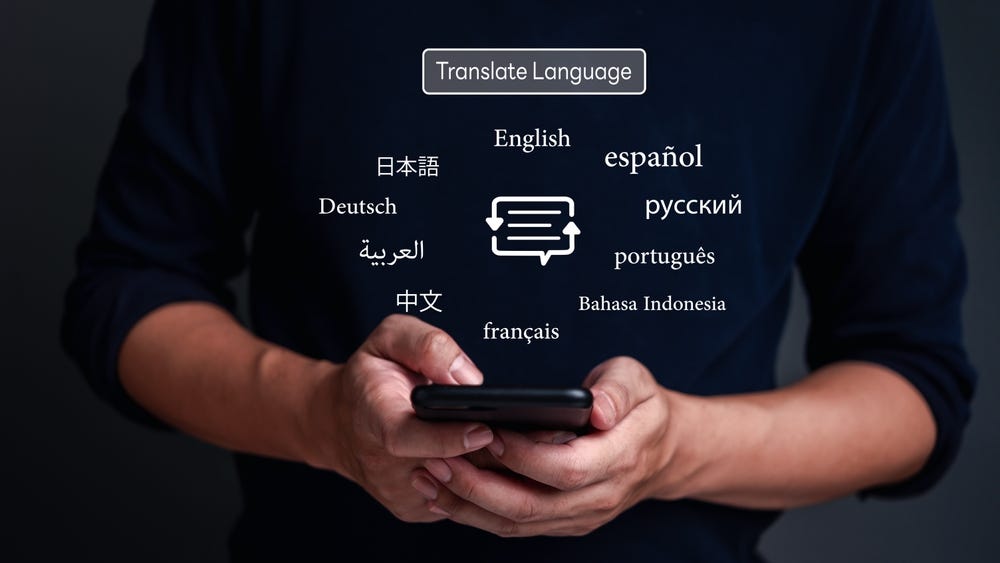
So what exactly will it look like? I’ve just made a high-fidelity clone of my voice that even the love of my life could not distinguish from the real me in a blind test. Why? Because time is the enemy, and media is central to the project. I want my voice to read my words; I don’t want to have to spend hours recording and editing a narrative. In addition, I’m creating a gold-standard digital avatar by recording myself speaking as I normally would to the camera. These two simple steps mean I can produce pieces to camera from scripts I write (NOT created by AI). The digital assets will simply deliver my words with my voice and image. I will, of course, still do live-to-camera commentary as part of the project, but prioritisation is part of the delivery philosophy. In addition, the tech stack will enable, for example, Spanish speakers to hear me speak Spanish complete with lip sync. It’s about widening reach.
The common denominator in deploying these digital assets within the project is using gold-standard frontier models, with the only criterion being their ability to deliver the best available results. The focus will always be on delivering content written by me. Where AI tools are used, I will label them and clearly document their use in the mission statement of the website that delivers the content. In reality, it would be no different from me providing a script to an actor to present. Instead, I will have total control of all the variables, including the visual environment for, say, historical facts, etc. It’s a very expensive road to walk, but it reflects how seriously I take my responsibilities.
As I explained previously, Substack will be the gateway to this new innovative storytelling vehicle. The platform's limitations prevent embedding content directly in a piece, but the system architecture will link out to truthmatters.org.uk in a way that feels seamless. It’s hard to explain without seeing it, but it will let users use Substack as normal if they simply want to read a static article. Alternatively, they can choose an interactive version of the piece from within the article itself.
So what will interactivity look like? Before we discuss this, let’s talk about the Truth Matters website currently under construction. It will host not only the interactive content but also access to separate non-Substack pieces, stats, and information tools. It will also include a custom knowledge base of facts, stats, and official government information. This will be a carefully curated repository of information, presented in a simple-to-navigate interface. Last time, I mentioned a tool to query the relationship between an elected member’s voting record and their donors. I thought bringing the data together in a way that could generate a report for a specified member would be a challenge.
Turns out retrieving the data is really quite simple; it’s public data. The challenge isn't the data; it's designing an algorithm that accounts for the many variables that reflect the truth rather than the raw data. For example, it doesn’t necessarily follow that a member is seen as representing corporate interests over constituents' interests if he/she received a donation from a corporation based in his/her constituency. That’s just one instance that could deliver a false positive. Creating a traffic light system for allegiance to corporate money isn't impossible, but it is complex; I’m working on it. This is a good example of how getting it right can delay delivery of one element.
A key aim, centred on a member, is to create a dashboard that quickly analyses and identifies conflicts of interest, such as stock trading or lobbying funding. An efficient dashboard could provide a wealth of information to help voters better understand an elected representative's commitment to their constituents' interests. Another key feature of the architecture is analysing positions on critical committees, etc., to examine lobbying influence. This will take time to build out, but it’s all within the scope of the project.

I’ve also built a data pipeline to access YouTube content and play only a relevant segment, so if YouTube content is available to illustrate an argument, it can be easily segmented to deliver only the relevant segment of the video to the viewer. When it comes to searching the curated private knowledge base, this will be split into two database containers. A traditional SQL relationship-driven data container to analyse stats and numbers, and a vector database container to search the knowledge contained therein. The intention is to evolve this component into a fact-checking resource that can’t be poisoned, as the Israeli government has done by flooding the internet with its narrative and contaminating AI search aggregation.
The system knowledge base will contain only information I've fact-checked and added myself. This will, of course, take time to build, but results delivered will be clean and accurate. Will mistakes be made when ingesting data? I’m only human, but I fact-check LOTS of data as I write, so it should hold up fine.
So where does the interactivity come into play? There’s a whole companion platform that comes into play to deliver it seamlessly. It will provide a central video thread that, at various points, offers branching opportunities to explore arguments further; this might lead to another video, a chart, or some stats, and then one button click will transport the user back to where they branched off to continue the journey. Effectively, it will let you explore my arguments from different angles; it will even give you opportunities to comment as you go, and those comments can be analysed and delivered to me for a response where appropriate.
The Truth Matters site will also include ALL the pieces I’ve written on Substack in a fully searchable library; they’ll be policy- and issue-tagged for better navigation, with full-text search. The interface will allow translation for the benefit of, say, Spanish speakers. Again, this will be driven by the best available AI translation model. As above, the user will be able to comment in their preferred language; the system will summarise it and send it to me so I can respond. It would then be returned to the user in their language. In addition, when users are looking at a list of articles, they’ll be able to get a summary of the article, again in their preferred language.
The site will also feature work from other writers you may not have stumbled upon in Substack. You’ll be directed directly to the pieces where you can interact directly with the writer. This will also extend to Medium, where my work will soon also be available. Any recommendations will be purely on merit, not because money changed hands. This service will NOT extend to work behind paywalls. It’s time, methinks, to raise the visibility of undiscovered talent.
This is just scratching the surface of this ambitious project, but I hope you can see this is the result of three years of careful consideration. I believe it can become an essential resource for anyone who wants to read the truth and not listen to the fantasy bullshit we're fed every day. It has to be said, the technology used to build it is the real hero, because it makes the complexity of what it does seem simple. The interface will just work, as the tech stack does all the heavy lifting.
If you’re a believer and you do want to help, be my guest: become a paid subscriber or use the Buy Me a Drink link below. I’d be delighted to welcome you as a stakeholder in this bold ambition to make a difference. Nobody should feel obligated; just feel free to keep offering the much-needed moral support that makes every day an adventure.
If you want to support my work but can’t commit to a paid subscription, you can now make a one-off donation by clicking the image below. Your donation helps cover research costs and keeps this independent reporting free for all.

I wish I could be a paid subscriber, but being on Disability, I am unable to.
Already a paid subscriber, but I bought you a drink because I love your idea and am looking forward to seeing it come to fruition!