


I wanted to begin today by saying a big thank you to those who reached out to me after my post yesterday. I think it’s easy to imagine in desperate moments that we are alone, we are the only ones suffering, when nothing could be further from the truth. Thousands of people face what they believe to be insurmountable problems every day, which leads them to consider ending their lives. I’m here to tell you there is life after despair, so never give up. There are people and organisations who can help, so never underestimate the humanity of others in your darkest moment. The first step out of the dark is to seek some help.

Returning to the matter at hand, the deeper I delve into what we can do to fight this battle for the soul of a nation, the more I need to explain, so please bear with me. Every time I attempt to describe the details of the media elements, there’s more to explain, and this requires further information as a preface to the proposition.
The key here is the obsession with a magic bullet or ‘quick fix’. People want a Trump-style bullet point summary, with perhaps the odd picture or two. For those people here, it is. There is no quick fix, Democrats lost ‘bigly’ by every single benchmark, and they did that because they thought the quick fix was pro abortion and ‘the other guy’s a fascist’. They never stopped to listen; they believed they knew what was in the best interests of the people. Clearly the people’s answer was f*ck you. In recent polling, just 29 per cent of Americans positively favoured the Democrats – a record low in CNN’s polling since 1992. Before you say yes, but that’s CNN, this is not an outlier. Indeed, it is more favourable than an ABC poll, which put it at 27%.
Axios reports:
57% of registered voters have an unfavourable opinion of the Democratic Party, the highest percentage since Quinnipiac started asking the question in 2008.
Before Democrats can even begin to consider a strategy, they need to mend fences with their own voters. This is not a quick-fix issue; it’s a systemic structural problem that’s being perpetuated within the party. I know it’s harsh, and it may not seem like I’m on the side of the Democrats. Tragically, like it or not, they’re the only game in town, so I have no choice, but that doesn’t mean they don’t need a wake-up call.
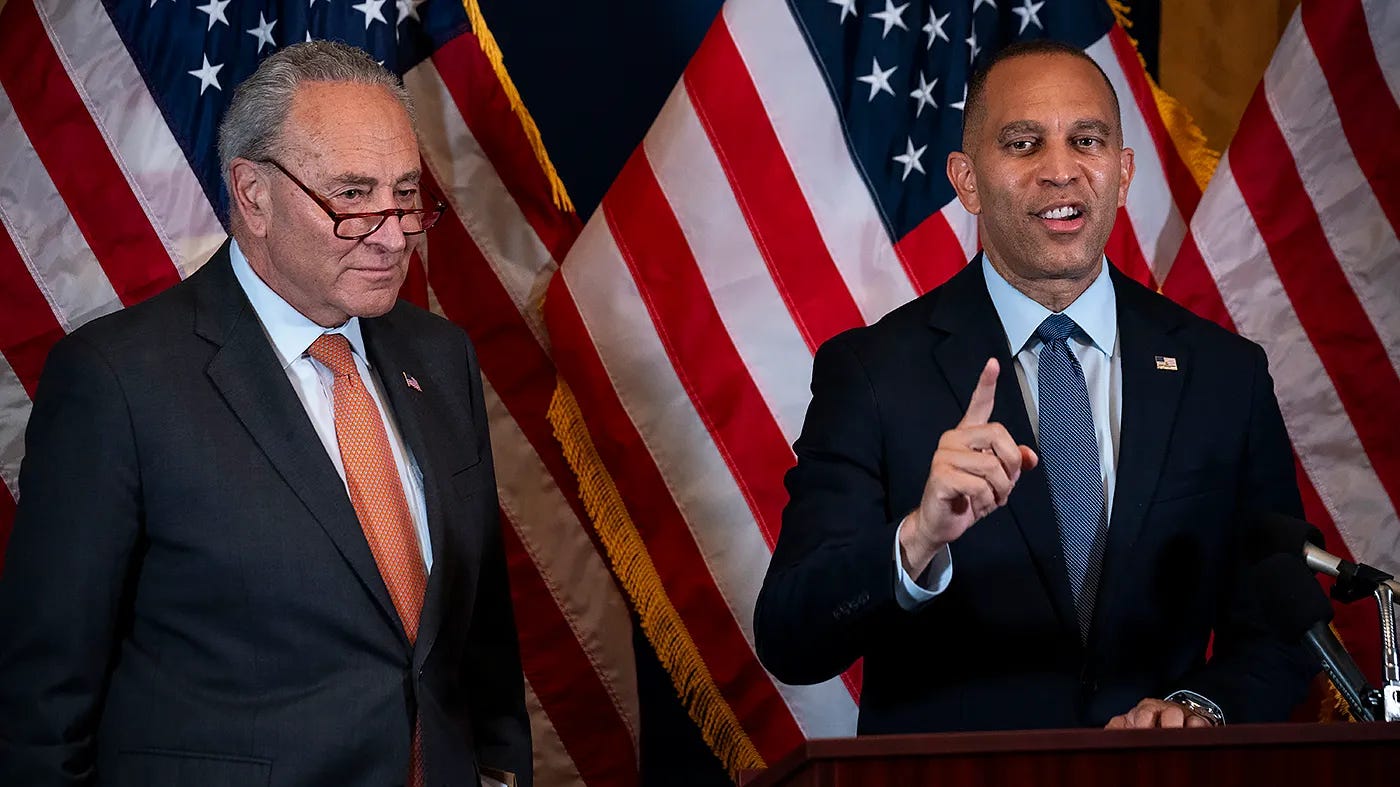
I briefly mentioned in my last post the need to define a new campaign landscape in an environment where Trump is working daily to control the narrative. As with all dictators, controlling the media is a central plank of building and retaining power. Trump is focusing his attention on silencing or, at the very least, controlling/disrupting the output of trusted media sources. This is why we are seeing him use the levers of government to threaten the likes of ABC and CNN. He knows that if he can dismiss the criticism and dissent intended to challenge the output from Fox News, he can be sure to consistently dominate the news cycle and, with that, the political narrative.
There is no doubt that his recent threats to media organisations have had an impact, as owners are instructing editors to tone down their criticism of Trump and the administration. We have already seen the likes of Jim Acosta, Katie Phang and others either resign or be let go, and this is a clear indication that Trump is succeeding in his attempts to silence dissent. The same is true for press outlets such as The Wall Street Journal and others.
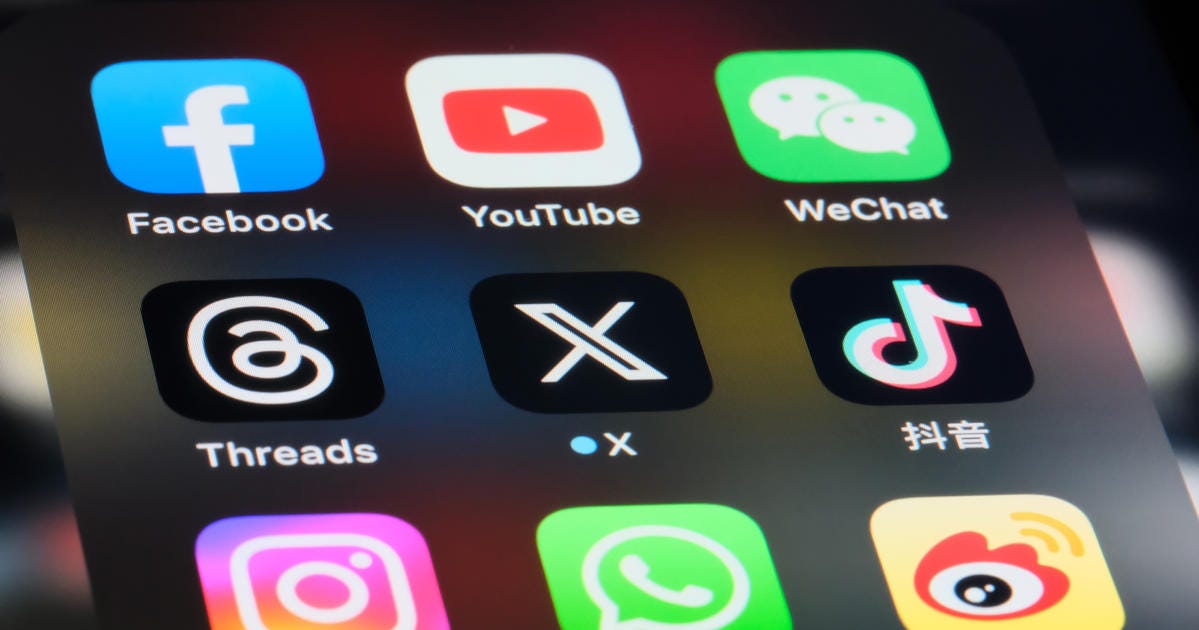
As I have said many times before, the biggest threat to democracy comes from Trump’s stranglehold on social media. He has taken Meta hostage, and his relationship with Elon Musk means that these two social media giants alone can quite literally control the flow of information across the social media landscape. If you add to that, TikTok could disappear in the blink of an eye if Trump decides it should happen; he effectively holds that platform hostage as well. I know from extensive use of TikTok that the algorithm has increasingly suppressed left-leaning voices in recent months, so there is every reason to believe that if it does survive, it will be in Trump’s pocket.
Given all of the above, how can we fight if, at the press of a button, our voices can be silenced at the same time mainstream media has been neutered? It’s not until you step back and view the situation in this light that you see what a massive problem this is. I fully expect CSPAN to be the next target of an executive order, in an attempt to control access to broadcasts from the House and Senate floors. As we already know, PBS and NPR are under attack and while only a relatively small part of their funding comes from the federal government, in these times of fiscal stress, Trump’s actions WILL have an impact on their delivery of services to the American people.
Reuters reported on May 2nd:
‘NPR said in a statement: "We will vigorously defend our right to provide essential news, information and life-saving services to the American public."
PBS President and CEO Paula Kerger said Trump's order threatened its ability to serve the American public with educational programming as it has for the past 50-plus years. She said PBS was exploring all options to serve member stations and viewers.’
This is all part of a strategy from Trump to shut down ‘public’ media. So, what exactly is CPB?
CPB is a private, nonprofit corporation authorised by Congress in the Public Broadcasting Act of 1967.
CPB is the steward of the federal government’s investment in public broadcasting and the largest single source of funding for public radio, television, and related online and mobile services.
CPB’s mission is to ensure universal access to non-commercial, high-quality content and telecommunications services. It does so by distributing more than 70% of its funding to more than 1,500 locally owned public radio and television stations.
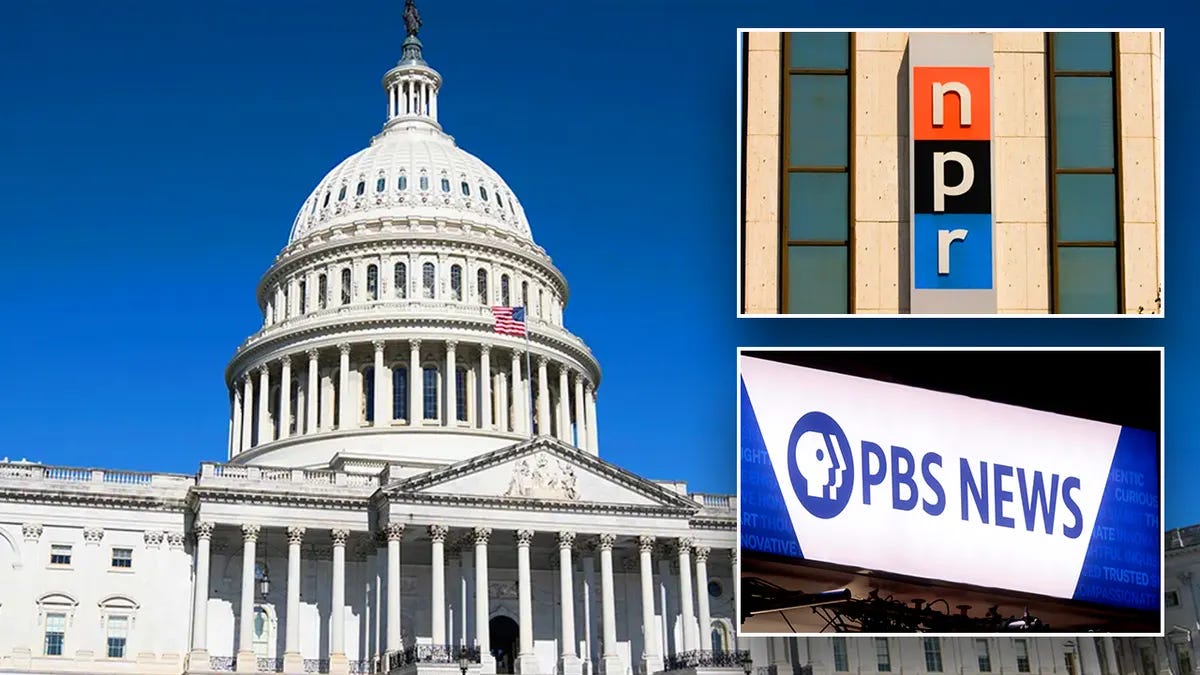
To be clear, Congress allocated $535 million for the Corporation for Public Broadcasting(CPB) for fiscal year 2025. This money has been appropriated, but given that Trump appears to be ignoring judges, it’s difficult to know how this will end unless Congress take back control of these potentially illegal, dangerous actions.
The point is that the administration is working hard to erode trust in any media output except that which is sympathetic to their crusade. The problem for me is that it seems Democrats are either burying their heads in the sand or, even worse, they don’t comprehend the changing media and messaging space. They need a realigned media investment strategy to explore how they can navigate a controlled media environment.
To better understand news consumption, I highly recommend you take a look at this Pew Research News Platform Fact Sheet, from which the topline assessment looking at consumption across platforms is:
A large majority of U.S. adults (86%) say they at least sometimes get news from a smartphone, computer or tablet, including 57% who say they do so often. These figures are almost identical to the share who got news from digital devices in 2023.
Digital devices are by far the most common way Americans get news, although a majority (63%) get news from television at least sometimes. The portion of Americans who often get news from TV has stayed fairly steady over the last few years, now standing at 33%.
Americans turn to radio and print publications for news far less frequently. In 2024, just 26% of U.S. adults say they often or sometimes get news in print, the lowest number our surveys have recorded.
To engage in a messaging battle, you need to understand the media environment, and this should be the key focus of Democratic strategists now, not next week or next month. The development of a strategy should have started the day after the election, as part of the autopsy of what went wrong with messaging in 2024.
I’m not coming to this blind. I attended several messaging shop coalition Zoom meetings in the last election cycle, where the focus was on understanding the psychology of voters. Millions of dollars were spent on focus groups, which then shaped their messaging strategy. My obvious question is, ‘How did that work out for you?’ My problem with message testing (which, incidentally, I do think is important to some extent) is that it can never replace the gut feeling an objective social observer brings to the table when it comes to shaping the message.
The problem with psychology is that it doesn’t always make sense. For example, the Democrats assumed that women would not support Trump in large numbers because women are more empathetic and Trump’s position on the right to choose. WRONG -After the election, having had time to analyse the female vote, the Guardian reported:
Gender had promised to be one of the biggest stories of the 2024 election. With abortion one of voters’ top issues, Donald Trump’s well-documented history of misogyny and a female presidential candidate of color on the ballot, Democrats banked on women showing up in force to defeat him. But Trump’s stunning victory in both the electoral college and the popular vote dashed those hopes – and scrambled the narrative around how gender, race and other markers of identity informed Americans’ votes.
The key takeaways:
Women voted for the Democratic candidate, but by smaller margins
White women are still voting for the Republican candidate
Trump did better with young women than he did in 2020
So pick the bones out of that one for me. If women prefer a sociopathic liar and convicted criminal over a black, highly respected former attorney general and sitting Vice President, there is a much deeper issue at play. Answers on a postcard, please.
It screams to me that the Democrats suffered from one of two problems. Trust had disappeared because Republicans dominated the narrative to sell a lie that Harris was part of a failed administration, or because the whole game was really about immigration. If it was the former, then it was the Democrats' abject failure to sell their economic achievements. If it was the latter, then it was the administration's failure to grasp immigration much earlier in the term. Regardless, the defeat represents a significant loss of trust. One thing we know for sure is that the loss of trust takes time to recover.
Democrats excel at overthinking, risk aversion, and an inability to be bold and ambitious in their approach to messaging and choosing leaders. There is absolutely no doubt that Democrats have some great political writers. My question is, even with the best writers in the world, if you lack a distribution network for your message, you are wasting your time. This is where we return to my point about Trump’s control of message distribution. The real architects of the Trump strategy know that distribution is the whole ballgame, and that’s why they are spending so much time restricting liberal voices’ access to it.
Don’t be fooled, though; it goes much deeper than that. They don’t want to exclude liberal voices from X, Facebook and Instagram. Liberal participation in these networks is a vital part of the revenue stream for the platform owners. The right-wing strategy of posting outrageous lies and disinformation always triggers their favourite response, ‘rage posting’. Liberals see something that outrages them, and boom, they dive in to express their outrage at the MAGA lies. Firstly, they are helping Republicans propagate their lies, and second, they are driving platform engagement revenue. It’s a win-win for both the platform owners and Trump. There is also a third essential element to this: while Democrats are rage posting, they are not posting to promote their own messaging. On every single level, DEMOCRATS LOSE.
Another factor that plays a role is a very human trait. Like it or not, we love the sound of our own voices. X is a prime example of a culture driven by an obsession with followers. It’s the dopamine rush we get when we look at that number and believe we are an ‘influencer’, it plays to our vanity and our self-inflated sense of value. Follower anxiety is a very real thing. Status in the resistance is measured by the number of followers you have; the message you deliver is secondary. The reality is that followers are important, but the number of followers is not the key benchmark. To maximise reach, you need to have high-value accounts that follow you; then, it’s down to how you drive engagement with your audience, and that’s an article in its own right.
Many variables influence how algorithms prioritise messaging, not least of which is whether you have a premium account on X. If you are in the ‘liberal club’, as I like to refer to it, you need to know your place in the hierarchy. tow the party line, and never dissent. When Musk introduced premium accounts, the liberal refrain was, 'Don’t buy into his money-making scam. Well, I felt different. I despise Musk, but he held all the cards. The writing was on the wall: not holding a premium account equals less reach and restricted video uploads. The old blue checkmark became worthless. For my brand, which relied on video output, it was a no-brainer, and Lord, did I take some incoming. I’m a pragmatist and not one for being part of any gang, so while my political position didn’t change, I went my own way, only to watch others slowly pay their money to protect their status. It went from 'don’t do it' to 'without it, your voice is diminished.
Even after all that, nobody understood in the 2024 cycle that this massive gathering of liberal voices known as ‘The Resistance’ were being played by Musk, and they weren’t helping themselves either. Musk had shifted the platform wildly to the right, feeding red meat conspiracy theories, lies and disinformation into the public square and liberals like piranhas shredded the shit posting in a frenzy of rage-tweeting that was going NOWHERE outside the echo chamber they had created for themselves. It was an echo chamber that Musk could also turn down at will, the closer the election came.
There were millions of posts that the Resistance thought were reaching voters, which were disappearing into the void aside from the odd few viral posts that got picked up by mainstream media. The same mainstream media they hated because they weren’t singing the tune they were expected to. The dynamics are very complex, and it’s the lack of understanding that leads to these schoolboy errors. Cable news networks are for-profit businesses, and while they may have a political bias, this will ultimately take a backseat to profit, which should come as no surprise. The fact is, viewers would rather watch Trump make a fool of himself and tell lies than listen to a reasoned political policy position. It’s the political tragedy of media supply and demand. Lies sell better than the truth. It might be hard to come to terms with, but until you accept it, you can’t plan a route forward.
Strategically, the best approach outside of your own social media posting objectives is to engage with selected high-profile right-wing voices. Rebut their argument and pivot to sell your message. Why? because you are taking the argument to them, and also to others who engage with their feed. Remember, not everyone who engages with MAGA accounts is a MAGA supporter; inquisitive independents and swing voters also visit these accounts. It may seem like a thankless task, but not only will you reach people you wouldn't usually reach, but you’ll also gain a better understanding of their approach to messaging, putting you in a better position to articulate your argument. The key is to understand the limitations of the platform you are on in terms of reach. This is also where I believe a database of short political Ads and visual messaging punctuation can play a vital role in improving messaging impact, thus helping press your argument home
This brings me full circle to the likes of Jim Acosta, Katie Phang, Joy Reid and others who are trying to establish an independent news presence outside the control limits. This is also where I return to the Meiselas brothers and the MeidasTouch Network. These guys were and remain ahead of the curve, and they have provided a masterclass in finding an alternative distribution point for Democratic messaging. They understand that truly independent media is the only viable solution in this moment of peril. My only concern comes from Google’s susceptibility to Trump’s will, which places YouTube at risk of the same right-wing bias present on X and Meta. You can never discount anything. This is why I believe that, ultimately, independent media servers must play a crucial role in any mid- to long-term strategy.
Meidas' strategy of building a gold standard coalition of writers, journalists, podcasters, and content creators is exactly the right move. The only gap I see in that coalition is political Ad creators, and this, for me, is a significant missing link as we prepare for the challenging battle ahead.
Elections in modern America are won at the margins. Typically, for Democrats, the challenge is to reach swing and independent voters; however, this time around, they are also facing issues with their own base, who appear to have lost confidence in Democrats’ ability to fight for their best interests. They must repair their own fence before they can go out and fight the enemy.
One thing I can say without fear of contradiction is that if Trump controls the social media space, Democrats are going to have to build the biggest ground game campaign in American history because you can’t beat meeting voters face to face. It’s hard, backbreaking work and can be challenging when you meet resistance, but a well-trained ground game army is worth its weight in gold. This then comes back to mending fences with the base because they are your army.
Next, we’ll finally drill into the media element of the plan and the creation of a political truth portal. I look forward to sharing my thoughts further. Even better, paid subscribers will finally get to see the media clips their subscriptions are helping to create.
’
It's not Trump we should be worried about. It's the puppet-master Russell Vought who is pulling the strings. He is one of the authors (if not THE author) of Project 2025, and he is NOT an elected official. Trump just wants people to massage his ego and throw money at him. Vought et al. want to destroy America and make it a misogynistic theocracy. It's Margaret Atwood's vision come true! How do we go after someone so carefully hidden? We could, of course, shine a spotlight on him and IGNORE Trump and Musk. That would really upset all of them. But the media is afraid of having to pay enormous fines––more important than truth, it seems.
Help!! It's necessary for our survival as a country to do better!!!
Russell Vought, and Stephen Miller are dangerous. Trump is their pawn. As a 50 year old member of the Democratic Party, I know that the message needed to be more real and they should have screamed ‘Democrats did that’ after every single initiative that helped America.
For example:
(Some people think the pandemic relief funds came from Trump 1.0. They did NOT! )
The checks were delayed because Felonius wanted his name on them.