Time to wake up and splash some cold water on your face
Amidst all the chaos of militarised cities and a campaign to hunt down the imaginary ANTIFA, the economy is screaming, 'get me out of the hands of this serial abuser'
Just another day in Trump’s fantasy ‘hot country’, a country descending by the hour into a banana republic. It’s hard to know what to focus on, given there is so much distraction going on, but I thought today we could zoom in on the economy, because as the saying goes, ‘it’s the economy, stupid’. I think it might in this instance be more appropriate to say it’s an ‘economy of the reckless’, because none of what Trump is doing benefits anyone but him and the top 10%, some would go so far as to say, just the top 1%, because they are almost the sole beneficiaries of his economic agenda.
The truth is that in Trump’s fairytale economy of alleged wealth and prosperity, the level of deceit is now off the charts. He knows the underlying numbers are bad, so he’s doing everything he can to distract from an economy on life support if you strip out the AI bubble that many market watchers expect to burst soon. I know eyes glaze over when the word economics is mentioned, so I’ll try to keep this simple and wrap some context around my thinking while Trump rage-posts and throws ketchup at the walls of the White House dining room, having not won the Nobel Peace Prize today. I have to admit to being amused that he lost to María Corina Machado, a long-time Venezuelan pro-democracy warrior and leader of the opposition now forced to live in hiding for her fight against the autocratic regime. Trump, an adjudicated rapist, was defeated by a foreign woman, fighting against everything he represents.
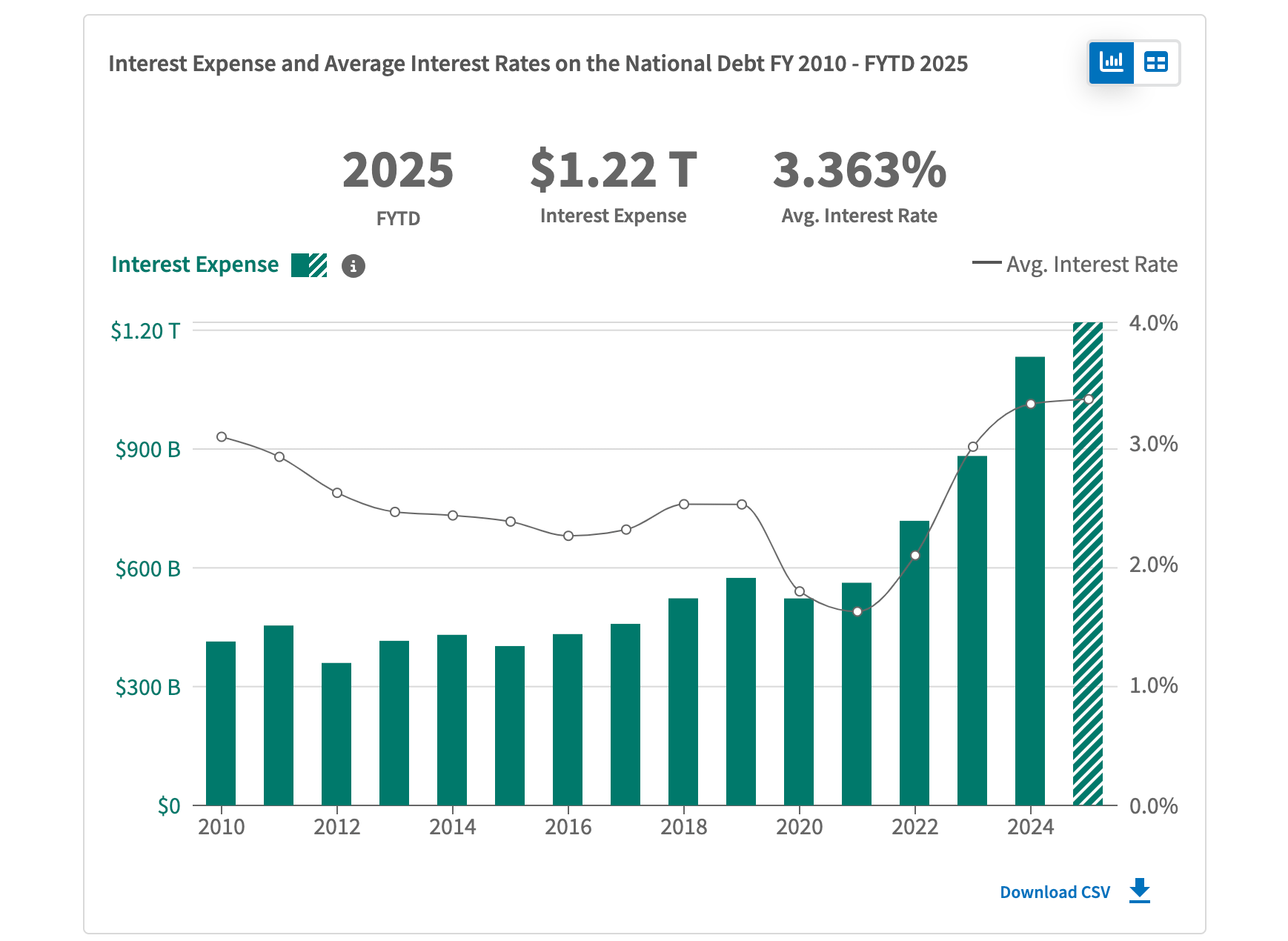
Let’s begin by taking a look at the basics. The US national debt is currently running at $37 trillion, which amounts to around $280,303 per household, or $235,000 per taxpayer. These are obviously estimates, but they provide a fair representation of the current position. The estimated cost of servicing the debt interest alone for the current year (2025) is $1.2 trillion. Yes, you heard that right, $1.2 TRILLION.
That’s approximately $ 9,000 per household or $ 7,643 per taxpayer. As a reminder, this payment is for the interest only on the debt. Now, here are the really important details, and these numbers are based on examining the top 10%, not the top 1%.
In the first quarter of 2025, almost two-thirds percent [67%] of the total wealth in the United States was owned by the top 10% of earners. In comparison, the lowest 50% of earners only owned 2.5% of the total wealth.
The report goes on:
…With such a small percentage of people in the United States owning such a vast majority of the country’s wealth, the gap between the rich and poor in America remains stark.
In an additional report by Abigail on Oct 29, 2024, on the subject of wage inequality, she noted
Despite increasing political attention paid to the topic, gender and racial wage disparities in the Untied States persist. While progress has been made towards closing the gender pay gap, male annual earnings continue to outpace those of female workers by thousands of dollars. Additionally, there are significant discrepancies between different racial and ethnic groups in the U.S., with Asian American households earning nearly twice as much annually when compared with Black American households.
Women earn 82.7% of what men earn for the same job.
The median income of a white household in the US is $89,050
The median income of a black household in the US is $56,490
As you are likely aware, the current federal minimum wage is $7.25 per hour. Adjusted for inflation, this puts it approximately 40% lower than what it was in 1970. The situation worsens in Georgia, where the minimum wage is set at $5.15. Additionally, some states offer exemptions for small businesses.
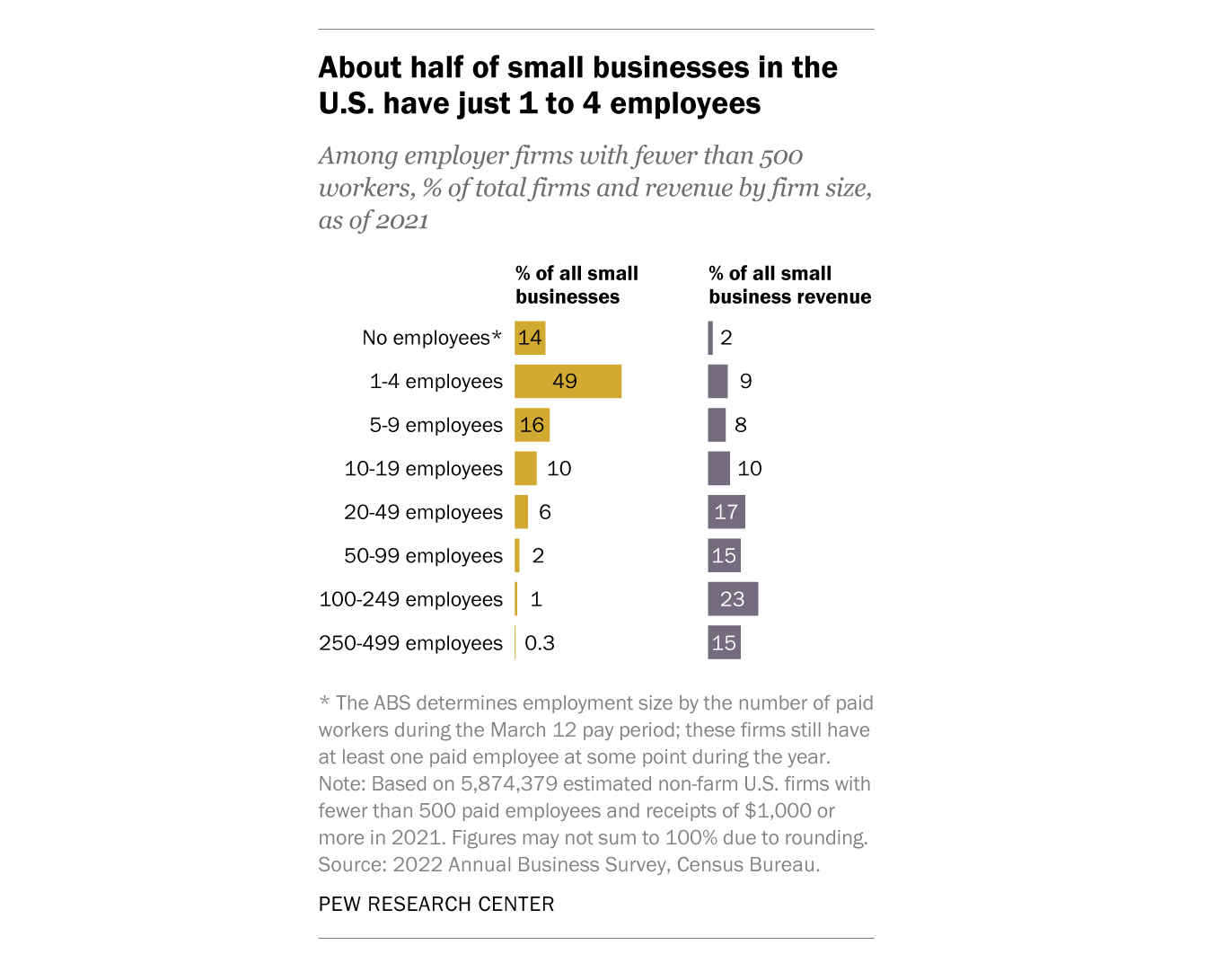
Speaking of small businesses, it's safe to say that this is a sector that Trump has totally abandoned in favour of large corporations. His imbecilic approach to macroeconomics means that the very backbone of the US economy is being sacrificed at the altar of corporate giants, otherwise known as ‘they who refuse to pay their fair share’. According to a report by Pew Research in April 2024:
‘…. small businesses loom large in the United States. These businesses – defined here as those with 500 employees or fewer – account for 99.9% of U.S. firms, according to the Small Business Administration. While most of these 33 million firms don’t have paid employees, about 6 million of them do. They account for just under half of total private sector employment (46%).
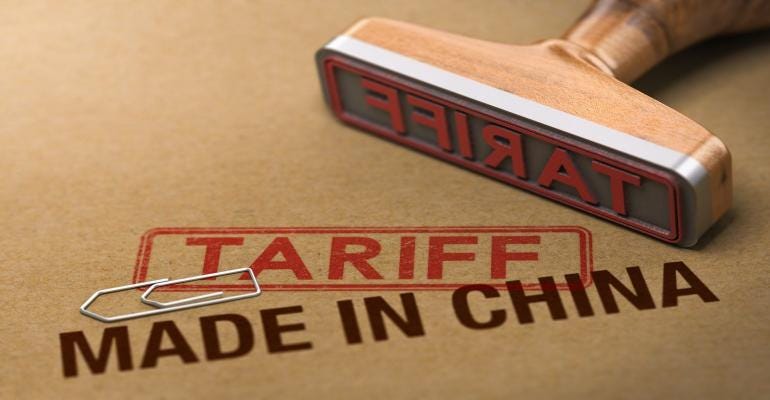
This is the sector of the economy that is being hurt the most by Trump’s tariffs, especially those importing goods or inputs for manufacturing from China. Unlike the corporate giants, they are often unable to absorb these additional costs to their businesses, but at the same time, don’t want to drive away customers. Unlike the larger companies, they don’t have the capital or the storage space to front-load stock at pre-tariff prices. The bottom line is that any portion of the tariffs they eat is just an additional tax they are paying to the treasury. If they do pass the tariff cost on, then their customers are effectively paying a supplemental federal sales tax. No matter how you dice and slice it, Trump gets his share, and retailers are left to fight with customers to work out who pays what proportion to recoup the duty (federal sales tax) paid by the importer.
What’s really important to identify here is that the incomes of business owners and their middle- and lower-income customers have not increased to a level where they can absorb the average 20% tax the government is imposing on the goods they consume, without it having an impact on their cost of living. This type of tax has always been popular with Republicans because it effectively forces the poor to subsidise the rich.
To make it crystal clear, if an imported item is subject to a tariff of, say, $20, the government is paid that $20 directly by the importer of the item as soon as the goods are landed at the port. That leaves the importer $20 out of pocket. At this point, the government don’t care because they’ve got their $20. The importer then has to decide whether to pass the $20 on to the wholesaler. Let’s say they eat $5 and pass on the remaining $15 to the wholesaler, who, in turn, has to decide how much to eat and pass on to the retailer. Let’s say the wholesaler eats $5 and passes on the remaining $10 to the retailer. The retailer then makes the final decision on whether to pass the $10 on to the customer.
As you can see, all the haggling is done between the importer, the wholesaler and the retailer; the customer is just a passenger. It’s then just a matter of how they decide to carve up the money the government has levied as a duty (tax) on the importer. The government has no interest in who pays what because they’ve already got their money. It’s at this point that scale comes into play. The bigger the retailer, the bigger the discount they can probably demand from the wholesaler. However, for small businesses like mom-and-pop stores, they would likely be able to demand little to no discount and face the $15 increased cost from the wholesaler.
It’s at this point that the viability of a business is brought into question, primarily if that small business operates on tight margins. Suppose a $15 increase in their retail price is too much for the customer. In that case, the customer may look elsewhere, perhaps online to a large retailer that has the leverage to squeeze the wholesaler, or they may have been able to front-load stock purchases before the tariffs were enacted. You can see where this is going. It just leads to the extinction of small retailers.
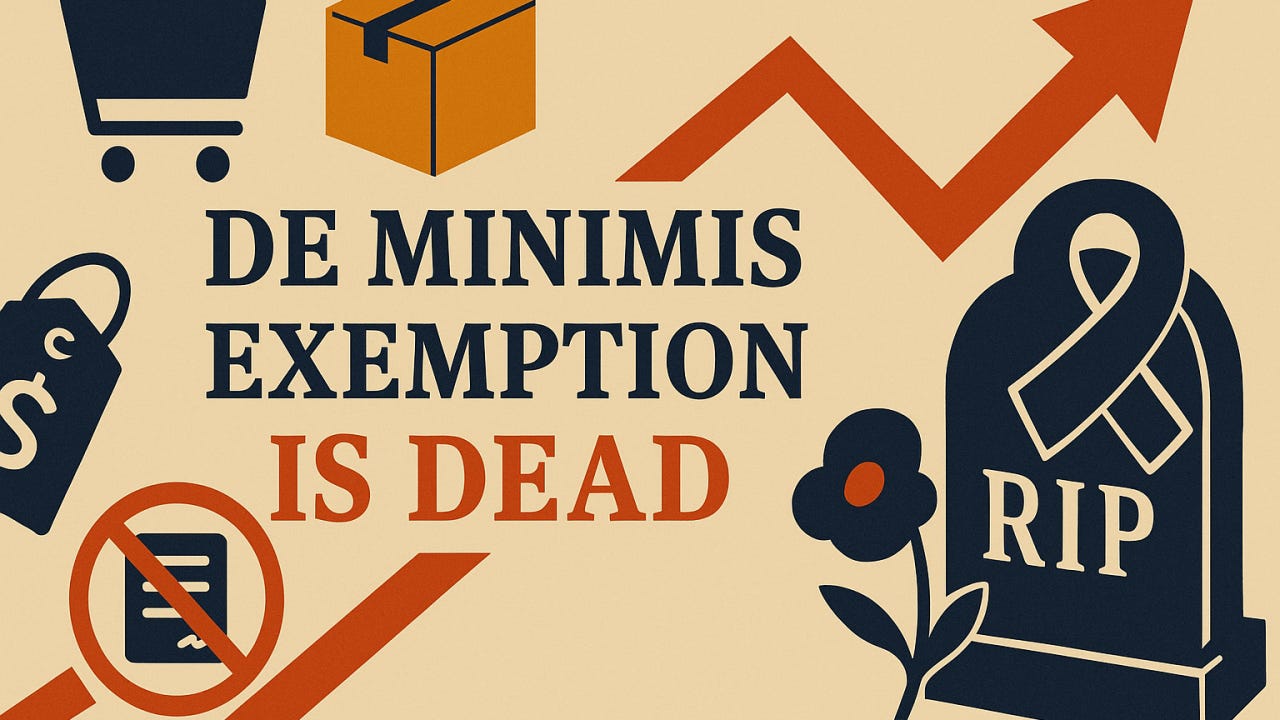
The same is now true of micro businesses that are sole traders importing goods valued below $800, which was previously the duty-free limit under the De Minimis exemption for imported goods, until Trump removed it. Many of these businesses have already gone to the wall because they were faced with 20-50% tariff costs that they were simply unable to pass on to their customers. Trump’s whole tariff strategy is based on an extortion racket at ports of entry, which leaves the supply chain to argue about how to cover the state-sponsored theft perpetrated on them.
At every twist and Turn, Trump has his hand in your back pocket, so when he brags about tariff revenue, he’s bragging to your face that he’s just fleeced you, and there’s nothing you can do about it. This is not a viable long-term economic strategy. Eventually, as wholesalers and retailers pluck up the courage to pass the entire tariff cost onto the customer, only then will they truly understand that they have been the victim of a state-sponsored mugging.
This is when inflation really starts to take hold, as store prices increase with more and more of the tariff cost burden being shifted to the customer. In a piece by Margaret Talev and Neil Irwin from Axios, they note that John Gerzema, CEO of The Harris Poll suggests:
“It’s such a visible signal that life is harder today than it was even last year when we were in an election cycle,” Gerzema said of grocery bills. Respondents “don’t feel like things are changing fast enough. This is going to be a significant issue for the president.”
The report goes on:
Prices for certain staple items many people consume nearly every day have risen much more than the average, including ground beef (up 12.8% in the past year), eggs (up 10.9%) and coffee (up 20.9%).
This is just a small sample of the items. We know that energy prices are now increasing for many Americans as well, so everywhere they turn, the basic cost of living is rising, despite Trump’s constant claims to the contrary. What you should be aware of is that the full impact of tariffs is not yet being fully felt on grocery basics. This serves to strengthen the case for Democrats standing firm on the shutdown to fight for the preservation of current ACA subsidies, which are set to expire in December, adding yet another straw to the camel’s back.
Low and middle-income families will soon find it impossible to survive; it’s as serious as that. As for the working poor, I have absolutely no idea how they will cope. They are already beginning to turn to buy-now, pay-later firms to purchase food, and guess who owns those extortion operations? The Republicans are squeezing from the bottom up to the point where there’s nothing to squeeze anymore. Tariffs will eventually choke the economy, and to what end? The revenue raised doesn’t even come close to the cost of the interest on the national debt. Trump is engaging in a circular firing squad. Trump has simply been participating in a circular firing squad from the day he entered office.
This is PART ONE in a five-part series of posts on the state of the US economy. You can read PART TWO
Next time, we’ll dig into the broader economic implications, because we are only scratching the surface in this first piece.
Thank you so much for taking the time to read my thoughts and observations. I hope you feel it was worth the investment of your time. I deliver a post to my community most days. If you appreciate my work, please consider becoming a paid subscriber to help offset some of the associated costs. It really does make a big difference.
It would be interesting to understand where Trump holds stock and to see if he is busy shorting the markets to make money for himself. Unlike any other politician, he does not put his holdings into a Blind Trust. I expect he's whip-sawing the country for personal financial gain every time he opens his mouth. If he plays the stock like that, it would explain a whole lot. Raise the market, then tank it, then raise it, tank it, rinse and repeat. You buy on lows, sell on highs, and rape the markets for personal gain. It's called painting the tape to keep the money flowing.
That is, as Mr Trump exercises total personal control over which imported goods from which countries are taxed, he can manipulate his tariff schedule to make deals which serve his interests. A favored importer can receive a generous exemption. A disfavored foreign entity will find that their U S market has shriveled.
It's nothing more than an extortion racket. And the burden is carried by the American consumer.




It would be interesting to understand where Trump holds stock and to see if he is busy shorting the markets to make money for himself. Unlike any other politician, he does not put his holdings into a Blind Trust. I expect he's whip-sawing the country for personal financial gain every time he opens his mouth. If he plays the stock like that, it would explain a whole lot. Raise the market, then tank it, then raise it, tank it, rinse and repeat. You buy on lows, sell on highs, and rape the markets for personal gain. It's called painting the tape to keep the money flowing.
There is a less-obvious aspect to the tariffs.
That is, as Mr Trump exercises total personal control over which imported goods from which countries are taxed, he can manipulate his tariff schedule to make deals which serve his interests. A favored importer can receive a generous exemption. A disfavored foreign entity will find that their U S market has shriveled.
It's nothing more than an extortion racket. And the burden is carried by the American consumer.
\Vince S