


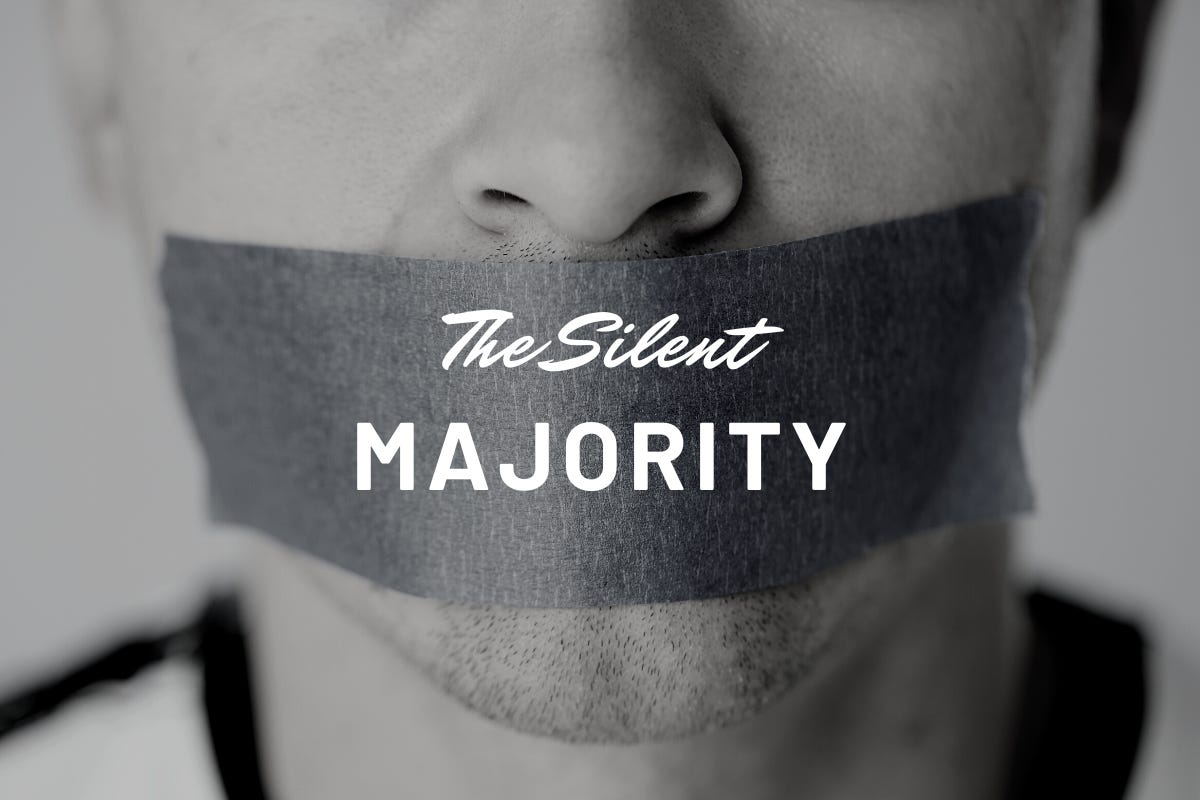
I want to set the shutdown aside for a moment to take a breath and look beyond our current situation, because there is often talk about the country being split in two. That’s what we have now accepted as the norm. Half vote Republican and half vote Democrat, and the margin in every election is narrow, which means nobody can govern as a government should.
The reason Republicans have decided to seize power in this manner is that they are not prepared to settle for not being able to govern; they have chosen instead to rule, and they can’t do that under the current electoral system, where 90 million voters decide to sit it out. Those who didn’t vote are a larger single demographic than either of the two main parties. This is the true heart of the problem.
So when Democrats say that MAGA are unreachable, that should not be a problem because they only represent at most 20% of eligible voters. Move on and go fishing in the pool that has decided that neither party are representing those who elect them. Which part of 90 million opportunities are people struggling with? These voters represent a devastating indictment of US representative democracy, and until the respective parties address this reality, there will be no opportunity for transformative change.
Having said this, I do believe that if free and fair elections do take place in 2028, Democrats will win big, as I’ve said before, not because of their vision or policy agenda, but simply because Trump is setting the country on fire for no economic or societal gain. It is simple to fill his pockets with cash, because it’s going to take some costly lawyers to keep him out of jail. At the end of the day, hate and division are always thankfully the preserve of the minority and eventually the majority will prevail. My only concern is the level of damage that will have been done by the time liberation occurs.
This context is crucial in understanding the current situation and the fact that Trump did not win with a landslide. Many Americans have lost faith in politics altogether, which is why so many people chose not to vote in the 2024 election. This is more than either of the leading party candidates received. Jedidajah Otte, in a Guardian piece following the December 2024 election, did extensive work to understand why so many people didn’t bother to vote. Bear in mind that the election was billed as the most consequential in US modern history, yet over a third of eligible voters sat on their hands. Now that’s what you call disenfranchised.
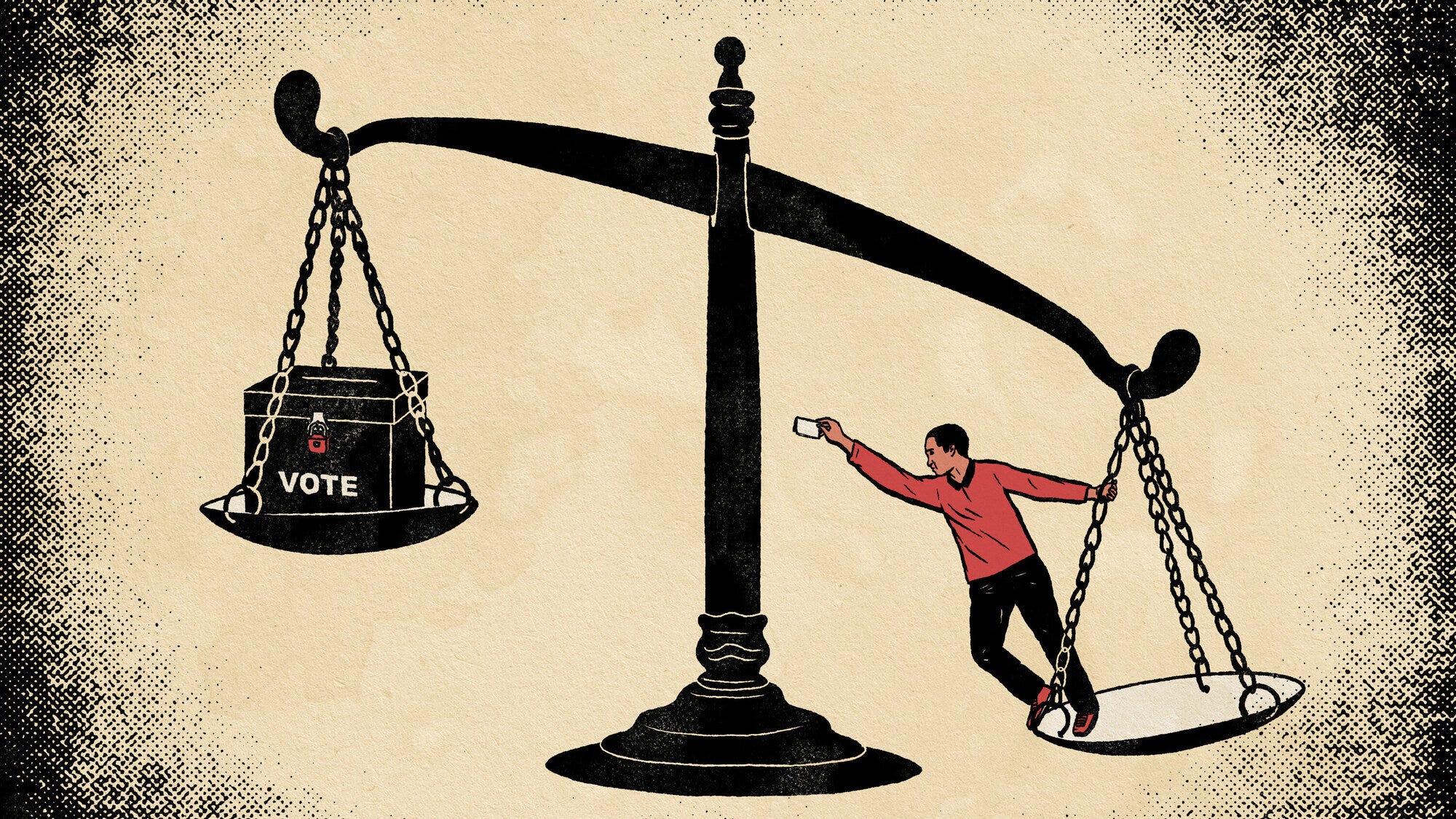
The key to understanding the Democrats’ loss lies in this massive group of disenfranchised voters, but as ever, nobody focuses on pieces that have been removed from the chessboard, and that is a fundamental mistake. The reason Trump won was because he constantly drilled down on feeding his base red meat and then looking to who Democrats had left behind and swept them up. What astounds me about the political class is their inability to look beyond the pieces on the table.
There were a few interesting takeaways from what I thought was an enlightening report. It has to be said, of course, that the Guardian is left-leaning, but I deliberately chose it because I want to understand what turned so many Democratic voters off in 2024. One item that jumped out at me in the piece was :
A large number of people said they abstained because no candidate represented working- or middle-class interests and people such as themselves, including several people who voted in the previous two elections but did not vote this time.
Significantly, the report goes on to note:
Some people from swing states said they did not vote because both parties were too similar and did not address concerns of the common voter, among them John, a 29-year-old financial professional from Pennsylvania who is a registered independent, but voted for Clinton and Biden in the previous two elections.
“What is the point [of voting]?,” he asked. “Aside from a handful of weaponized issues, the parties are nearly identical. They both hate the poor and serve only their donors.”
Now, people who inhabit the political bubble might perceive the policies between the two as miles apart, but that is not the point. It’s all about perception. We often question if this is about apathy, and I’m not convinced it is, as reflected upon by John, a 58-year-old from West Virginia who said :
“I wasn’t apathetic about this election, I followed it closely,” he said. “But most of the candidates and issues left me cold and disinterested and seemed to be simply perpetuating the existing system, especially the status quo of authority and law and order, or rampant human development on the land.
“On the presidential level, I was shocked and disgusted that the Harris campaign chose to completely ignore discussing climate change. Fundamentally, this election seemed to have very little to do with my interests and concerns.”
Now you can argue that this is not a measure of nationwide sentiment, but there is little doubt in my mind that these, for the most part, align with my assessment of the Democratic campaign’s failure. This is NOT, might I add, me bashing the Democrats; it’s real voters expressing genuine concerns. What you have to remember is that Trump does not have to worry about whether his base will turn out to vote. THEY WILL. Whether that will be the case if he drops dead is a different matter.
Democrats have a bigger tent to be concerned about, and that presents a challenge. The problems Democrats faced were that you could not divorce the campaign from Gaza. Republicans didn’t need to; they were signing the bombs and saying, ‘kill them all. Democrats had a much more complex needle to thread, and I actually think Kamala Harris went as far as she could on the Gaza issue without it having a devastating negative impact. Did I agree with the campaign’s position? Absolutely not, but harsh though it may sound, I understood the politics of the situation. That’s simply the political pragmatist in me. Regardless, it did have a significant impact, as did the apparent abandonment of the working class in pursuit of votes from the middle class.
There’s little point reliving the past, but I do think it’s essential in terms of how to approach the future better. I get it that using the word ‘Democratic Socialist’ is like holding a crucifix up to a vampire. I’ve termed it ‘People First’ Democrat. Unfortunately, every American has been conditioned to believe, as I often say, that anything left of Mussolini is communism and communism equals bad. It is, of course, nonsense. Healthcare for all in any sane world can’t be socialism; it’s social responsibility, as is a living wage, affordable prescriptions and paid family leave.
No responsible society has its citizens living in indentured servitude for the right to be called an American; it’s ludicrous by any measure. Just as American slaves knew no better, it seems the 21st-century tech plantation owners have decided to impose economic slavery.
Healthcare as a human right.
A living Wage.
Affordable prescriptions.
Affordable childcare.
Access to free education (pre-college).
Access to affordable higher education.
Affordable home care for seniors.
In the eyes of Republicans, this represents greed on the part of working Americans. If they are provided these as a given, why would they work hard to achieve them? All while they themselves take for granted that they and their family will have access to all of the above and more from cradle to grave. It takes a special kind of social thug to believe that these should be common rights in a free society.
These foundations should form the bedrock of the Democratic proposition to the American people. In power, however, they soon see that more for the many means less for them, and that’s how we’ve arrived at where we are today, with the Democrats becoming Republican Lite. The problem faced here is that, yes, the Democrats are absolutely right to do what they are doing, but I ask myself, are they doing this because Chuck Schumer fears a primary challenge from AOC more than a government shutdown? And I think we have our answer.

I have said it before: the lions in the Democratic caucus are eager and ready to be fed, but the donkeys leading them are having to be dragged, kicking and screaming, to the realisation that it has to be people before party.
So why do I believe Trump has overplayed his hand on the shutdown? It’s simple; he can’t help himself, gloating and issuing threats. The American people are no strangers to government shutdowns. Still, this one is unique in that Trump is gleeful to be wielding power in an attempt to humiliate the opposition party, fighting to save healthcare for those who are, in many instances, Trump’s own voters, he is happy to throw under the bus.
Low-income families are predominantly residents of red states, which have the highest concentration of low-income workers. These states also have more regressive tax regimes that disproportionately affect these families. For example, in Georgia and Wyoming, the minimum wage is $5.15, whereas in several other states, it is $7.25. Rural farming communities are struggling at the moment, which is why Trump is looking to bail them out to the tune of $10 billion, while handing $20 billion of taxpayers’ money to his buddy Javier Milei in Argentina, whose farmers are helping replace US soybean sales to China. You really couldn’t make it up, yet he does every day.
What Trump is calling ‘Democrat programs’ are the very programs that his own voters rely on. It shines a direct light on the difference between Trump and Democrats; it’s the difference between night and day. Trump’s sole purpose is to punish his enemies while allowing his own voters to continue to live in poverty. That’s not leadership, it’s reckless abandonment.
It’s time to stop settling for safe and present a vision for a new America that narrows, not widens, the wealth gap, that values workers, not abuses them. Want a sample of what I mean? Meet Graham Platner, running against Susan Collins in Maine.
A bold and ambitious agenda that banishes the trickle-down lie to the trash can of history where it belongs. It’s not a sign of weakness to promote a sense of collective purpose for the better good. We do not have to abandon the vulnerable in pursuit of prosperity; we have to stop worshipping at the altar of greed at the expense of others.
There’s a pool of 90 million voters to convince that your idea is bold and ambitious enough to persuade them to return to the ballot box. I believe they’re listening, but nobody is singing their tune at the moment. It’s the most significant opportunity in American politics today.
The following two quotes from two very different American leaders adored by their respective parties are each profound in their own way:
“America remains mankind’s best hope. The eyes of mankind are on us, counting on us to protect the peace, promote new prosperity, and provide for them a better world.”
Ronald Reagan
“Focusing your life solely on making a buck shows a certain poverty of ambition. It asks too little of yourself. Because it’s only when you hitch your wagon to something larger than yourself that you realise your true potential,”
Barack Obama
I’ll conclude with:
“We must all live together as brothers or perish alone as fools,”
Martin Luther King Jr.
From No mercy/No malice
By Professor Scott Galloway
We frame economic power as a contest between capital and labor, but the real star of the American economy is consumer spending, which accounts for 68% of GDP. The Great Recession saw a 3.4% drop in consumer spending — at the time, the most severe year-over-year decline since World War II. The U.S. economy registered a 9.8% drop in consumer spending during the second quarter of 2020, when Covid shut down the world as we knew it. In both instances the U.S. government responded aggressively, spending hundreds of billions, primarily on bailouts, to pull us out of the Great Recession, and trillions, primarily in direct aid, to get us through the pandemic. The lesson? When consumers stop spending, American leaders start listening. As Geo Hussar explained to his YouTube followers at the end of September, “this is not seizing the means of production, but seizing the means of consumption,” adding that if every American dropped their consumption, on average, by 2%, “that would be the most loud and potent form of protest.”
Yes. People-first.