


It’s difficult to even begin to understand what Trump’s attempt to extort Iran for its oil has done. What is clear, however, is that the US is handing billions of dollars to China as nations seek economic insulation from renewable energy. I’ve explained over and over that China is one big research and development lab for a Chinese government that plans years ahead. Chinese society has long been a testing ground for a different kind of people-focused social experiment.
I am not for one moment suggesting that China does not have its problems with human rights and a failed real estate boom that has proven to be economically disastrous; it was the one thing it imported from capitalism that did what capitalism does: boom and bust. However, if a country were measured by social progress for the benefit of its people, it would be at the tip of the spear in how technology and the population can coexist for the betterment of society.
Using Western money derived from providing cheap labour for greedy capitalists, China has created a future that’s plain to see. Over the last half-century, it has lifted nearly 100 million rural residents out of extreme poverty over eight years, and over 800 million since 1978. I dare say it could have done even more, but for the West's sanctions and their persistent attempts to inhibit Chinese economic growth. Unfortunately, all attempts have merely forced China to innovate to circumvent impediments placed in its way. The West have created a monster that is now eating them alive.
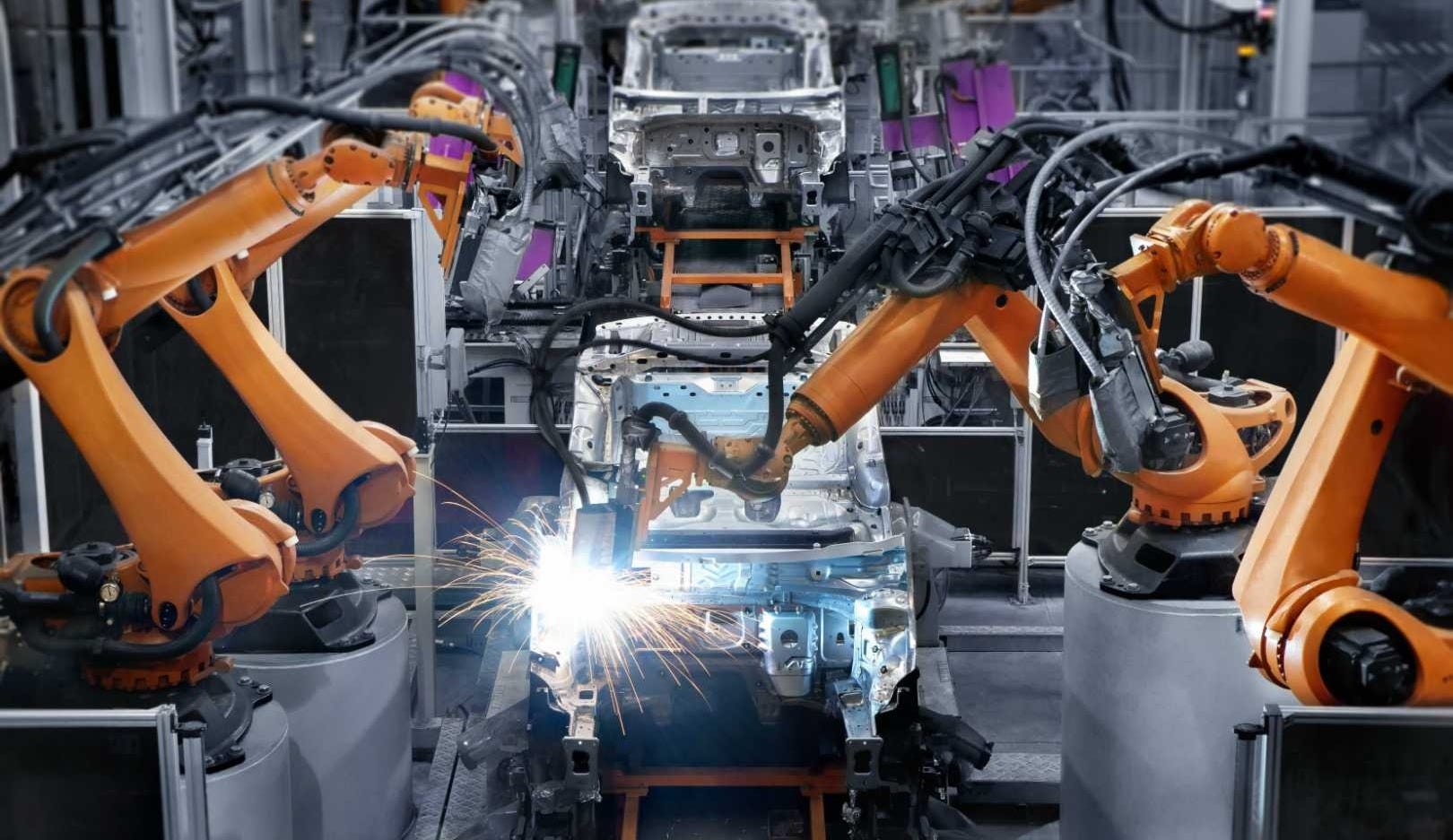
It has built the most advanced automated manufacturing economy in the world and is home to the world’s largest-ever infrastructure investment. It’s adopted the key tenets of capitalism and shaped them in its own likeness. The results are frankly staggering. What they have managed to do is reimagine free-market capitalism, adapting it into a more efficient state-driven model. A model that not only benefits its citizens, but also allows it to compete on the world stage with a dysfunctional superpower, ‘a superpower with a limp’, as they describe it.
Unlike the U.S., it does not have to maintain over 750 military bases around the world with all the associated costs; it has just one official overseas base in Djibouti, which serves as a logistics hub for anti-piracy, peacekeeping, and humanitarian operations. It does, however, according to Yahoo Finance, have plans to project power in regions where it has economic interests, to develop facilities at Ream Naval Base in Cambodia, Gwadar in Pakistan, and Bata in Equatorial Guinea; military projection, by US standards, is low on its priority list.
The US, as part of its strategic policy and military posturing, is investing heavily in AI integration in warfare. Let’s face it, we can no longer describe it as defence, given the decision to rename the Department of Defence the Department of War. Even in this critical area of National security, there is no question that the US is already concerned about how far Chinese military integration of AI has advanced. If you are interested in digging in a little deeper, I suggest you take a look at a new report by The Centre for Security and Emerging Technology at Georgetown University, entitled Pulling Back the Curtain on China’s Military-Civil Fusion - How the PLA Mobilises Civilian AI for Strategic Advantage. You can download the full PDF here
There’s no question that it’s frankly ludicrous to promote the fairytale that China represents a clear and present military threat to the world. That crown has long been held by the US. In an excellent, comprehensive study by the Military Intervention Project (MIP) by Sidita Kushi and Monica Duffy Toft, it examines over 400 military interventions by the US since 1776, but more importantly, it identifies that 50% of these have taken place since 1950, with 25% in the post-Cold War years alone.
In contrast, Rand research notes:
As China has ascended in power, observers have debated whether the country might follow a similar path. In the three decades leading to the country's ascent as the second-largest economy in the world, China to date has deployed only relatively modest numbers of troops abroad in nonwar missions, such as maritime patrols and United Nations peacekeeping operations.
You can, if you wish, download the full PDF of the report, China’s Military Interventions - Patterns, Drivers, and Signposts, here.
The long and short of it is that China seems more than proficient in using its military for soft-power purposes. It was only purposefully engaged in conflict between 1949 and the 1970’s. The report notes :
These interventions stemmed primarily from heightened threat perceptions, concerns about the regional balance of power, and the role of allies and partners
Cold War–era interventions took place largely along China’s periphery, partly because of a lack of military capabilities to project power.
The Cold War–era case study highlighted Vietnam’s alignment with the Soviet Union, Vietnam’s war with its Chinese ally, Cambodia, and unresolved border disputes as key drivers.
There is no overt evidence of military expansionist ambition; their focus has been on economic consolidation through soft power to create resilient trade routes and access to critical minerals, which they were aware of long before the US understood the geopolitical imperative of refining these resources, a move which has provided China with so much leverage against Trump’s aggression towards China.
The critical point in my wider exploration of the anatomy of Trump’s hostile takeover of America is the regime’s inability to understand the overwhelming threat that China presents, not militarily, though I’m sure US military planners have no appetite to attempt any form of military coercion against China. This is all about Xi’s relentless mastery of soft power through the provision of infrastructure, including roads, railways, deep-sea ports, and schools to partner nations.
While the US has been investing trillions in its US Industrial-Military Complex to deliver big profits to the top 10% and intimidate alleged allies around the world, China has been on a quiet charm offensive to undermine American power and appear like the reliable adult in the room. There’s no doubt that Trump will be defined by his diplomatic ignorance, which has had the unintended consequence of making China great again. To be clear, this is not an American thing; Western democracies have long underestimated China’s resilience and determination to succeed. In many ways, China has been the silent economic assassin from the East.
What Trump has done is accelerate the growth of Chinese power through naive, some would say infantile, uninformed economic and foreign policy blunders. Of course, it doesn’t help when he has Laurel and Hardy (Kushner and Witkoff) as his crack diplomatic negotiators. His persistent unforced errors have accumulated, making the world not only more dangerous but also poorer.
Trump’s intransigence on Iran is stupidity personified. Iran WILL eventually extract reparations; it’s just a matter of in what form, when and how much. I’m sure the Chinese have provided counsel to the Iranian leadership on how to handle Trump. To be blunt, Trump is a failed leader attempting to cover up his idiocy by building ballrooms, a triumphant arch, and a golden statue outside his golf club. while putting his face on passports and national park passes. Not to mention hanging images of himself on buildings all around Washington, all to convince himself he’s relevant. One thing is for sure: when he’s gone, he will make demolition experts great again.
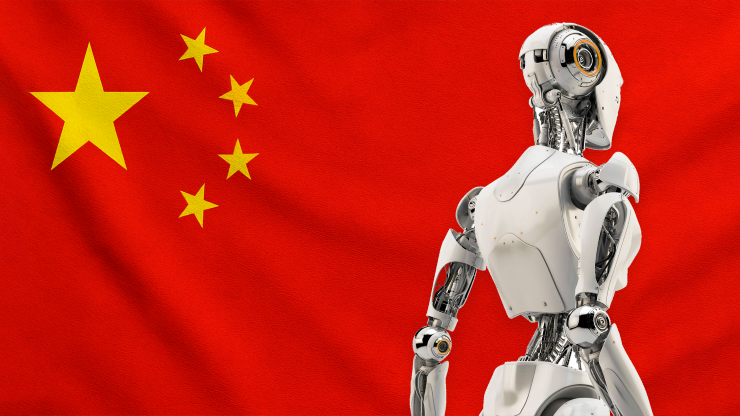
When it comes to robotics, China is now the global leader in the space, just as they have become the leader in Electric Vehicles and renewable energy. While there’s little doubt the US holds a marginal lead in frontier AI models and has an edge in microchips, China is just one step behind and is now moving forward without dependence on US-manufactured chips, which NVIDIA is finding to its detriment in the global market. While they might not be there yet, every indication is that China will, as with energy and manufacturing innovation, level up and likely move ahead of the US.
It has the world’s second-largest military budget, at around $277 billion. While that is just a little over 25% of the bloated U.S. war budget, China is not cursed with an Industrial-Military Complex awash with greedy investors and oligarchs using it as a rich man’s slush fund. I think it can safely be said that the Chinese public’s value for money from military investment is significantly higher than in the U.S.
Longstanding Western propaganda has had its populations believe China is the enemy, when in reality, it’s just a country the West can’t keep pace with on innovation and societal development. If you want to build infrastructure in the U.S., it will take years and go way over budget, yet China can build a small rail station in a weekend.
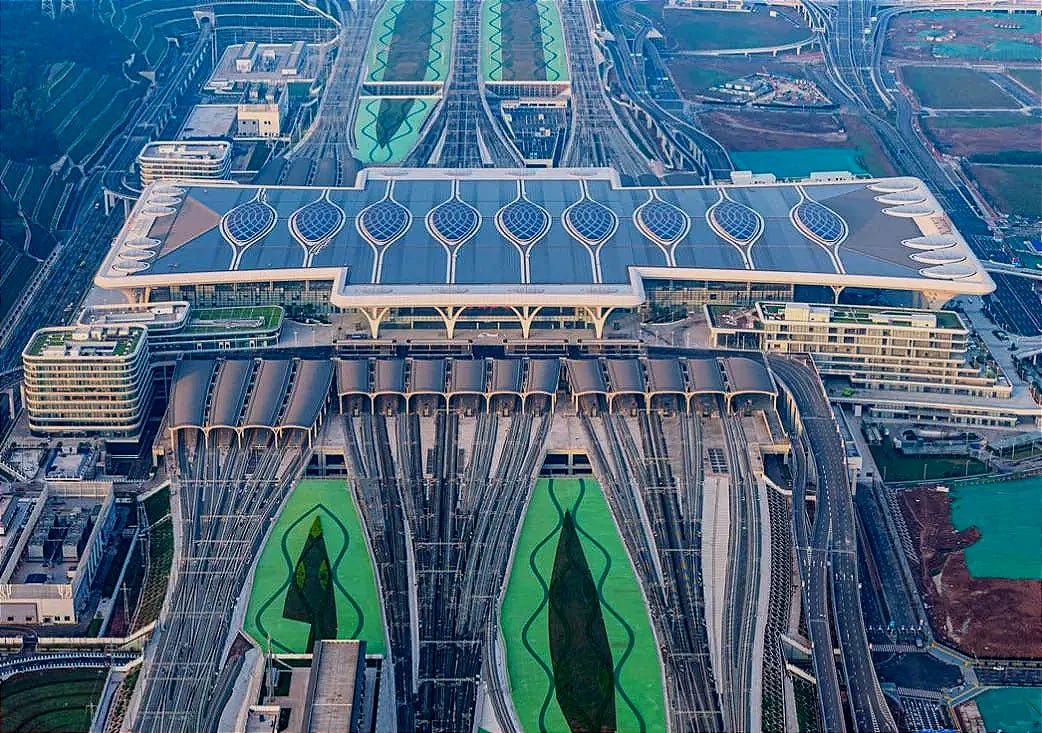
When it comes to large infrastructure projects, they’re in a class of their own. It built Chongqing East Railway Station, which is about 5 times the size of New York’s Grand Central Railway Station, in just 38 months. All part of the largest high-speed rail network in the world. Their success goes way beyond infrastructure and technology. China has one of the highest-performing education systems, particularly in standardised metrics such as PISA (reading, math, science), which frequently top global rankings. They don’t subscribe to the Republican mantra of ‘keep ‘em dumb an’ poor’
It’s estimated to be almost a decade ahead in nuclear power generation technology, with renewable technologies accounting for 56% of its total power capacity; it’s well on course to electrify the nation, thus reducing reliance on the importation of fossil fuels. Yet another example of long-term forward planning.
From an economic growth perspective, it’s currently the only nation on Earth capable of providing the West with the means to become independent of fossil fuels at scale. The reason it’s able to do this is that its wealth is not being stolen from the inside by the rich. It does not have to answer to a shareholder class, and it plans in decades, not 2-year election cycles. Before you ask, there are rich people in China, but they know their place and operate within state-set parameters
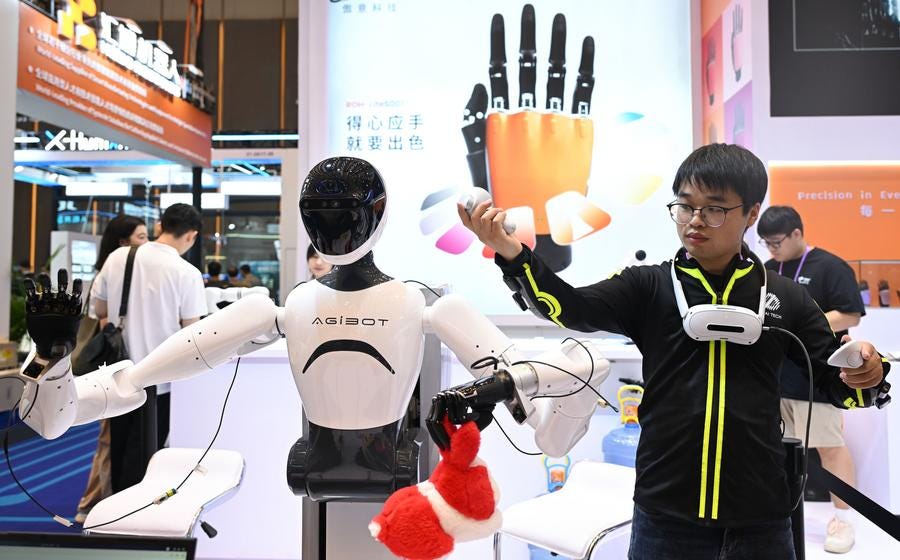
The days of Chinese imitation are long gone; they no longer need to imitate because they are now leading innovation across all the key economic drivers. The rich in America have turned Western capitalism into feudalism, with a society of have-nots and have-yachts; that mentality does not exist in China, and that’s why they will, in time, become the number one global economy. There’s little wonder Trump wants to make America great again; he is obsessed with resurrecting past glory. The same glory Reagan and corporate America handed on a plate to China for a quick buck.
At the time, the corporate elite thought they were reliving the golden age of slavery, replacing black people with Chinese workers, just as they had armed the Mujahideen in Afghanistan. (How did that go?) China has used Western investment not only to compete, but to lift its population out of poverty and share the spoils of its economic success. They don’t need to go to war with America, as demonstrated by their one trillion dollar trade surplus in response to Trump’s attempt to crush their economy. That should tell you everything you need to know about who’s really winning.
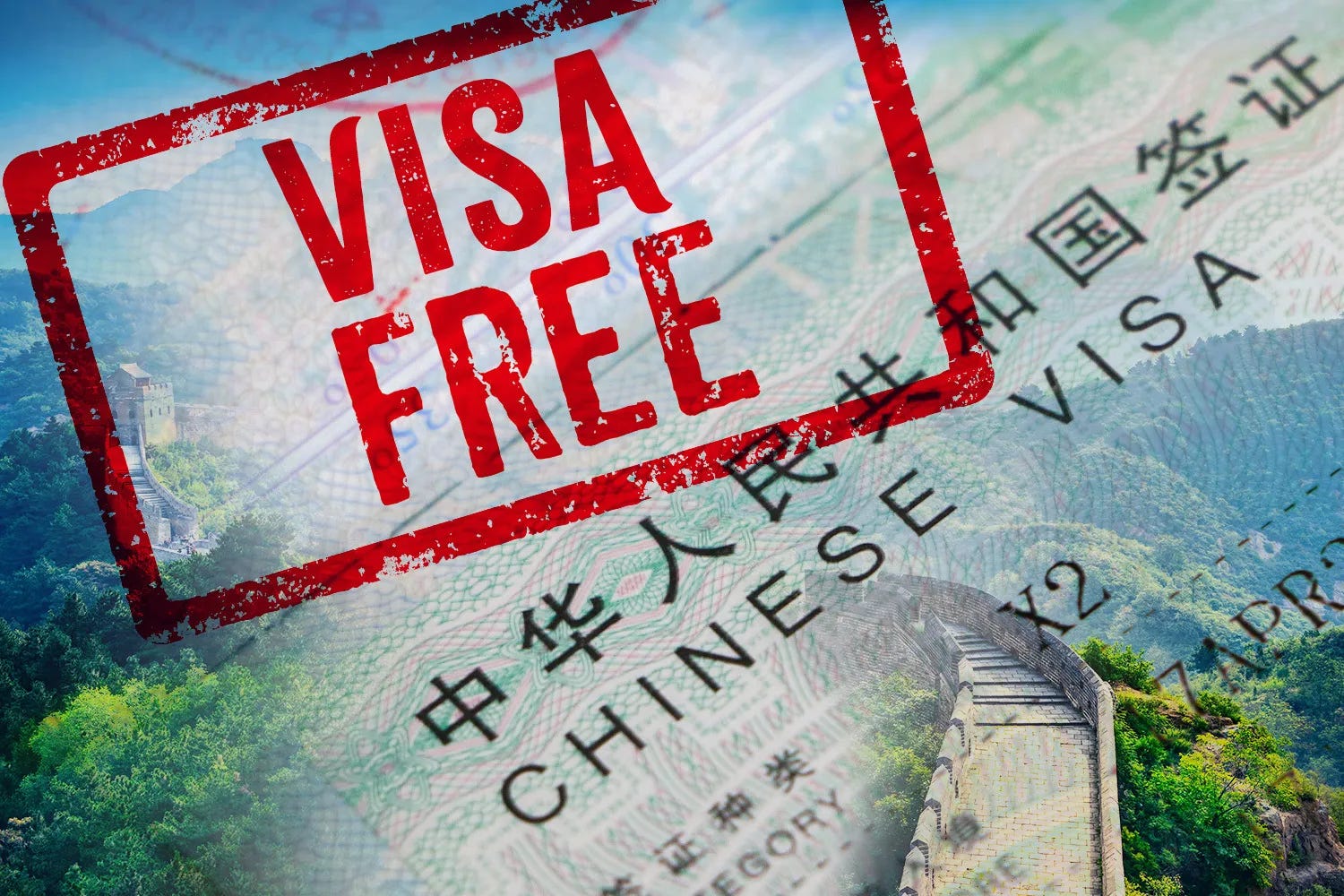
Don’t take all this from me, China has opened its country to non-visa tourism for good reason: it’s proud of what it’s achieved in a little over half a century. In that same period, America has broken its society, its politics and become the pariah state once reserved for China. The tables are turning. As a female tourist in China, you can wander the streets alone at any time of night or day and feel absolutely safe. You can leave a laptop on a park bench at lunchtime, walk away, and it will still be there the same evening.
How the mighty have fallen.
One thing I think deserves mentioning is that they are have been a more closed society without the immigration from people from many other countries and I don’t know about if they have all the religious permutations stirring up problems here. Also the “white” power b.s. here they are all pretty much the same. Your article is on point that greed and lack of vision is making USA look VERY stupid and our faltering educational system will not help future generations. And then a phony nincompoop gets elected president. I have no faith in the future of America with republicans cheating where ever they can get away with it and a SPINELESS Democratic Party. Thanks for your writing!!!! Tell it like it is!
I have been to China. You see what they want you to see, without you realizing it. They also always have eyes on you, as a foreigner, and though you think you were wandering alone at night, someone was watching. Questions may be asked about it without you realizing that someone had to be watching for someone to ask that certain question. Had an experience in Tiananmen Square. Looked like few people were there. I military guard on a corner, like a policeman. The square is huge. You start thinking people are actually free here. We so happened to be there when some people, maybe three, one driver, two people who unfurled a banner. It was in Chinese. We couldn’t read it. In less time than it took to read my last few sentences, military vehicles appeared, surrounded the van, took them away.
We were quite far from the incident, but then a vehicle roared up to our group. Soldiers got out. One pointed at one in our group. Took his camera. Exposed and kept the film. Fortunately, they gave his camera back. He had taken a picture of the van and banner. Then, poof, they all disappeared. All this said, is to let you know that you always have eyes on you in a dictatorship country.