


PREFACE | PART ONE | PART TWO | PART THREE | PART FOUR | PART FIVE | PART SIX
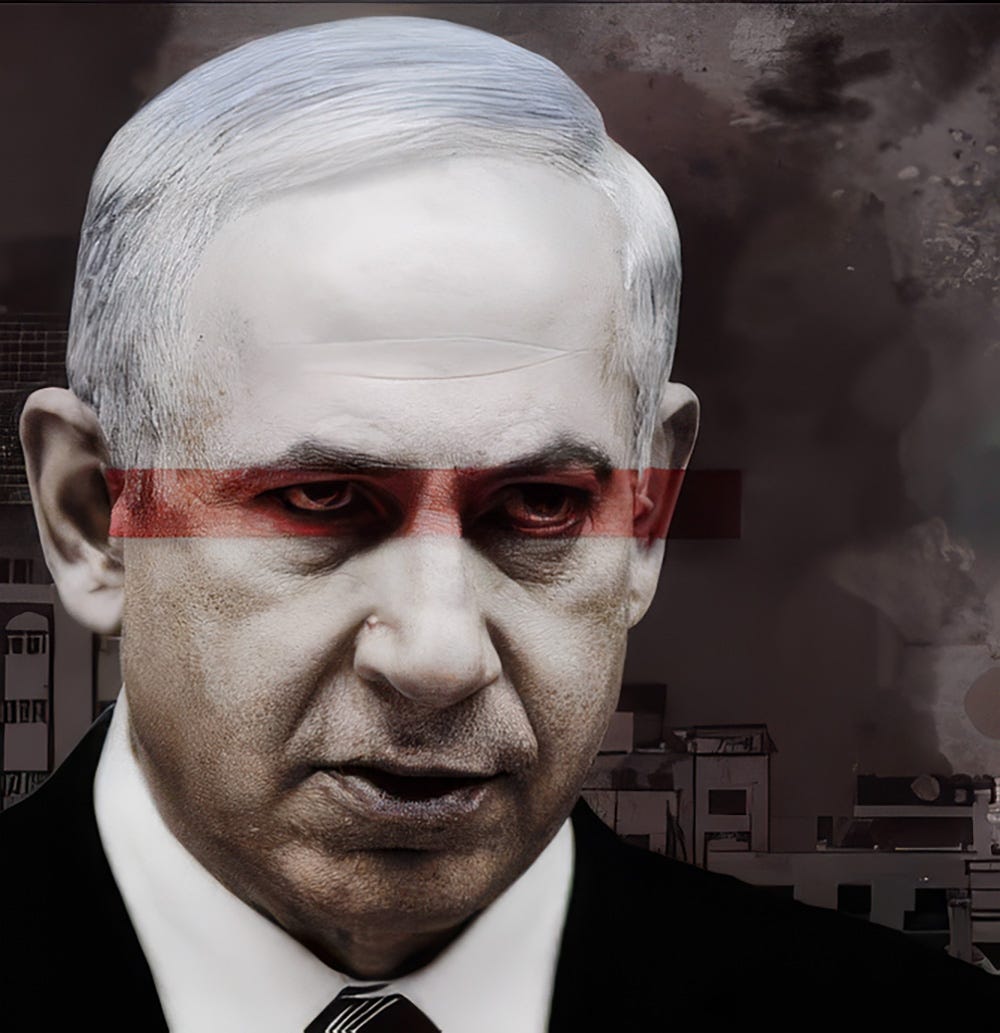
The true evil of this story is NOT the senseless catastrophic loss of life; the real untold story is that Netanyahu was told the attacks on October 7 were imminent, and the man who had sanctioned funding for Hamas to the tune of $1.3 billion made a calculated and, in my view, cynical decision to do nothing. I believe he did this because he saw it as an opportunity to avoid accountability for his own alleged corruption, while achieving a long-held dream to rid Gaza of the Palestinians. He believed the only way he could survive politically was to go on a military rampage, killing as many Palestinians as was required to hold onto power. His arrogance led him to believe he would never face accountability.
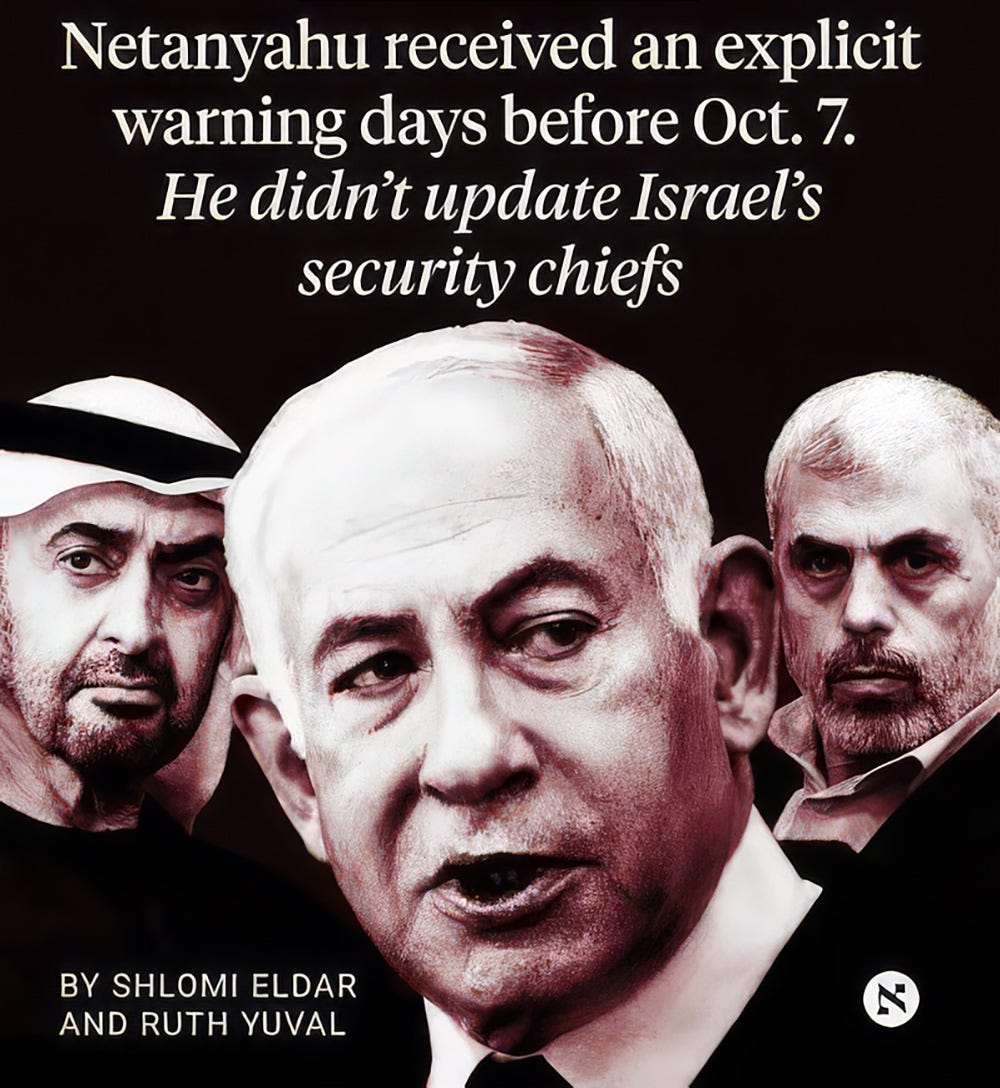
If you take nothing away from this extensive, detailed series of pieces, you should at very least read this Haraatz article, which I’ve made sure isn’t behind a paywall. It goes to the very heart of what Netanyahu knew and when. For the sake of clarity, Haraatz is the oldest newspaper published in Israel. It is printed in both Hebrew and English. It’s widely regarded as Israel’s “newspaper of record,” recognised for serious investigative reporting and in-depth analysis. As a subscriber, I would liken its reporting to The Guardian’s.
I highly recommend reading the full piece because it brings together so many threads, and my thanks go to the authors, Shlomi Eldar and Ruth Yuval, both highly respected journalists. The title of the article was :
Revealed: Netanyahu Received an Explicit Warning Days Before Oct. 7. He Didn’t Brief Israel’s Security Chiefs
It is an expansive and highly detailed piece which outlines exactly what Netanyahu was told, when and what he did, or rather did not do:
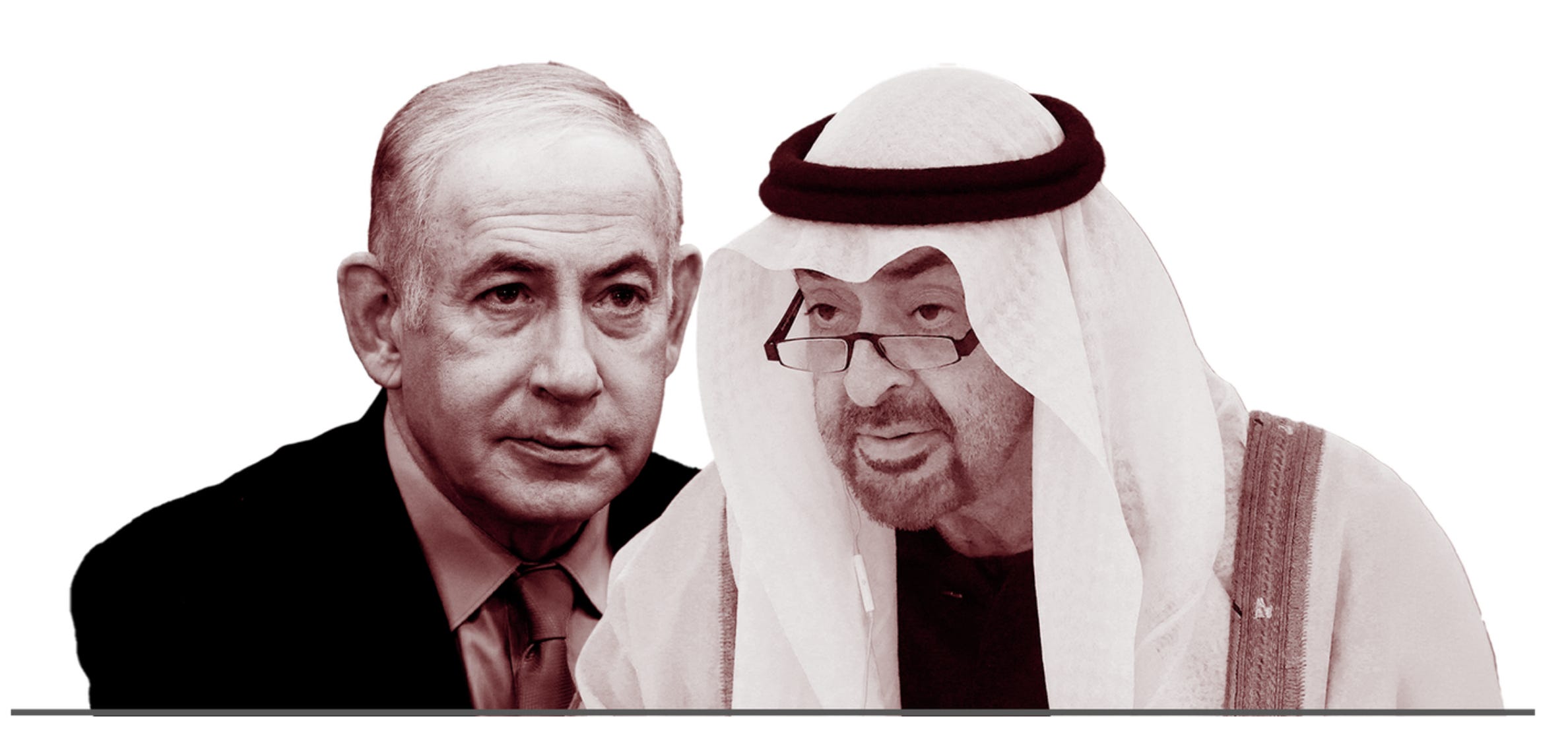
A week and a half before the October 7 massacre, Mohammed bin Zayed, the president of the United Arab Emirates, called Netanyahu and spoke with him for 45 minutes. He gave him an explicit warning that Hamas’ leader in Gaza, Yahya Sinwar, was planning a major operation against Israel.
The burning question surrounding this deadly affair is: why did Netanyahu choose not to act? It’s important to understand the background to what was going on between Israel and Hamas in the months before the attack. At that time, with the approval of Netanyahu, the Israelis were in talks with Hamas regarding a temporary truce with a view to arriving at a sustainable agreement in the Gaza Strip. This involved the release of abducted soldier Gilad Shalit, among other demands. Netanyahu was dangling a carrot.
As reported:
The talks initially focused on a gradual lifting of the blockade on Gaza and increasing the shipments of food and raw materials entering the Strip. A new idea was also raised: establishing trade zones along the Strip’s borders with Israel and Egypt, which would offer thousands of jobs to unemployed Gazans. The Egyptians were also willing to allow “safe passage” for residents of the Strip on their way to the airport in Sharm el-Sheikh – which would provide them with an opening to the world. The proposal to supply natural gas to the Strip from the Gaza Marine natural gas field, discovered in 2000 off the enclave’s coast, was also put forward. The proposal was called “G 4 G,” Gas for Gaza.
In short, all parties seemed set on reaching an agreement, but Netanyahu started slow-walking the process, which ultimately left Sinwar increasingly frustrated. It seems likely that political considerations got in the way, and Netanyahu was fearful of what might happen if he did deal with Hamas; how would the right-wing political thugs in his cabinet react? To be very clear, Hamas was prepared to do a deal in return for the release of Israeli prisoners and the bodies of soldiers held in Gaza.
The piece notes:
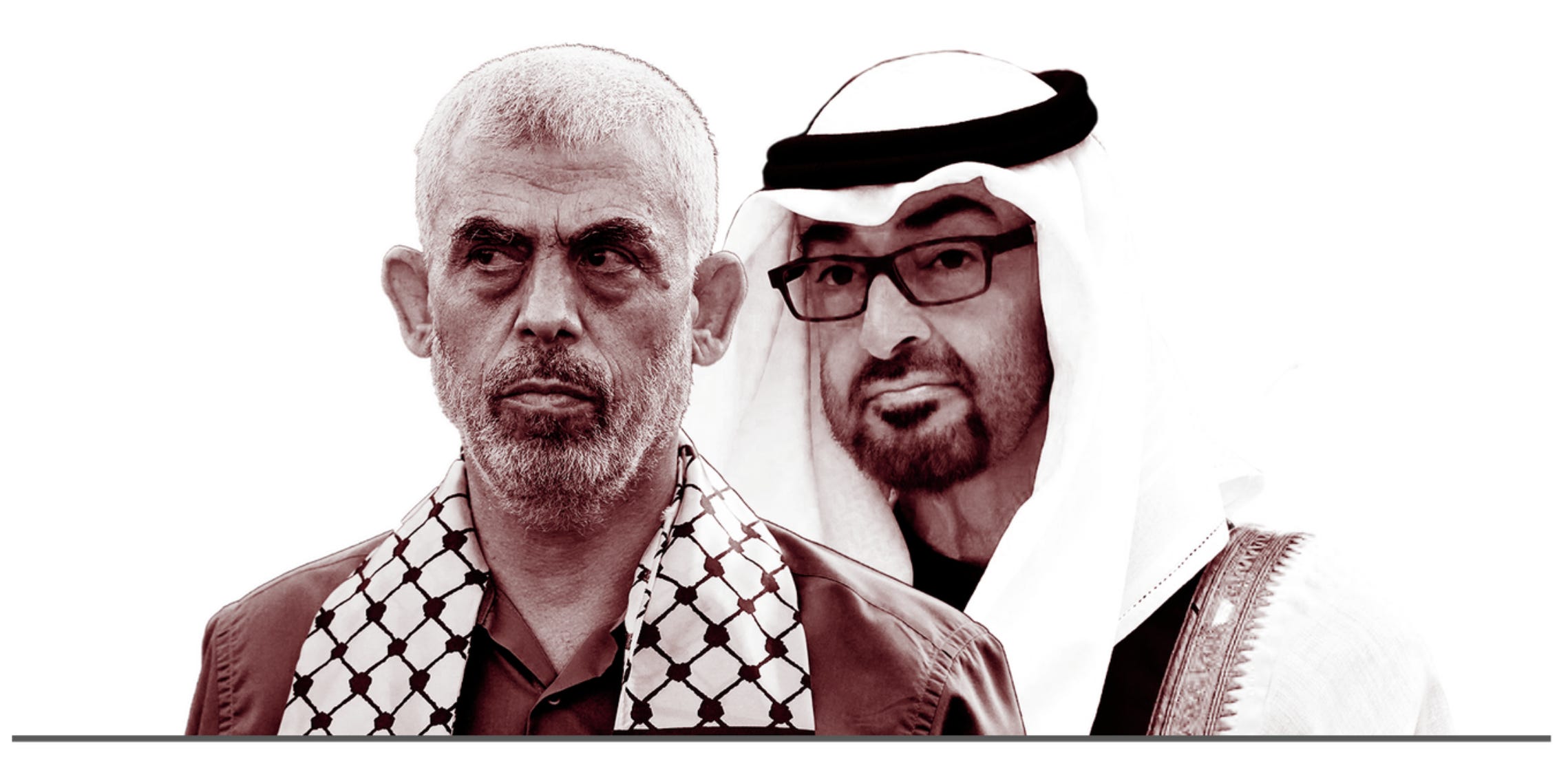
In September 2023, just before the die was cast, Sinwar [Hamas leader, later assasinated by Israel] arranged a private meeting with Fatah official Coal Eyes. “Tell the Israelis that if they don’t make progress, I’m preparing a huge surprise for them,” he declared emphatically. Here, he dropped a key word for the first time, one that should have triggered red flags: “Tell them to expect a ‘zilzal,’ an earthquake.”
There is no question that Netanyahu and his security advisors failed to take the threat seriously. Despite advice to the contrary, Netanyahu simply reinforced his position: “Prepare plans for me, and I will consider them.” Officials noted that this was his way of postponing action. The Emirati leader, fearing Netanyahu was not taking the threat seriously, spoke directly on the phone with him for 45 minutes
The reporting continues:
Seeing that Israel was not responding to the clear warning conveyed to the Shin Bet, the Emirati ruler decided to hold a conversation with Israel’s prime minister himself. Thus, that 45-minute conversation took place at the end of September, in which he conveyed an explicit warning to Netanyahu about Sinwar’s intentions.
The bottom line was that, despite all the warnings, one of which also came from Egyptian intelligence chief, Gen. Abbas Kamel, Netanyahu failed to act and additionally failed to share the full extent of the warnings with Shin Bet, to which later a senior official said:
“If we had known about the warnings ... it could have changed our entire assessment picture.”
The rest is history, but that is not the end of the story. After the attack and the subsequent kidnapping of the hostages, this is where it gets more chilling:
When the Israeli security cabinet convened with some delay, at 2:45 P.M., there was still no clear idea of the number of people abducted. “Currently there are 14 soldiers and 28 civilian hostages, and dozens more with whom there has been no contact,” the head of the Shin Bet said. Finance Minister Bezalel Smotrich demanded that the captives be ignored, stating that “it’s impossible to operate with such a mindset.”
From the outset, it appears the hostages were nowhere near the top of the priority list, and I believe it stayed that way. They were, in my view, an impediment to the opportunity that had presented itself to send a message and make Gaza uninhabitable in order to rid it of Palestinians. This was reinforced when, that same evening, Qatar’s Prime Minister Sheikh Mohammed bin Abdulrahman al-Thani called Mossad Director David Barnea to say:
“I just finished a conversation with Hamas political leader Ismail Haniyeh and his deputy Khalil al-Hayya, who had only recently arrived in Doha,” he briefed Barnea. “I explicitly threatened them that if all civilian hostages are not released immediately, I will personally order their expulsion from Qatar. I would like to inform you that Hamas is ready to release all civilians now, and we are prepared to mediate.”
In summary, by the evening of October 7th, there was an offer on the table from Hamas to release ALL the hostages, and the Israelis refused to negotiate. Once again, I believe that this was because they knew exactly what they were going to do, and if the hostages were released, that would punch a big hole in their genocidal plans.
I want to make it clear that this reporting is NOT mine; all credit goes to Shlomi Eldar and Ruth Yuval. I framed it in the context of my overall commentary to provide a broad summary for the time-poor. I stress once again: you really should read the entire piece.
Millions of ordinary citizens have fought hard for this shift in public opinion, taking to the streets and having the guts to say what their governments would not. The level of power leveraged by so many so-called democratic governments has been breathtaking; people have lost jobs, even gone to prison for simply speaking the truth, and that will forever be a stain on those complicit in Israel’s crimes against humanity. The truth is, the people were right, just as they were about weapons of mass destruction and the current failed war in Iran. No sign of political moral decay is clearer than a government that refuses to listen to its people.
In the final piece tomorrow, I’ll do a roundup and introduce you to a wider picture of concern. I’ll also answer some of the questions raised in the comments over this series. I usually revisit the topic every six months in the hope that things will have improved, only to find they have got worse; it is truly soul-destroying to witness. I have no idea where we will be next time, but I don’t have high hopes.
If you want to support my work but can’t commit to a paid subscription, you can now make a one-off donation by clicking the image below. Your donation helps cover research costs and keeps this independent reporting free for all.

No doubt. Netanyahu’s army was in the West Bank at the time of the attack on his country in a known precarious area. His military and he himself failed his country and used the results to justify more killing. Very much like Bush and Cheney failed the United States in September of 2001, using it to justify a military buildup, loss of American freedoms and wars in countries we had no business in. Im just an ordinary citizen who knew without a doubt that there were no WMDs in Iraq. Just like i know Israel has nuclear capabilities and Iran does not.
Trump was warned and started a war.