


PART 1 | PART 2 | PART 3 | PART 4
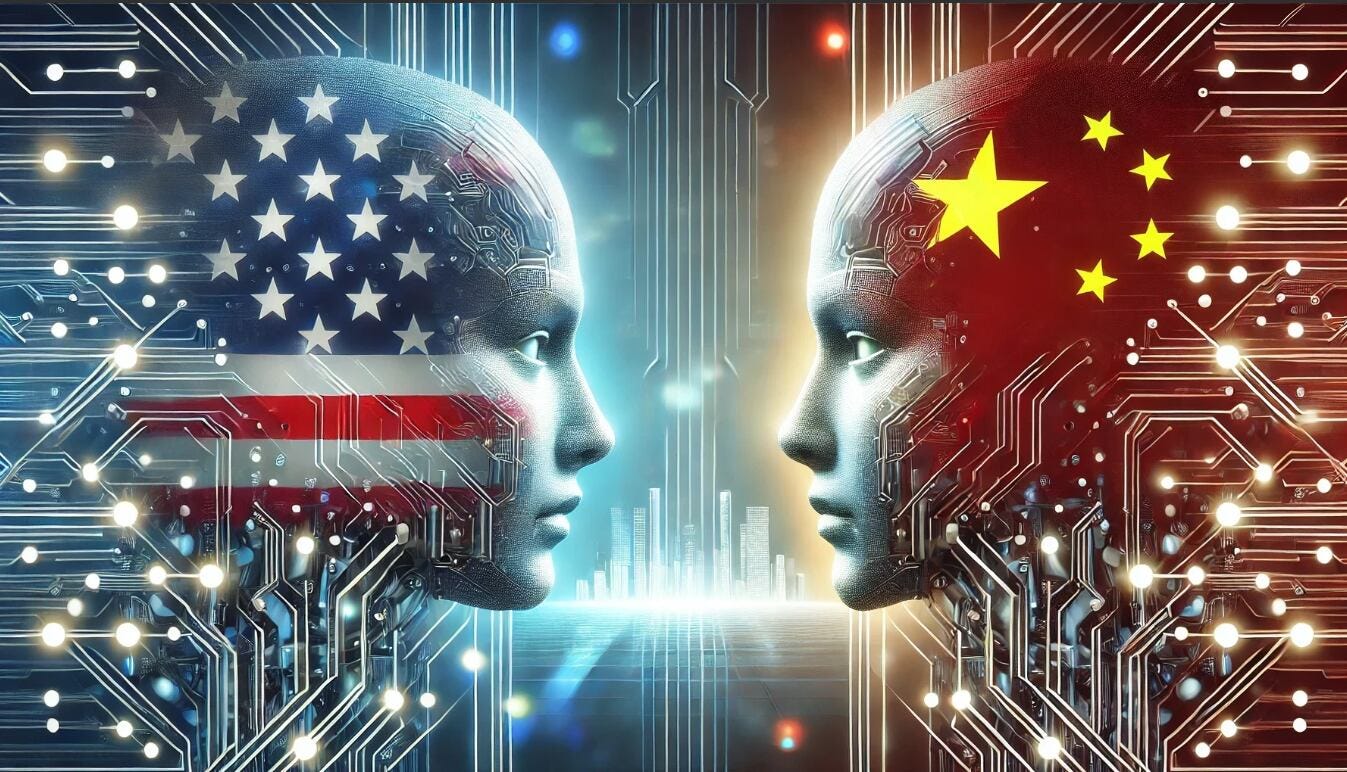
This is the penultimate piece in my series of posts on AI, its intersection with US politics, and the broader socioeconomic impact of political opportunism and exploitation. As each day passes, I am struck by the now-almost-total dependence the US has on winning the AI Tech Stack war with China. Trump is hailed as America’s CEO, yet he has no plan B. He’s bet the entire house on winning a race with no guarantee the US will emerge victorious.
The extent of the risk can’t be overstated. Economist Jason Furman, from the Harvard Kennedy School, has stated that almost all US GDP growth was driven by investment in Data Centres for AI. As reported by Nick Lichtenberg for fortune.com on October 7th 2025, Furman noted:
GDP growth would have been just 0.1% on an annualized basis, a near standstill that underlines the increasingly pivotal role of high-tech infrastructure in shaping macroeconomic outcomes.
He goes on to report:
Furman’s findings, shared online and echoed by financial analysts including Robert Armstrong of the Financial Times‘ Unhedged (the same writer who coined the term “TACO trade’), echo several months of observations on the remarkable surge in data-center infrastructure. In August, Renaissance Macro Research estimated, to date in 2025, the dollar value contributed to GDP growth by AI data-center buildout had surpassed U.S. consumer spending for the first time ever. That’s remarkable considering consumer spending is two-thirds of GDP.
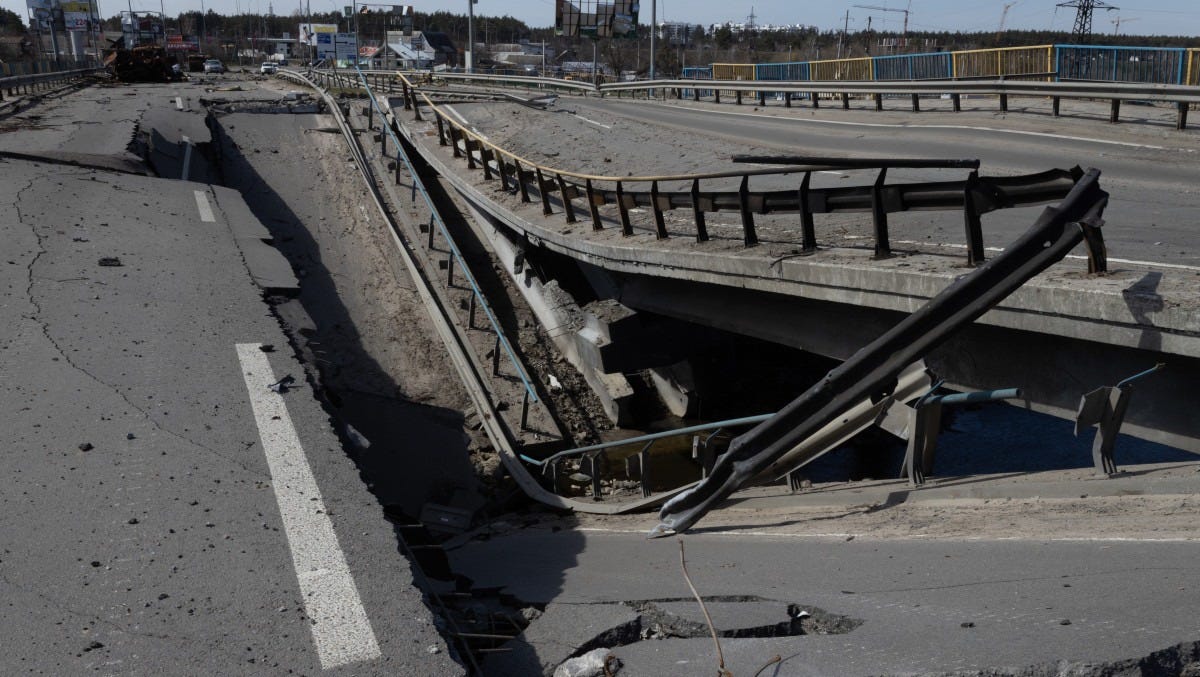
From a country that, for decades, has allowed infrastructure to crumble while China left the US in the rearview mirror, it’s strange to see a targeted, all-in approach to infrastructure. The keyword here is ‘targeted’. The roads can still crumble, the bridges can still collapse. Public transport infrastructure can remain in the Stone Age, but power generation and Data Centre construction are key imperatives. So the obvious question I have is this: why is public infrastructure investment a no-no, but AI infrastructure a national priority? Both drive GDP growth, but updating public infrastructure for the benefit of the people can wait until sometime never.
What’s most egregious is that, having recognised the imperative for energy capacity, this administration has decided to build that capacity using the most expensive resource, fossil fuel. It is proof beyond doubt that this exercise has nothing to do with efficient, cost-effective power generation and everything to do with a return on investment for the fossil fuel industry’s purchase of lawmakers and the President of the United States.
One of the reasons the US will likely lose this economic and tech war with China is that policy is not driven by efficiency and best practices; it’s driven by who pays the largest political bribes. We often make the mistake of seeing this as a technology race with China. This is not how the Chinese think; they think big picture. Energy production is considered in a much broader context. The march is on to electrify the country, removing dependence on oil and fossil fuel imports. Once again, it’s about long-term planning, not short-term profit.
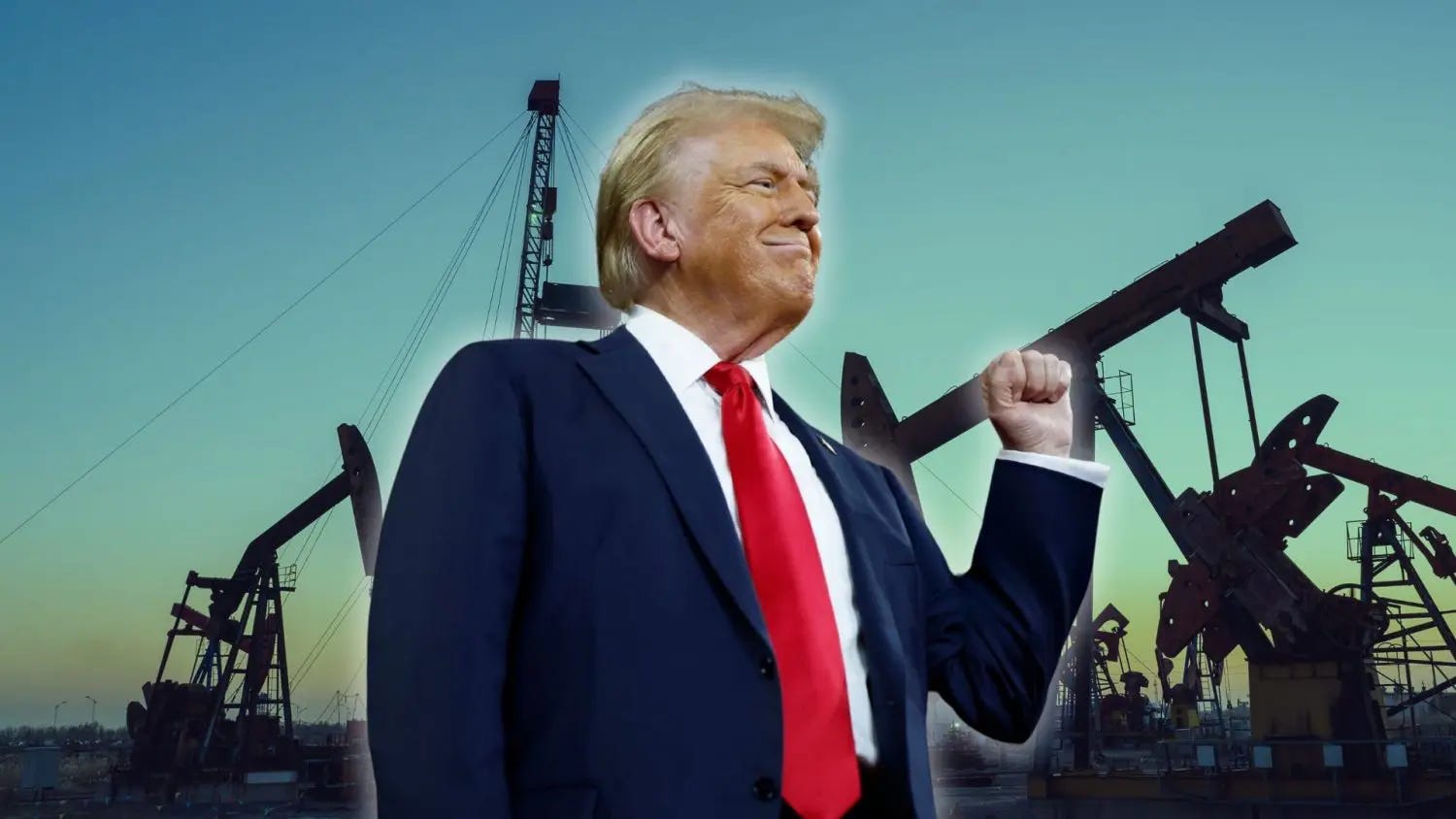
Under Trump, the US has now placed a bet on fossil fuels and abandoned renewables. History will mark this as the year when America began the slow process of economic euthanasia. Trump has deliberately walked away from a market valued at around $1.26 trillion in 2025, projected to hit $4.6 trillion by 2035. Estimates vary slightly, but by the US walking away, they have quite literally gifted China an open goal, which Xi fully intends to exploit to the full. It is the most significant act of ideological economic suicide in recent history, reversing Joe Biden’s forward-leaning and largest-ever investment in green jobs and renewable energy.
Why is this important in the context of AI? Because energy is the whole ball game in this space, and China is so far ahead, it’s embarrassing. Beyond renewables, China is estimated to be a decade ahead on nuclear, too, having recently, it seems, come very close to perfecting thorium nuclear reactors. If you’d like to read more about this original abandoned US research embraced by China, take a look at this article titled: "Chinese molten salt reactor achieves conversion of thorium-uranium fuel ” It appeared in World Nuclear News on November 4th 2025. The Shanghai Institute of Applied Physics of the Chinese Academy of Sciences announced:
“This milestone breakthrough provides core technological support and feasible solutions for the large-scale development and utilisation of thorium resources in China and the development of fourth-generation advanced nuclear energy systems.”
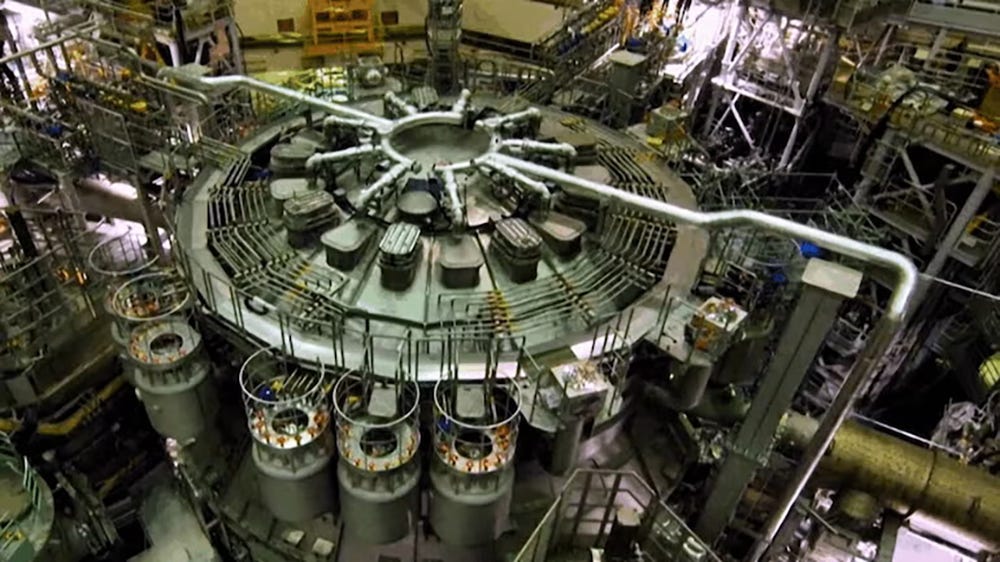
The project started in 2018 and is a shining example of advantage gained from long-term planning by the Chinese government; unhindered by a 4-year electoral cycle. This is the very reason China can build a railway station in 9 HOURS. Taken one step further, Chinese engineers, workers and AI robots worked seamlessly together to build Chongqing East Railway Station. Opened in June 2025, it’s the world’s largest high-speed rail hub, and it took just 38 MONTHS to complete. Click on this link to see how they did it. I highly recommend watching the linked video because once you see it, you can’t unsee the difference between the two cultural approaches.

It shows the chasm that exists not just in technology and infrastructure, but also in the massive cultural gap that shapes attitudes towards the Chinese work ethic. Western democracies can’t compete; it’s why, in my opinion, the US will ultimately lose the AI race. I chose to feature this particular project because it allows me to demonstrate the difference between the short-sighted race for profit and strategic state-level investment and planning.
Corporations and a shareholder class don’t drive Chinese policy decisions; a people-centric government drives them. Let me qualify this before people jump in and talk about ‘state control of the people’, which incidentally is what Trump is currently trying to impose in the US, WITHOUT the benefits delivered to the Chinese population.
I’ve said before, I don’t buy the claims that China has eradicated extreme poverty. There is still evidence of it persisting in some rural parts of the country, as well as evidence of forced labour, but there’s no question that the government continue to address the issue. The fact is, although the country is home to nearly one-fifth of the world’s population, it has only 7 per cent of the world’s arable land. There are still reported cases of malnutrition in remote rural areas to address. Interestingly, China is also not exempt from obesity in its more prosperous cities. Hence, the government undoubtedly faces challenges similar to those of Western societies—an apparent side effect of adopting state-controlled capitalism that has resulted in increased prosperity.
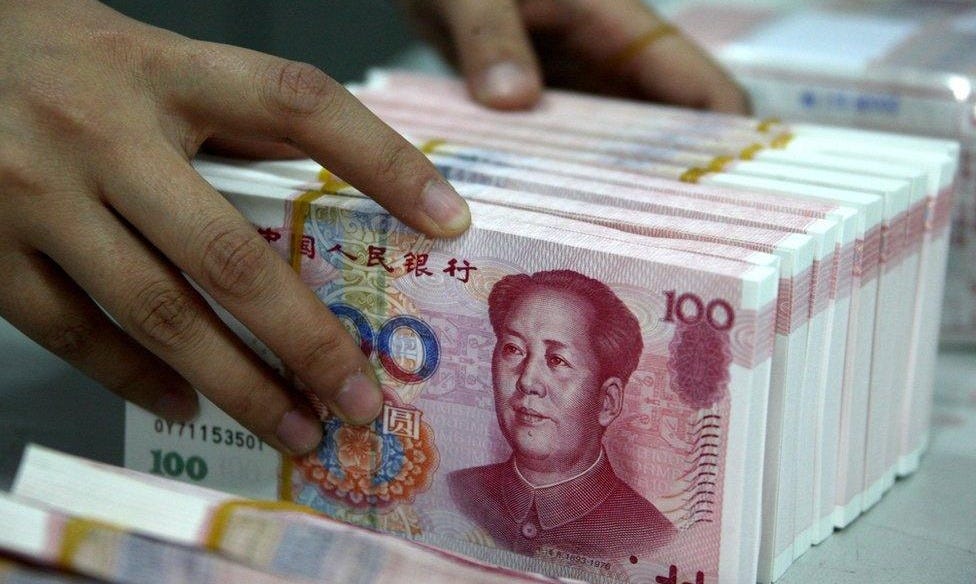
Despite the more controlled economic model, wealthy people do exist in China. This is a result of Chinese leaders learning about the upsides and downsides of free-market capitalism. The evolution of the Chinese system shines a light on what Americans could have if the wealth gap were smaller. According to global spending definitions, about 50% of the Chinese population is considered middle class. To provide some context, the middle class accounted for just 3.1% in 2000 and rose to over 50% by 2018, adding hundreds of millions. That’s a meteoric rise by any measure. It’s estimated that only 1.2% of the population has a high net worth.
Since 1978, the bottom 50% of Chinese earners have seen their real income grow 500%. In the same period, US workers have seen stagnant real income growth, while the top 1% have seen exponential growth. It is, of course, essential to note that the bottom 50% in China in 1978 often lived in severe poverty before the US decided to throw their own workers under the bus to capitalise on Chinese poverty to exploit abundant, cheap labour. Little did they know, they had signed the future decline of their own economy at the altar of greed.
What we see from 1978 onwards is the Chinese government embarking on a long journey of discovery, leading to HUGE social and infrastructure investment. You can criticise them as a communist dictatorship all day long. Still, the lack of a shareholder and corporate class enabled them to lift 800 million of their population out of abject poverty, and build cities and infrastructure that is a decade ahead of their now main economic competitor. While the West fell asleep at the wheel, thinking of China merely as the counterfeit capital of the world, China kept their head down and became the manufacturing and infrastructure capital of the world instead. Only then did they make the shift from imitation to innovation.
They understood that if they just stayed focused, they could be a formidable economic powerhouse, and so it came to pass. Suppose positions had been reversed and China had been using American cheap labour. It is safe to say American factory owners and the rich would have hoarded the Chinese investment just as the top 1% are doing now. There would have been the bare minimum of infrastructure investment made, as there is now, and the workers would have remained as poor as they were when China first placed manufacturing orders. This is precisely why the US will lose this race.
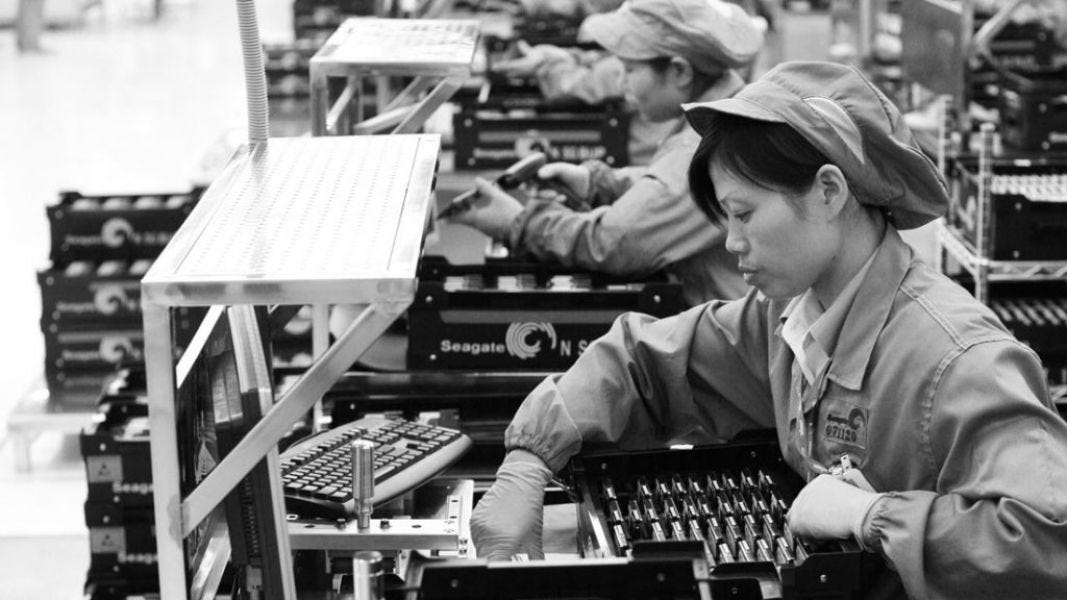
To recap: 800 million people out of poverty, a gold-standard education system, the most advanced cities and infrastructure in the world, and a leading global automated manufacturing hub. There are so many red flags waving, as Corporate America relentlessly continue skimming money from the economy through low wages and massive tax breaks. They are literally sucking the life out of hard-working Americans who delivered them the wealth that they promised would trickle down. This is not about China stealing American ideas and not ‘playing fair’. Since when has America ever played fair? The number of ideas they have stolen from the British alone could fill a warehouse, so this victimhood card is worthless in a globally connected economy.
Let’s look at what happened when, for research purposes, Jim Farley, CEO of Ford, had people tear down Chinese EVs. He described them as “far superior” to Western counterparts. According to the Global Times, Farley claimed that “ the teardowns convinced him the US automaker had to change to match its new competitors”. You can click here to listen to him express both his admiration for the Chinese and the realisation that the US economy was lagging so much that it was a significant challenge even to begin mounting a response. American exceptionalism has created a nation which is a legend only in its own lunch break.
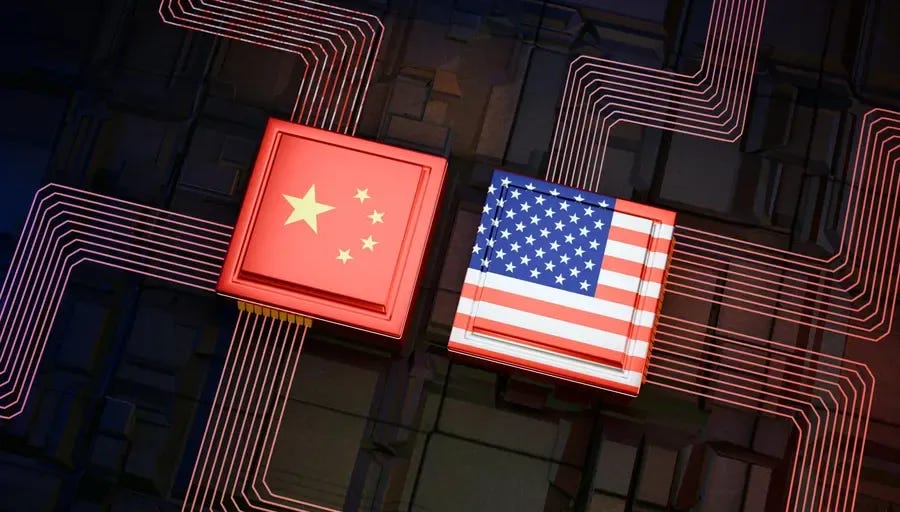
You hear Trump telling the world that the US is leading the AI race based on fairy tales told to him by US tech oligarchs. Meanwhile, China has already mastered and deployed AI not just in rudimentary voice assistants, but across the entire manufacturing process. I’ve linked another video here to take you inside the AI-driven manufacturing process. It’s time to face reality and understand that the US model for AI implementation is behind the curve. The reason for this is that the focus is NOT on the real-life need to integrate AI into the traditional workflow, using it as a value-added efficiency tool, but rather on using it as a workforce-replacement tool.
I had hoped to wrap up this series with this post, but there is one more important aspect to cover: reality versus hype, which we’ll address in the final post.
Thanks for all the information and well written articles. Just diving into AI and this helps tremendously.
The t-Rump regime. Taking the US back to the 1800s burning decomposing dinosaurs, plants and coal. While the Chinese eat our future technological and economic breakfast, lunch, dinner and desert.