



Let me begin today by saying a big thank you to those who engaged with PART ONE of this two-part post. Part one was my first swing. By way of explanation, my approach is to select a broad subject, in this case, to deal with the calls for a general strike and an economic blackout following the outstanding success of the No King’s Day protests on October 18th. I then do a brain dump, which serves as the basis for my post for the day. I then read through it multiple times, refining as I go, and attempt to present it as if we are having a conversation over coffee or a beer.
I find that this allows me to express myself without the constraints of having to please an editor, although I know some will be screaming, ‘You do need an editor sometimes, Martin, as well as a proofreader.’ I know, I know, but verbosity is my middle name, and missteps prove I’m not AI. That’s my excuse, and I’m sticking to it.
When I worked on the piece yesterday, although I had discussed economic disengagement on several occasions before, I hadn’t examined it thoroughly to determine how best to implement it. As some noticed, I was ‘winging it’ to some extent, suggesting Netflix should be the first target. Some people have rightly pointed out that Netflix exhibits left-leaning tendencies, so I have taken that into account, and we’ll address that in this second part of my post.
Today’s post works on the assumption that, as a reader, you are familiar with the concept of what I like to call ‘smarter direct action.’ The key to my proposition is simplicity, with the potential for a powerful, back-end technology-driven management capability. Let me be clear at the outset: I consider everything in this post to be open source; feel free to deconstruct it, copy it, or do with it as you like. Consider my words your words. Attribution would, of course, be nice.
All I ask is that, if you appreciate the thought and work that’s gone into this piece, you consider becoming a paid subscriber to Truth Matters. My paid subscribers are a rare bunch of people who are prepared to help fund the Truth Matters Project purely for the greater good, and to ensure it remains free for everyone to access, because we believe the truth should never be locked behind a paywall —and I love them dearly for it.
Right, enough of that, let’s press on. I’m often asked, ‘Do you have any good news for us?’ and I always promise that as soon as I have some, I’ll be the first to shout it from the rooftops. Well, today is all about GOOD NEWS. Now, please don’t get too giddy on me, because it comes with some caveats. I don’t want to rehash old ground, so if you haven’t read PART ONE of this post, could I ask you to do so before continuing? I have linked it below:
The symbolism is chilling, the outlook may appear daunting, but we're not done yet.

People often ask me, ‘How do you manage to write with a sense of purpose each day?’ My answer is simple because someone has to record not just the events of the day for the history books, but the raw emotion of the moment: the anger, the sense of injustice and the tragedy of it all. What frustrates me more than anything else is that it really doesn’t ha…
I will summarise by saying this: the US economy is highly vulnerable to the targeted strategic action I propose in this piece. For all the reasons I noted in the above piece, a general strike in this economic climate would likely be a self-inflicted wound. Around 14% of households live on less than $25,000, 7.4% live on less than $15,000, and an estimated 64% of families live paycheck to paycheck. For this campaign to be successful, it must be on a mass scale, be easy to participate in, and simple to track the results of the action.
It must be acknowledged that some people can participate more easily than others, and we must be mindful that what may seem like a small sacrifice to a comfortable American will be a huge sacrifice for a low-income family. This is about a collective effort where we adopt an ‘every little helps’ approach to supporting each other during the campaign. While I support campaigns like ‘Blackout Friday’ and a boycott of ‘Cyber Monday’, these are more short-term inconveniences for the uber-rich. I encourage anyone who can participate in these campaigns to do so, though; they help loosen the foundations, as I see it.
Having established that participation can’t be equal depending on one's means, the next consideration is scale. Strategic, targeted disengagement can only be effective through large-scale, coordinated economic hits. You will note that, in part one, I advocated for a panel of financial experts and suggested that Scott Galloway chair it. I note that this also upset some, given his position on Israel. Let me say immediately, my support for Palestinian self-determination and the need for the Israeli government to be held accountable for adjudicated war crimes, and I believe genocide, is well documented.
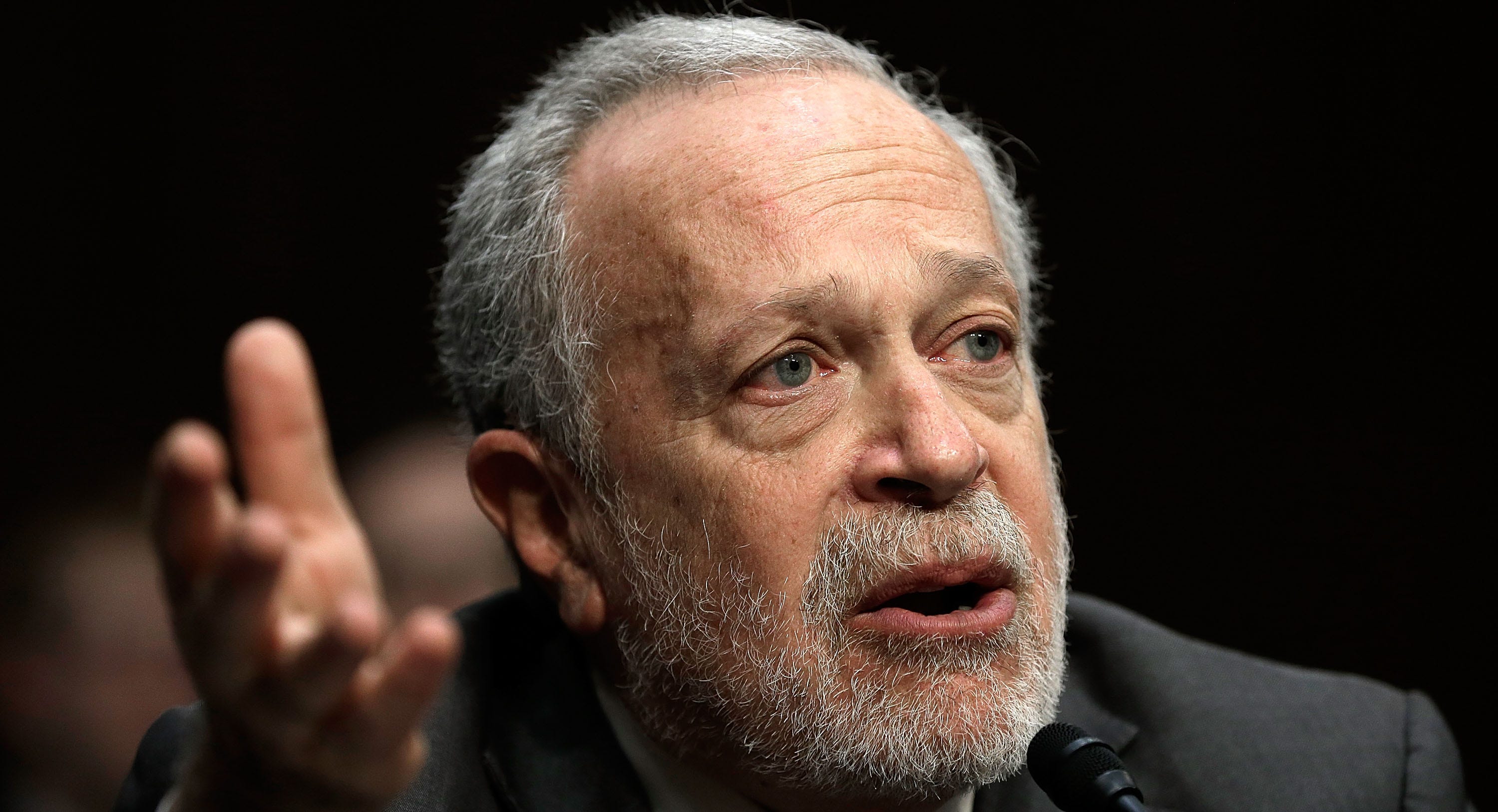
I don’t want to get into it here, but if you dig deeper, Scott’s position is much more nuanced than some would have you believe, and sometimes the blunt nature of his commentary can easily be misunderstood. I am not an advocate for throwing the baby out with the bathwater, but someone did point out that Robert Reich would also be a great candidate to chair the panel, too. There are others too, like Joseph Stiglitz, a Nobel Prize-winning economist, and Jared Bernstein (Chair of the Council of Economic Advisers under Joe Biden), as well as Heather Boushey, who served on the same council. As the story goes, find me a roomful of economists that agree, and you might just bump into a unicorn, but you get where I am going, and I suspect that Robert Reich may have a few suggestions himself. The key point here is that economists of this stature are well-positioned to advise on economic targeting strategies, and that is mission-critical.
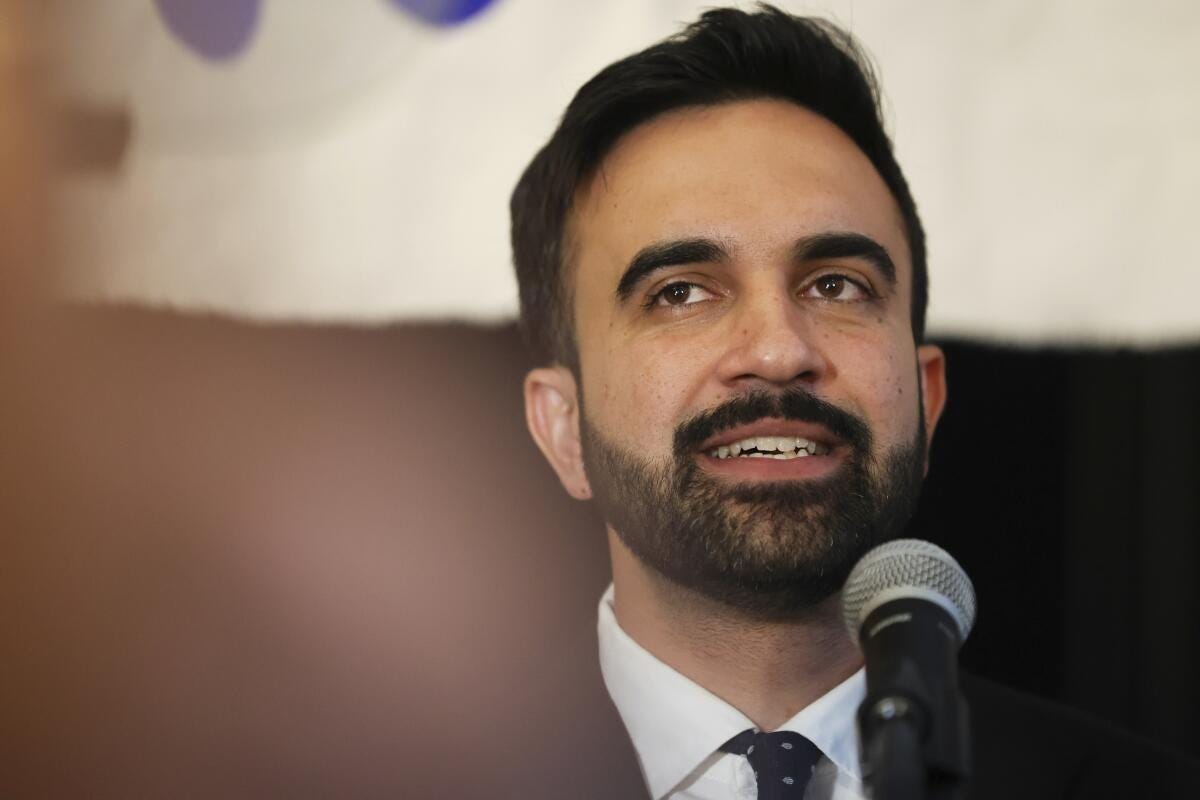
The next part of the jigsaw is messaging specialists, and there is no shortage of those. I would contact Zohran Mamdani’s team and Gavin Newsom’s team. I’d also reach out to Leigh McGowan, aka Politics Girl and Ohh that’s RICH, all of whom I greatly respect. There are, of course, many, many more who I’m sure would jump on board if asked.
This piece is about building what I call the No Kings enlistment database. This is the key component and requires some thought. I’m sure Indivisible already has a database, but I don’t know whether it’s a centralised or decentralised system, where the various branches maintain their own lists. This, however, is where I can put on my database developer hat and tell you what it needs to look like. There needs to be a centralised enterprise secure database held either on Microsoft Azure, Google Cloud, or Amazon Web Services. Given that these providers are part of what we are fighting, we already have a dilemma.
The following paragraph is for those who understand the technical requirements for securely hosting a large dataset. I’m personally more familiar with Cloud SQL and Firestore. However, the options are comprehensive in terms of providers for basic data needs, such as storing email addresses, with the potential to expand for those who want to get involved in demographic analysis. What is really important to note is that I am not a US citizen, and while I could build the database and a modular, cloud-function-driven application workflow. This would almost certainly qualify as election interference by a foreign agent, were I to do so. That would not be the case, I believe, if I were offering a free consultancy service to someone in the US building it.
In any event, Indivisible could either expand its own data list or build an ultra-secure repository for a new dataset. The challenge this type of project always faces is infiltration by bad actors through fraudulent registrations and attempts to obtain information on economic targets in advance. This is easily addressed by not releasing the target info until the day of action. You can’t stop this type of activity, and it’s a waste of time trying, in my opinion. However, if you wanted to get hyper-paranoid, there are AI tools that can analyse social media accounts associated with an email address and politically score it. You can build this into the registration as a background process to weed out MAGA infiltrators. This is not a foolproof system, but it does do a reasonably good job.
There is another concern: people who want to participate but fear their data will be hacked and used against them. A legitimate concern that forces the data controller to consider the level of security to use for the data repository. The alternative would be for the participant to create an anonymous email account. You can check out Proton for info on how to do that; they also offer a free version. The key here is to ensure there are no barriers to low- or no-cost participation.
From the Indivisible point of view, even if they had to build a new data repository from scratch, it could be done within a week. If they are happy with their own systems, then it’s just a matter of providing a registration point. If they wanted to keep this data partitioned, then they could port across any data and set up a redirected registration. This may all sound a bit technical, but the user isn't involved; it’s a back-end function handled by the system admins, and I’m more than happy once again to help with it if nobody else can.
Data analysis is mission-critical, so the minimum fields you would require on any registration form are an email address and political affiliation. The latter is essential because it should be sold as an apolitical campaign that invites participation across the political spectrum. Using this flag option allows you to identify party affiliation, etc. If you want to expand this, you can add fields to indicate what action was taken and which economic target was affected. This is all about database design, and again, I can help with that.
All of the above might sound technical, but it really isn’t; it is bread and butter for any database engineer. It’s at this development stage that you can add fields to understand user activity better and drill into participation. It really depends on how far you want to go. For example, you could introduce a short, carefully crafted questionnaire to identify the demographics of a No Kings conscript, with options for gender, age group, ethnicity, and income range as dropdowns. You could also specify a method of contact so that orders can be sent to either an email address or a mobile. The options are endless, depending on what data you want to analyse
Moving on. So we have the registration, which will add an email/mobile number to the list. Once the panel of economists identifies a target list, it’s a simple matter of pushing out however many million targeting instructions to No Kings conscripts for action. The key to all of this is unified mass action. Also, as stated yesterday, nobody can throttle these messages as they are direct communications. There can be no algorithmic interference. You will, of course, need to use a mail distribution tool like Mailchimp, or you could integrate SendMail directly into the database.
What this proposition does or should do is take the politics out of the process; this needs to be ‘We the people’ versus the government. It’s the perfect example of a bloodless expression of the Second Amendment. Instead of resorting to violence to overthrow a tyrannical government, the people use the power of their pocketbooks to achieve the same goal via technology. And guess what? It costs the digital soldiers, not a cent. Indeed, it saves them money because economic disengagement keeps your money for later, when you have achieved your goals, and forces big corporations to discount what you want to buy to get you to spend again.
This project would not be about getting you not to spend, but about getting you to defer spending. It’s not about depriving yourself, it’s about learning to be patient and making a temporary sacrifice for the greater good. 68% of US GDP is consumption, don’t let anyone tell you you are not in the driving seat. You hold ALL the cards; it’s just that you have never weaponised them before. I can absolutely guarantee that if this is played right, it would lead to the fall of this government. They are betting the house that you do not have the balls to be so audacious. They are playing on the basic fact that humans are not, by nature, patient; they want it, and they want it now. This takes a new mindset for many.
In a me, me, me society, I must admit I have my doubts, but I swear to you, if you can make this happen, it’s game over for Trump and his acolytes. If you don’t want to target Netflix in the opening salvo, then hit Disney again. The aim of targeting a high-profile streaming service is to get it picked up by corporate media to fire a warning shot. My problem with a big hit on Amazon is that there are tens of thousands of delivery drivers you don't want to hit too hard, so you keep ordering low-value goods to keep as many of them in a job as possible. Just don’t buy big-ticket items like white goods, etc. Maybe a value threshold should be set?
During the campaign, the focus should also shift to supporting local businesses, which have been hit hard enough by tariffs without this campaign kicking them while they are down. I think a reconnection with local businesses is long overdue, if I’m honest. I have always been an advocate. I support many local businesses and love the personal connection. I know it’s not always possible, depending on where you live, though. There is, of course, the dilemma of weighing the targeting of the hospitality industry, which employs many low-income workers. It will always be a balancing act, and hitting some low-income workers will be unavoidable, but this is where having a panel of economists comes into its own. The campaign should be strategically aimed fairly and squarely at corporate America.
This is about deferring purchases, not cancelling them. Keep the money in the bank for that house move or car purchase, the 100-inch flatscreen can wait, as can the new computer and the super duper coffee maker you’ve had your eye on. Put off the vacation and consider scaling back the holiday festivities this year if you can. Above all, be guided by the expert panel and your conscience.
On the question of social media and AI like ChatGPT, there’s no need to cancel accounts, etc.; dial back or stop using the services, other than maybe for work. Their funding comes from active users and from the exposure of those users to Ads. By simply curtailing use, you get almost the same impact as deleting your account. On that note, though, I would say don’t hold out hope for the prominent liberal voices on Social Media dialling back their use, because that will dial back their income. For the record, I have no problem curtailing my use, because democracy is more important than my bank balance. I’d retreat to Substack and keep delivering the truth here.
Let me conclude by saying: do not participate in sick-day campaigns or strike action; it is too high-risk. This is about being smarter and avoiding risk from malign actors and Trump’s Gestapo, by participating from the comfort of your home. Once again, I’m prepared to consult for free to help with any aspect of the plan's implementation if required. The one thing I would say is that this is all about scale, no scale, no success. This needs to be, at the very least, an email address from everyone who took part in No Kings and those people coming together to fiscally assault targets identified by the Economist Panel.
We need to move away from gesture-based actions and single-day events unless they are done at scale. Without mass participation, they are just distractions and inconveniences for Corporate America. This needs to be about sustained, rolling targeted spending strikes. This is absolutely doable and could, as I said yesterday, create a third way in US politics, because this model would work against any administration. For those Democrats who are really angry with the party, it represents an opportunity to put the DNC in the shade and demand a seat at the table of a people-first Democratic solution with no fear of the corporate interests of either side. It represents an opportunity to change everything.
Now you might claim this is fantasyland politics, and I’m happy to be wrong, but I suspect I’m not. I have no problem reaching for the stars. I call it optimistic audacity because without the audacity of hope, we are dead in the water.
Please don’t send me email addresses. I have reached out to Indivisible to see if they would like to chat. As I always say, you can take a horse to water, but you can’t make it drink. My job is done in terms of outlining a comprehensive solution that I believe to be viable. The question is, will Indivisible be prepared to run with it or a version of it?
Martin, the Canadian consumer response is a grassroots movement which has had a massive impact on the US wine and spirits market. A 96.8 percent drop in wine sales to Canada, which has always been the US industry’s largest customer, by a mile!
I so agree with this strategy. Profits are the only thing this regime and corporations care about. Americans need to stop buying stuff they don't need. Massive protests in the streets are great at building unity but I don't think the regime or corporate America cares about any of that. Hit their profits and they'll take notice.