



As each week passes, it becomes increasingly complex to comprehend the depth of deceit that is now the foundation of this administration. Trump has castrated the corporate media, who, with the odd exceptions, are becoming complicit in a level of lies and obfuscation that is beyond breathtaking.
PART ONE - THE BACKDROP
What I want to explore in this first of a two-part piece is the critical backdrop that allows Trump to persist in creating an economic fantasy, which encourages the American people to inhabit a delusional world in which he falsely projects economic prosperity, supported by hidden taxes levied on the very victims of his deceit. Revenue is falsely portrayed as income from foreign countries, which are painted as exploiters of failed US trade policy. What he fails to mention is that a number of these are failed policies from his own first term. To better navigate the challenges ahead, you must understand the truth about the dangers that have arisen from the US falling asleep at the economic wheel. At the same time, China slowly built not just domestic but global infrastructure, including deep-water ports. It also built the most advanced and automated manufacturing base in the world.
Trump talks about restoring former US manufacturing glory. While it might read well in a social media post, a meme, or a Fox soundbite, it is simply not going to happen. It is beyond delusional in the 21st-century geopolitical landscape. Even if this is a genuine, misguided aspiration, he is simply shifting around the deckchairs on the Titanic. It took 15-20 years for China to establish the manufacturing dominance it enjoys today. It’s estimated that this is three times as fast as any Western economy could achieve the same position. Between 2002 and 2016, China's infrastructure investment as a share of GDP tripled, reaching nearly 24% by 2016. At the same time, comparable US investment was a lamentable 2.6%.
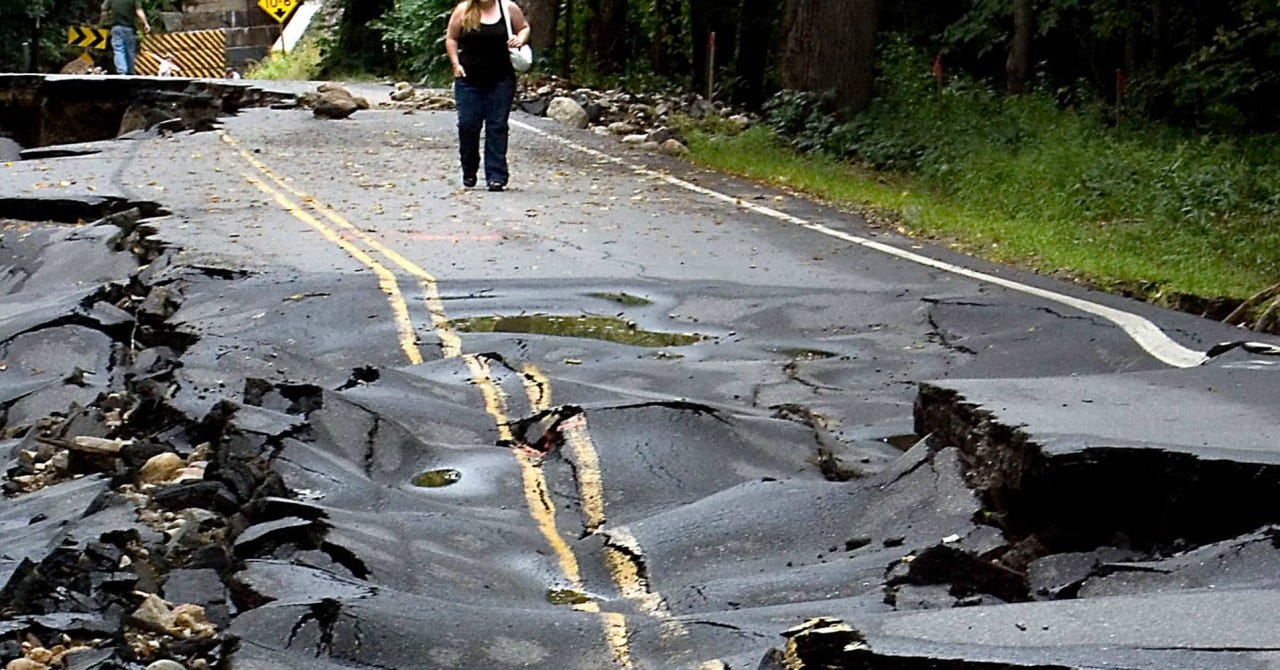
From an infrastructure and investment perspective, the US is a third-world country compared to China. I know it may be uncomfortable to hear. However, to gain a better knowledge of the challenges the US faces, it pays to have an understanding of the competition's strengths. The pre-eminent problem is that the US is riddled with the cancer of corporate greed and exploitation. It has mined profit to the point of extinction, then turned its attention to the ever-diminishing wealth of low and middle-income earners.
The rich have recruited Politicians they have bought to transfer wealth from the bottom and the middle to the top, by transferring the collective taxes paid at the bottom to the top 5% in the form of trillions of dollars in tax cuts. In a clear act of state-sponsored robbery, they have perpetrated a fiscal holocaust on the poor and the vulnerable, leaving millions food-insecure and without healthcare. There is no better example of a crime against humanity than their fiscal cleansing of those at the bottom.
The very least that the American people deserve is not to be deliberately lied to every day as if they have no right to be told the truth. That is where we are in this moment, as we attempt to come to terms with the injustice of it all. We can talk about the militarisation of the streets and the procession of abductions of people by masked men with weapons and detention quotas. We can talk about the removal of healthcare from almost 17 million Americans and the removal of nutritional assistance from the food-insecure. But, ultimately, the tyranny is driven by one thing: the rampant redistribution of wealth from the bottom to the top.
Let’s be very clear, Trump’s campaign was based on two fundamental pillars: mass deportation and the cost of living. In other words, immigration and the economy. The truth is that, in the end, this will ultimately revolve around the economy, above all else, because without a strong economy, there can be no prosperity.
I have been raising red flags for months, as have many others, about the way that Trump structured the budget bill. It was designed to conceal the impact of the draconian measures taken to siphon money from lower and middle-income earners to benefit the rich. Trump has deliberately deferred the implementation of Medicaid cuts until after the midterms and delayed the slow rollout of SNAP cuts, which have now started to impact food-insecure families. At the same time, he has promoted the limited and temporary no tax on tips and overtime. As a result, the administration can perpetuate its fantasy economy through a carefully controlled media narrative, selling the lie that the US is taking tens of billions of dollars from foreign countries to make America rich again.
Before we even consider anything else, America has not been rich for decades. The only time the US national debt was zero was on January 8th 1835, under Andrew Jackson. The last time the US had a budget surplus was in fiscal year 2001 under Bill Clinton, and this occurred primarily because of the 1993 Budget Reconciliation Bill, which raised individual taxes on high earners. I think there’s a message there before we even begin.
How can a country be ‘hot’ as Trump likes to call it when the US is carrying $37 trillion in debt, which represents a debt-to-GDP ratio approaching 125%? That is to say, the debt is. 25% larger than the revenue the US generates for the year. It does not take an economist to understand that that is not ‘hot’. I would also point out that Trump added 21% ($7.8 trillion) of the debt in his first term. The current annual cost of servicing the interest on that debt amounts to $1.013 trillion as of July 2025. If you want to break that down into the cost per household, it’s not easy because the latest available data on the number of households is from 2023, which stood at 131.43 million. Based on that number, the cost of servicing the debt per US household is $7,836. This is just to pay the interest on the debt and stand still.
The US national debt is double that of its closest economic competitor, China, which stands at $18.8 trillion, with a debt-to-GDP ratio of 88%. We cannot have a conversation about the US economy without understanding the importance of China in the conversation. The critical point is that China has huge economic assets. It has the most advanced manufacturing and logistics infrastructure in the world. It is years ahead of the US in nuclear energy technology and also leads the world in the production of low-cost renewable energy. Trump's only viable claim is that the US is leading in Artificial Intelligence with its AI stack. So much of a lead that China is now saying they don’t want to buy new Nvidia chips.
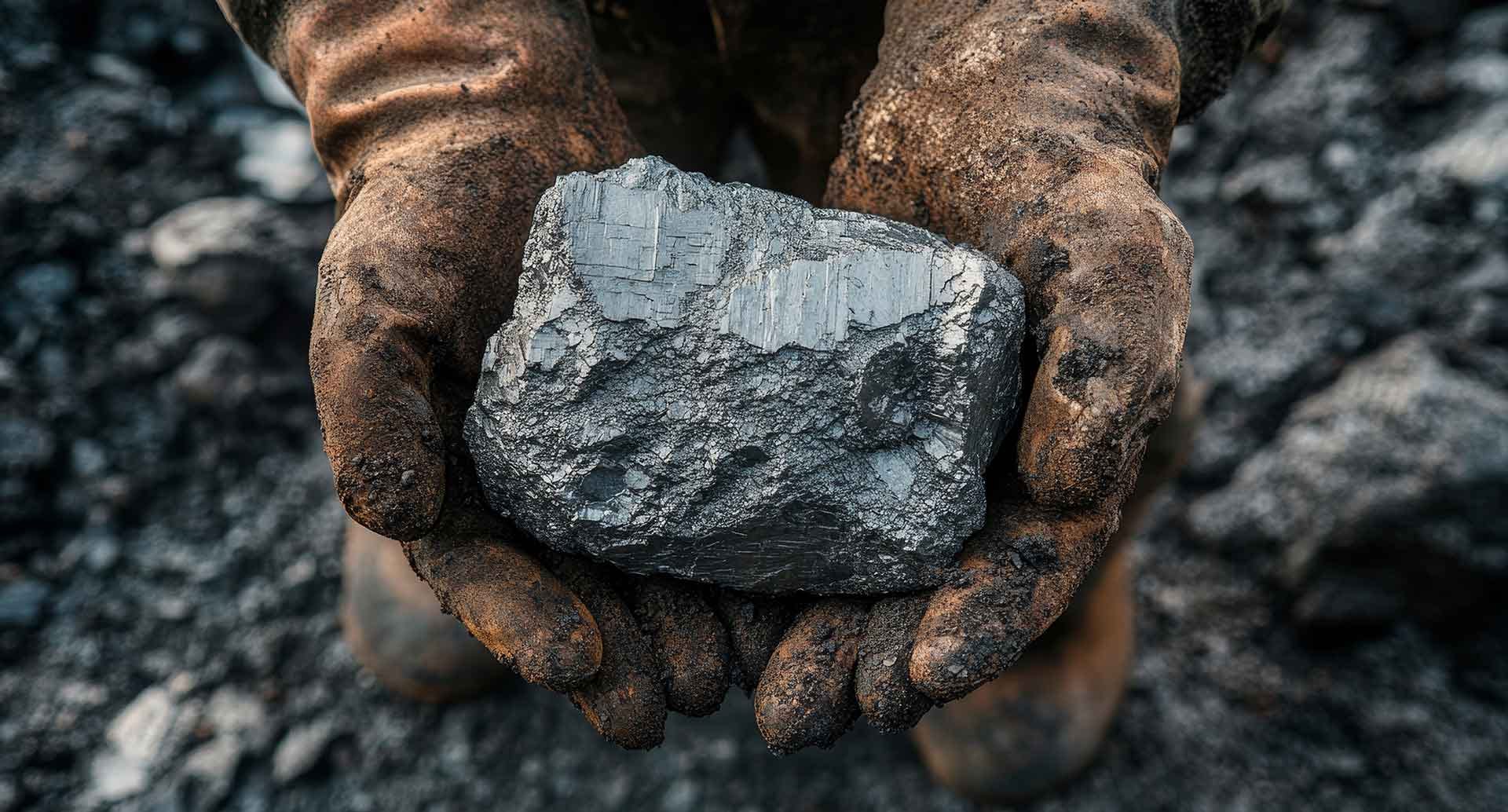
There is no better example of the US being unable to deny its reliance on the global market than its dependency on rare earth minerals. China accounts for around 70% of global mine production and over 90% of refining capacity. This is not lost on Trump, as we see him desperately attempting to extort other countries that have rare metal resources. This is before we discuss the Chinese Belt and Road Initiative and the infrastructure built in Mexico, Africa, and across Europe. To understand the global reach of the initiative, which has been built over decades and involves trillions of dollars of Chinese investment and soft power, take a look at the map below to see its international reach in terms of global infrastructure that facilitates frictionless trade.
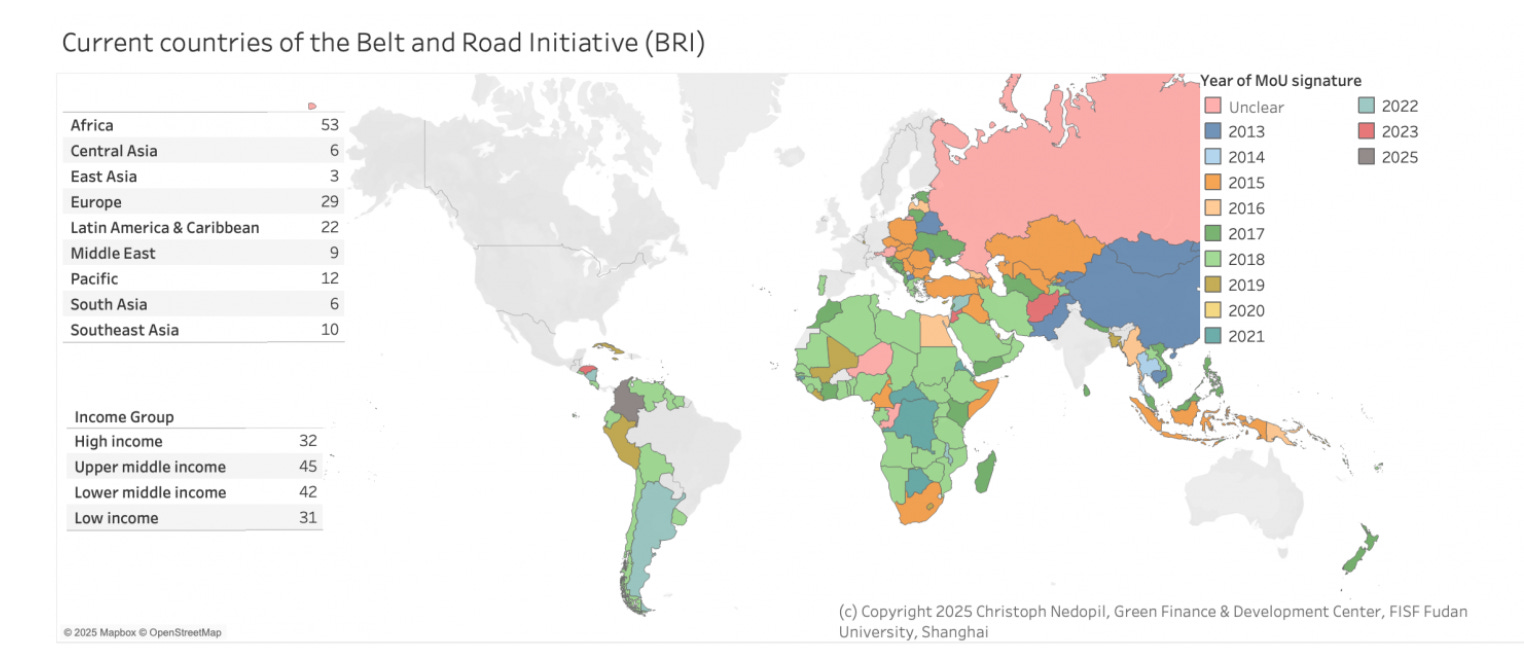
China does not focus on short-term objectives; everything it does is based on long-term strategic planning, and this is why Trump has been unable to bully it with his tariff policy. Aside from everything else, China knows that its population will tolerate economic pain much longer than Americans can. If you compare the two countries in terms of progress, there is no comparison, and that is why China presents such a threat to the US. When it needs to invest in, for example, AI, it is not worshipping at the altar of shareholder culture. The government can decide on the direction of travel and make it happen. This represents a real challenge for a free market capitalist economy to compete with.
China can build a railway station in 48 hours, a feat that can take months or even years for Western economies to accomplish. This is why China has been able to eradicate poverty and had built 48,000 km of high-speed rail by the end of 2024, adding a further 2000km by the end of 2025, with plans to extend that still further to 70,000 km by 2035. Meanwhile, the US has just 375km cleared for speeds above 100mph. The point of this opening overview is to say that it is all but impossible for the US to compete in any sense of the word with an economic imbecile at the helm.
This is why Trump is having to resort to bullying and extortion, and why he is employing tariffs. He is betting the house on the US AI Tech Stack on the assumption that the US is the dominant force in this space. Just like Republicans can’t win an election without using voter suppression, the US has been unable to dominate the AI space without restrictive tech export practices to slow down Chinese innovation and development. Unfortunately, this move has had the opposite effect, serving only to boost Chinese government investment and innovation in their tech companies. They are no longer imitating; they are innovating in the tech space.
For evidence, you need to look no further than a fascinating piece in Money Week by Simon Wilson on July 25th 2025, subtitled, ‘The idea that China could pull ahead of the United States in terms of technological prowess once seemed fanciful. That’s no longer the case.’
The report notes:
A technology index by researchers at Harvard, published last month, ranked 25 countries across five sectors: artificial intelligence (AI), semiconductors, biotechnology, space and quantum technology. It placed the US first in all categories, but with China breathing down its neck in second.
It goes on to note, however, that a study by the Australian Strategic Policy Institute found that:
China has already pushed ahead decisively in crucial areas. The think tank found that, back in 2003-2007, the US led China in 60 of 64 frontier technologies – such as AI and cryptography – while China led the US in just three. By 2019-2023, the position had reversed. China now leads in 57 of 64 key technologies, and the US leads in only seven.

While I would still put the US ahead of China in the AI Tech Stack race, this is no longer measured in years, but rather months, and that is not a big enough gap given the pace of current Chinese AI development. Also, we have to consider other important considerations when it comes to AI. The technology is outrageously power-hungry, and in this regard, China is in a far better position to meet that energy demand, given its ability to add capacity to its grid much faster than the US. There is also the indication that new Chinese-developed chips are reported to be more power-efficient.
China understands scale, and that’s why they are taking the smart route of open-sourcing their AI models to accelerate innovation and gain market share over Western competing models. For me, it’s only a matter of time. Their tenacity and commitment to this blue ribbon competition with the West is not just about the commercial benefits; it’s about national pride. This is not really a consideration for competing corporations whose sole purpose is to feed their evey hungry shareholders.
Without the US holding the global reserve currency, the prism through which we are viewing the US economy would look very different. Trump’s ability to sell his illusion of a ‘hot’ economy is driven by half the population believing the constant stream of lies he delivers through a compliant corporate media and his unquestioning base. For example, 47% of Republicans and 32% of Democrats still incorrectly believe that foreign countries are paying the tariffs that THEY are paying themselves. This, despite extensive efforts to highlight that American importers pay the tariffs and pass on the tax in the form of higher consumer pricing.
Soon, there will be no escape from what translates to a deliberately hidden federal sales tax as Americans start to feel it in their grocery bills. The new tax now reaches beyond importers and now extends to individual consumers shopping online for overseas low-cost goods. The removal of the de minimis exemption on imported goods valued below $800 manifests itself as a very tangible sales tax, which can be very high depending on the country of origin. In Trump’s new America, there is no escape from him constantly having his hand in the back pocket of families. Taxpayers have become his flexible slush fund, which he can tap into when he wants to apply pressure to an international extortion target. I call them targets because they can no longer be considered trading partners. They are merely abused hostages to fortune.
In PART TWO, I’ll be drilling into the direct day-to-day impact of what is now clearly an increasingly vulnerable economy. I’ll be looking at the economic sectors, as well as small and micro-businesses. It is essential that everyday Americans fully understand the threat, but more importantly, how to spot threats to themselves and their families, if, as it looks pretty likely, the economy is beginning to unravel.
Find PART TWO here
Thank you for this. I’m not an economist, but even I can see where this is all headed. People are going to become desperate and he will fan the flames into civil war. It’s a horrible prediction but I fear it’s not wrong.
Great article, the enormous hit on us is going to be landing very hard . All the subsidies for health insurance premiums ,energy along with the increases to prices for groceries is full front and center. Will the Democrats present any push back now on the bill and tarifs during the debt ceiling negotiations? Now I share a headache 😞